
Palmeiras Football Formation
 June 14, 2024


Starting Lineup
21- M. Lomba2- M.Rocha
15- G. Gómez
26-Murilo
22-J. Piquerez
8-Zé Rafael
5- A. Moreno
23- R. Veiga
10- Rony
17-Estêvão
7- Dudu
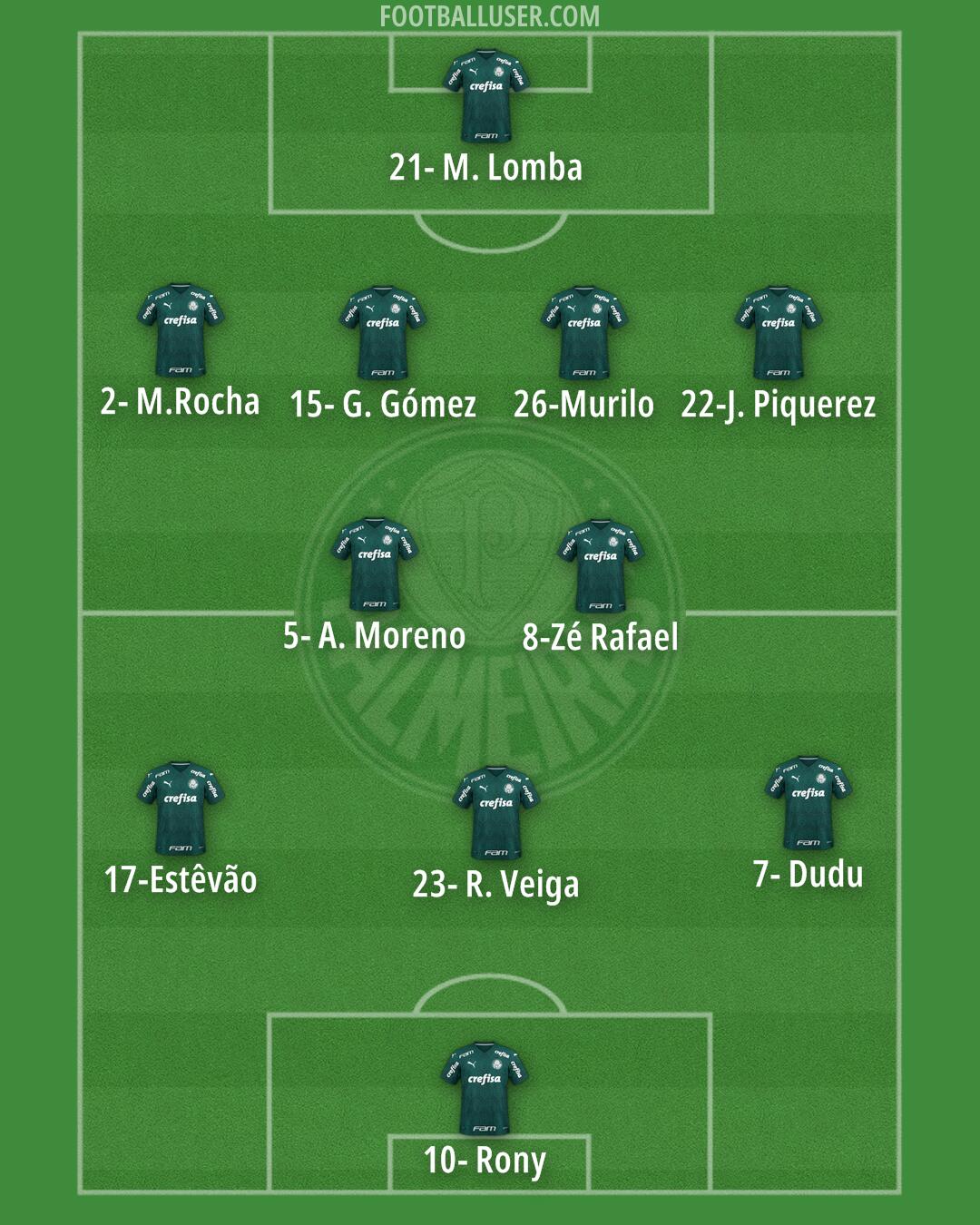
Palmeiras looks to control the middle of the pitch and use quick transitions in a 4-5-1 formation. This lineup is built to maintain a compact block while waiting to strike on the break. The tactical identity relies on winning the second ball and moving the ball forward quickly once possession is regained.
M. Lomba guards the goal as the defensive unit sits in a mid-block. A flat back four consists of M.Rocha at right back and J. Piquerez at left back, both tasked with tracking runners and providing width when needed. In the center, G. Gómez and Murilo act as the main central defenders, with G. Gómez using his aerial strength to clear lines and Murilo providing cover. The back line works to stay connected and squeeze the space between the defense and the midfield.
The midfield works as a five man unit to dominate the central zones. Zé Rafael and A. Moreno operate as a double pivot to shield the defense, with Zé Rafael providing energy to win back possession. R. Veiga plays as the central connection, looking to play through the lines and find teammates in advanced positions. On either side, Estêvão and Dudu operate in the half spaces to link the play. Estêvão uses his dribbling style to carry the ball forward, while Dudu looks to find pockets of space to create chances.
Rony operates as a lone striker and acts as a pressing centre-forward to force the opposition into mistakes. He works to pin the last defender and creates room for the midfielders to arrive late into the box. The attack relies on the wingers pulling wide to stretch the defense before cutting inside to combine in tight spaces. Palmeiras uses the movement of the front five to create quick combinations, often looking to hit in behind on the transition.
One major advantage for Palmeiras is the ability to press in a mid-block to force long balls. The numerical superiority in the central midfield area allows the team to recycle possession easily when they have the ball. They can also switch play rapidly to use the width provided by the full backs and the wide midfielders.
This formation is built for teams that want to stay compact and strike with pace. It is best suited for matches against opponents that dominate possession but leave space behind their defensive line.