Inter Miami Soccer Formation
 June 16, 2024


Starting Lineup
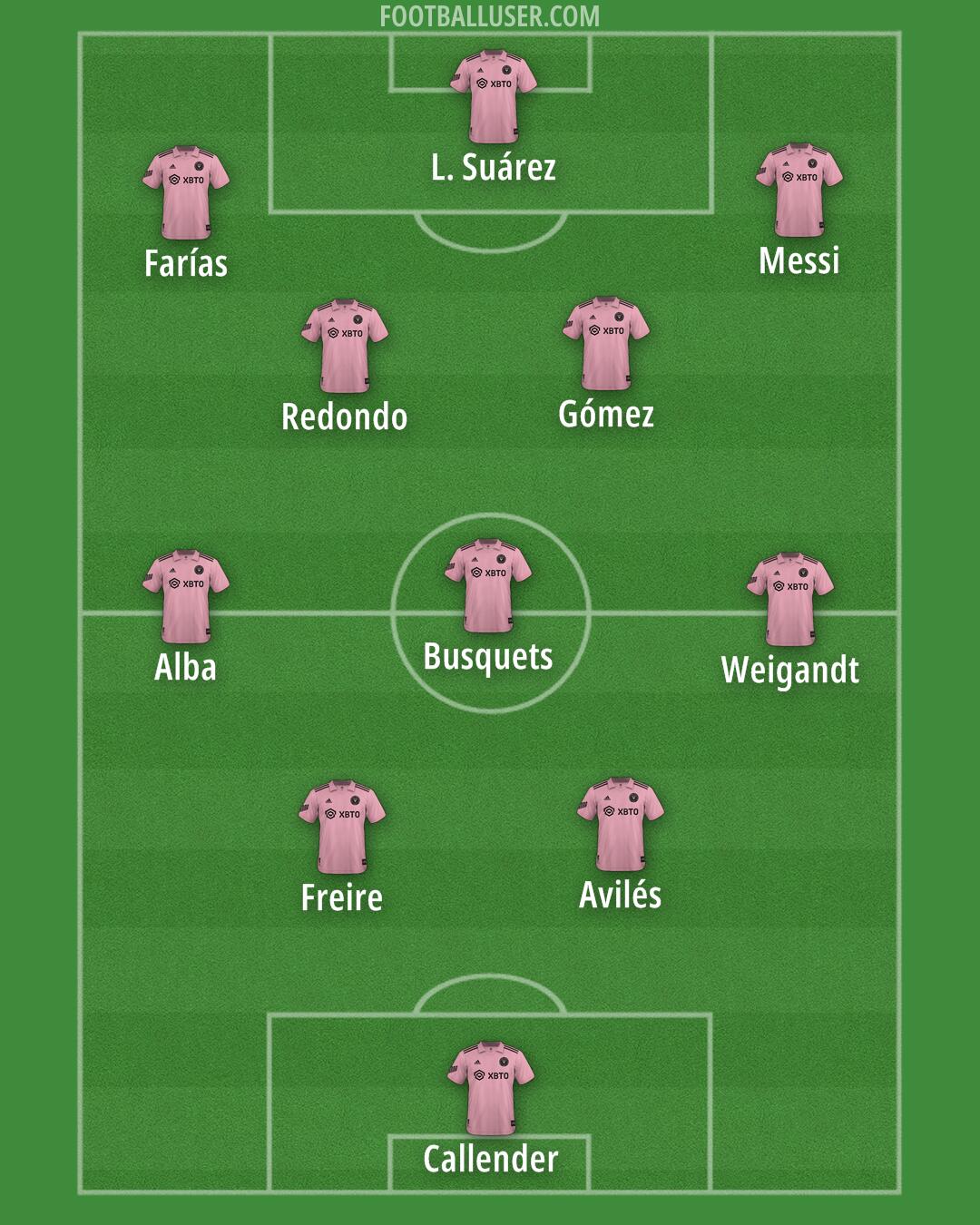
L. Suárez · Alba · Weigandt · Callender · Freire · Avilés · Busquets · Messi · Farías · Redondo · GómezInter Miami focuses on a vertical style of play that looks to break quickly through the middle, utilizing a 4-5-1 formation. This lineup is built to control the center of the pitch while keeping a presence in the half spaces to link play. The goal is to win the ball in central areas and launch immediate attacks toward the lone striker.
L. Suárez starts between the posts to organize the defensive line. The back four functions as a flat back four where Farías acts as the right back to provide width. Messi operates as the left back and can push higher to support the midfield. In the center, Gómez and Redondo form the defensive pairing, with Gómez acting as a ball playing defender to start attacks. The unit works to stay compact and squeeze the space between the lines to prevent through balls.
The midfield relies on a three-man midfield with a carrier to bridge the gaps. Busquets operates as the deep lying playmaker, sitting in front of the defense to recycle possession and protect the center. Alba plays on the left of the trio to drive forward with the ball, while Weigandt provides balance to hold the shape. Avilés and Freire play in the pockets ahead of the midfield, acting as attacking midfielders who press aggressively to win the ball high up the pitch.
Inter Miami uses a lone striker in Callender to lead the line. He must work to hold up the ball and wait for the midfield to arrive. The attack is built through the wide areas as Avilés and Freire look to cut inside and find the feet of the striker. This setup creates runs in behind and relies on the movement of the attacking midfielders to pull defenders out of position. The team looks to attack in combinations to isolate defenders in one on one situations.
This formation offers the advantage of numerical superiority in midfield to dominate the center of the park. The presence of Busquets allows Inter Miami to control the tempo and switch play effectively. Additionally, the team can use the overlapping runs of the wide midfielders to create overloads on the flanks.
This 4-5-1 lineup is built for controlling the central zones and hitting teams on the transition. It is best suited for matches against opponents that leave space behind their midfield.