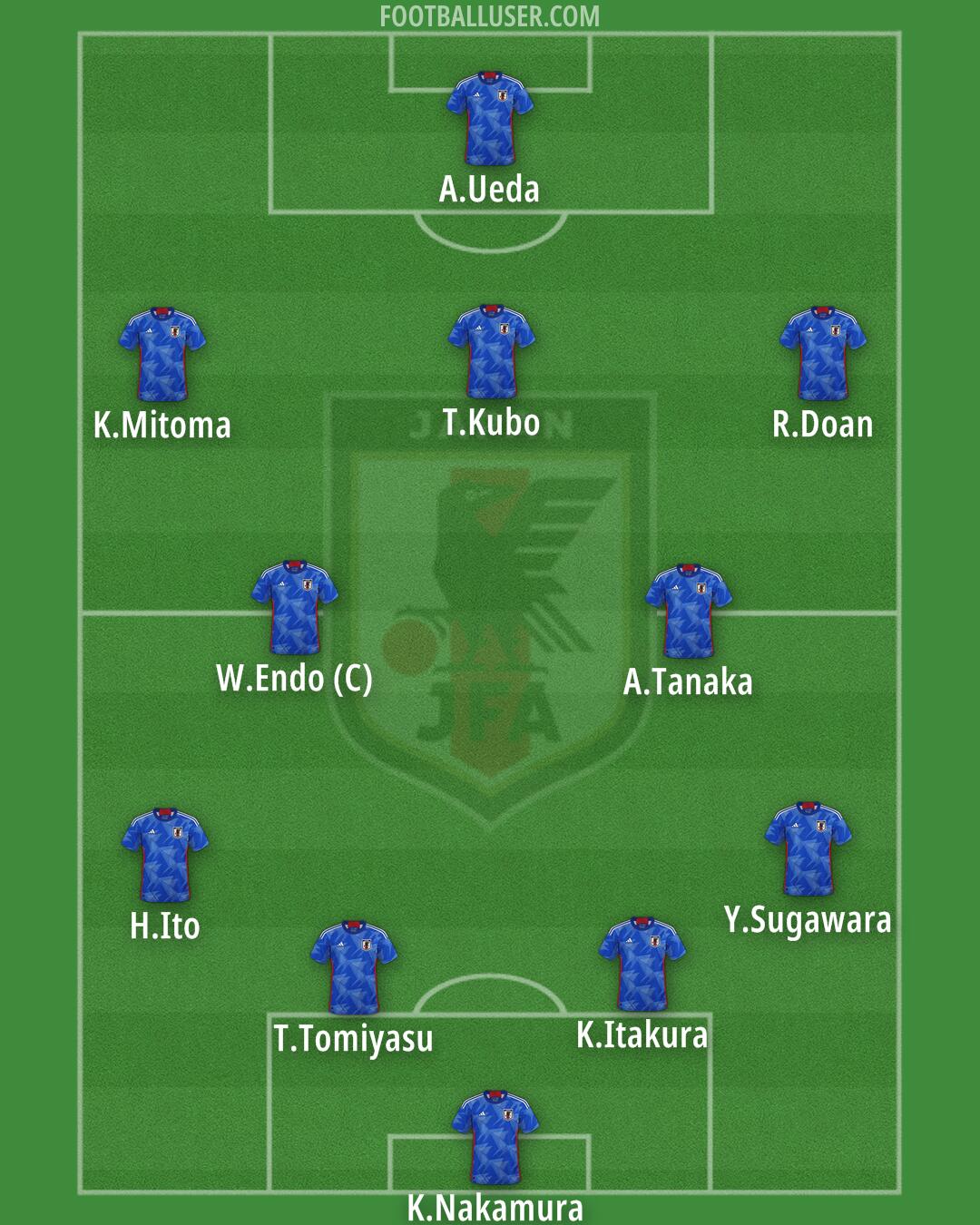

Japan National Football Team Formation
 June 16, 2024


Starting Lineup
K.Nakamura · Y.Sugawara · K.Itakura · T.Tomiyasu · H.Ito · W.Endo (C) · A.Tanaka · T.Kubo · K.Mitoma · R.Doan · A.UedaJapan looks to play with a direct and aggressive identity using a 4-2-4. This formation aims to overwhelm the opposition through high volume attacking and intense pressure in the final third. By pushing many players forward, the team seeks to win the ball back high up the pitch and strike quickly before the opponent can settle.
K.Nakamura starts between the posts to organize the defensive line. The back four operates with a high line to compress the playing area. T.Tomiyasu and K.Itakura act as the central defenders, where Tomiyasu uses his physical strength and ability to cover wide areas to help the unit. H.Ito and Y.Sugawara act as full backs, providing width while tracking back to prevent being caught out on the break. The defensive unit must stay compact to avoid leaving gaps between the lines when the team pushes forward.
In front of the defense, a double pivot provides the necessary balance. W.Endo, acting as the captain, sits deeper to shield the defense and use his experience to break up play. A.Tanaka works alongside him to drive the ball forward and connect the defensive unit to the attack. This pair must work hard to win the second ball and ensure they do not get bypassed by quick passing moves. They are the engine that allows the rest of the team to commit to the attack.
The attacking line is built to stretch the defence and create chaos. K.Mitoma and R.Doan play as wide wingers, with Mitoma using his dribbling style to beat defenders one on one. They often cut inside to create space for the full backs or to shoot. T.Kubo and A.Ueda operate as a two-man strike partnership in the center. While Ueda acts as a physical presence to hold up the ball, Kubo looks to find space between the lines to play through the lines. This front four focuses on pressing the opposition back line to force turnovers.
Japan offers significant advantages through their ability to press in coordinated waves. By having four players high up the pitch, they can pin the last defender and force long balls. The team also benefits from the speed of transition when they win the ball in the middle third. Using the width of Mitoma and Doan creates wide overloads that force the opposition to shift constantly, leaving gaps for late runs or central combinations.
This 4-2-4 formation is a high risk, high reward lineup designed for attacking dominance. It is best suited for matches where Japan needs to break down a low block or exploit a disorganized opponent through sheer offensive volume.