
Portugal National Football Team Formation
 June 18, 2024


Starting Lineup
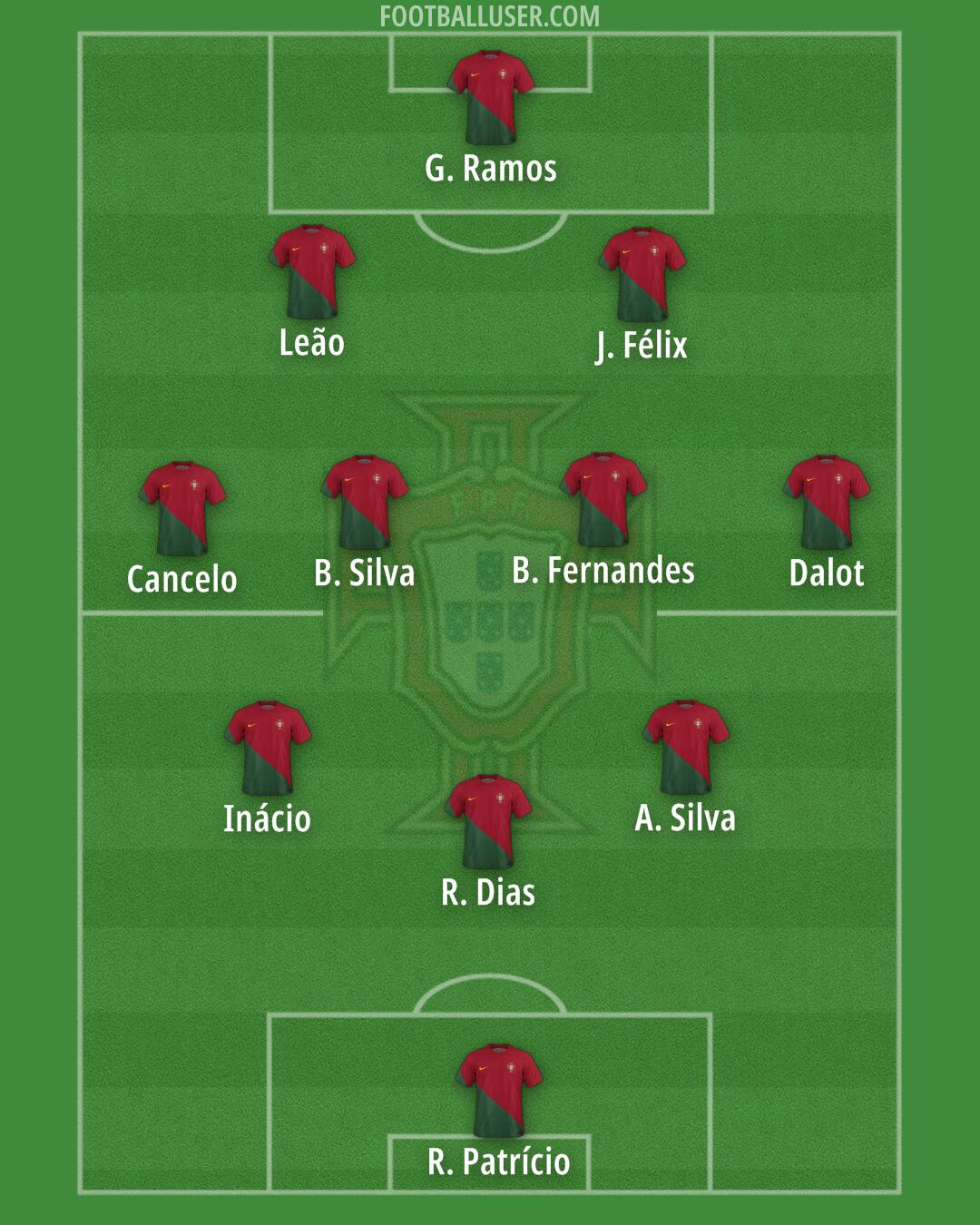
R. Patrício · R. Dias · Inácio · Dalot · G. Ramos · Cancelo · B. Silva · B. Fernandes · Leão · J. Félix · A. SilvaPortugal focuses on a high press and rapid transitions using a 3-4-3. The team looks to win the ball high up the pitch and immediately exploit the space behind the opposition. This lineup is designed to dominate games through heavy pressure and quick vertical movements.
R. Patrício sits between the defenders to sweep behind the line. The back three features Inácio, R. Dias, and A. Silva. R. Dias uses his aerial strength to defend set pieces and plays out from the back with precision. Inácio and A. Silva cover the channels to ensure the unit stays compact. The defense works together to squeeze the space and force opponents to play wide.
A central midfield pairing of B. Silva and B. Fernandes links the defense to the attack. B. Silva uses his pressing intensity to disrupt play, while B. Fernandes uses his passing range and set piece delivery to find teammates in advanced positions. Cancelo and Dalot operate as wide midfielders. Cancelo will overlap the winger to provide width, whereas Dalot must track back to protect the right side. This formation allows the team to recycle possession and switch play effectively.
The front three utilizes wide attackers and a central striker to stretch the defense. Leão stays on the left to use his dribbling style and drive at the defense, while J. Félix operates on the right to cut inside. G. Ramos leads the line as a striker who can hold up the ball and link up play between the lines. The movement of the wingers creates space for midfielders to arrive late into the box. Portugal looks to hit in behind on the transition or deliver a cross from the byline.
This formation offers significant tactical advantages, such as the ability to create wide overloads when Cancelo and Dalot push forward. The team can also press in coordinated waves, using B. Silva and B. Fernandes to trigger a press. This high pressure often forces a long ball from the opposition. The speed of the attackers ensures that the team can break quickly once they win the second ball.
The 3-4-3 formation is built for aggressive, high pressing football. It works best against opponents that try to play out from the back or leave space behind their defenders.