
Colón Football Formation
 June 26, 2024


Starting Lineup
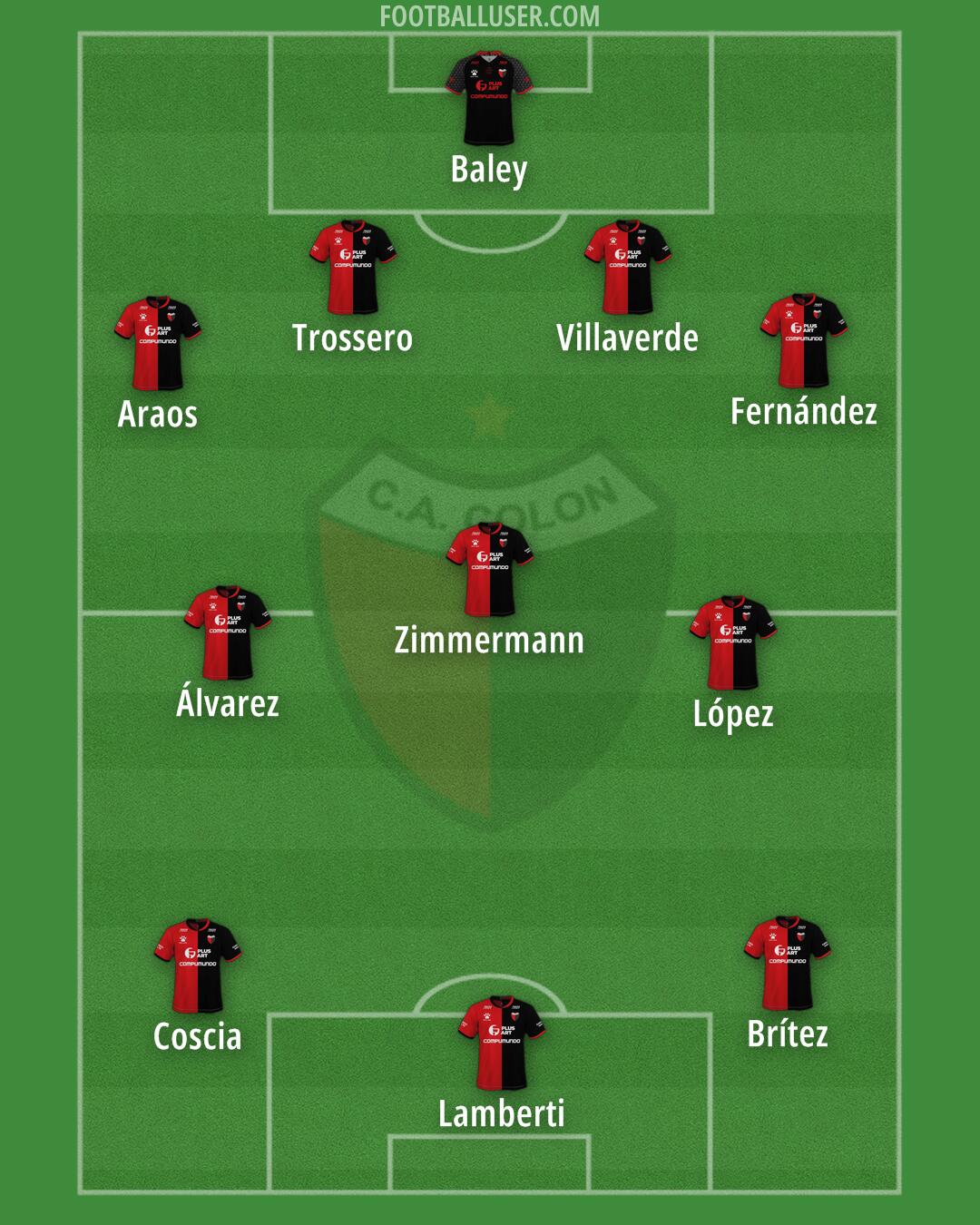
Baley · Araos · Trossero · Villaverde · Fernández · Zimmermann · Álvarez · López · Coscia · Lamberti · BrítezColón relies on a vertical style of play to catch opponents out of position using a 4-3-3 formation. This lineup focuses on quick transitions and direct movement to move the ball into the final third. By playing with high intensity, the team looks to win the ball back quickly and exploit gaps left by the opposition.
Baley stays between the posts to command the area and organize the defensive unit. The back line operates as a flat back four with Trossero and Villaverde acting as the central defenders. Trossero acts as a ball playing defender to start attacks, while Villaverde covers the space behind him. Araos and Fernández play as full backs, providing width and helping to defend the flanks. The defenders work together to hold a high line and squeeze the space in front of them.
The midfield functions as a three-man midfield with a carrier to move the team forward. Zimmermann works to shield the defence and disrupt the opposition. Álvarez and López operate in the half-spaces to connect the defensive and attacking lines. Álvarez helps to drive forward with the ball, while López works to win the second ball and recycle possession. This trio is tasked with pressing aggressively to win the ball high up the pitch.
Colón employs three attackers across the front to stretch the defence. Lamberti operates as a lone striker who tries to hold up the ball and pin the last defender. Brítez and Coscia play as wide wingers who hug the touchline to create width. Brítez looks to cut inside to shoot, whereas Coscia focuses on getting to the byline to deliver crosses. The front three press from the front to force a long ball from the opposition.
This 4-3-3 formation offers several tactical advantages for Colón. The team can create wide overloads when the full backs push up to overlap the winger. There is also a high level of compactness when defending in a mid-block to deny the turn to the opposition. The speed of transition allows the players to hit in behind on the transition before the opponent can recover.
This formation is built for a side that wants to play with high intensity and directness. It is best suited for games where the team can exploit space behind a high defensive line.