
Dinamo Football Formation
 June 30, 2024


Starting Lineup
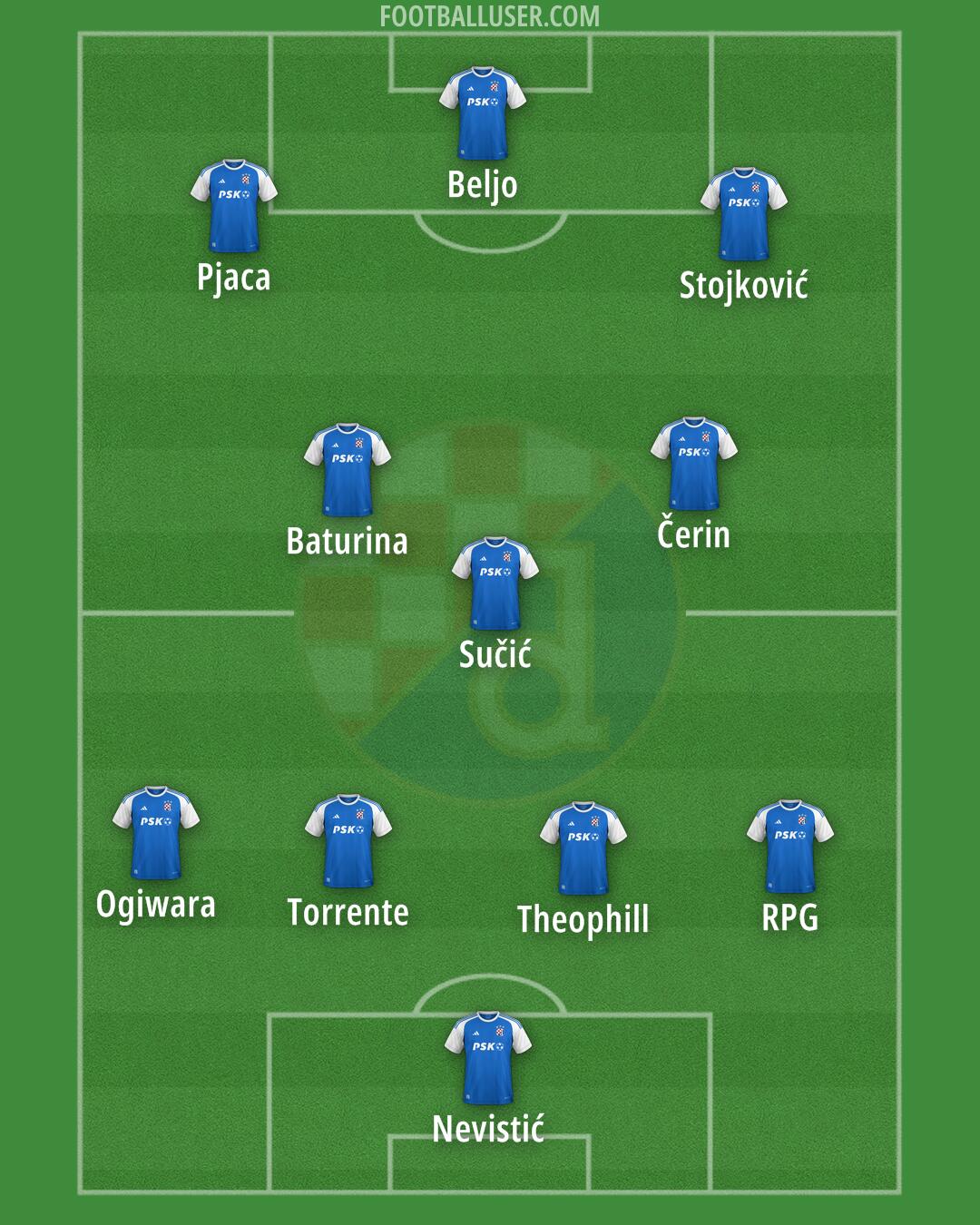
Nevistić · Torrente · Theophill · RPG · Ogiwara · Sučić · Čerin · Baturina · Beljo · Pjaca · StojkovićDinamo relies on a heavy defensive presence and quick transitions through a 5-4-1. This formation is built to play as a defensive block that waits to hit the opposition on the break. The lineup aims to squeeze the space between the lines and force the opponent into wide areas where they can be contained.
Beljo sits between the posts to guard the goal. The defensive unit operates with a back five that maintains a narrow defensive block. Sučić acts as the central man in the back three to hold the line while Čerin and Baturina occupy the spaces on either side. Pjaca and Stojković operate as attacking wing backs, tasked with providing width when the team has the ball and tracking back to support the defense when they lose it. The unit defends zonally to ensure no gaps open up in the middle of the pitch.
The midfield works as a flat four to control the center of the park. Torrente and Theophill form a central pairing to shield the defense and win the second ball. Torrente works to connect the defensive and attacking lines, while Theophill looks to carry the ball forward and break the line with vertical passes. Ogiwara and RPG operate as wide midfielders, positioned to press in a mid-block and provide service when the team moves into the final third. This midfield group must work to deny the turn of opposition players and keep the team compact.
In the attacking phase, Nevistić serves as a lone striker. He is tasked to hold up the ball and find the feet of the oncoming midfielders. The attack relies on the movement of Pjaca and Stojković to overlap the winger and deliver crosses into the box. When Dinamo wins the ball back high up the pitch, the forwards aim to hit in behind the defense on the transition. Nevistić must press the opposition back line to force a long ball and allow the rest of the team to push up.
This formation offers significant tactical advantages through its compactness when defending and its ability to exploit space on the counter. By keeping the lines tight, Dinamo creates a difficult block for opponents to pass through. The role of the wing backs allows for wide overloads during attacking phases, creating numerical superiority on the flanks.
Dinamo uses this setup to absorb pressure and strike with speed. This formation is best suited for matches against teams that dominate possession and leave gaps behind their defensive line.