Liverpool Football Formation
 July 1, 2024


Starting Lineup
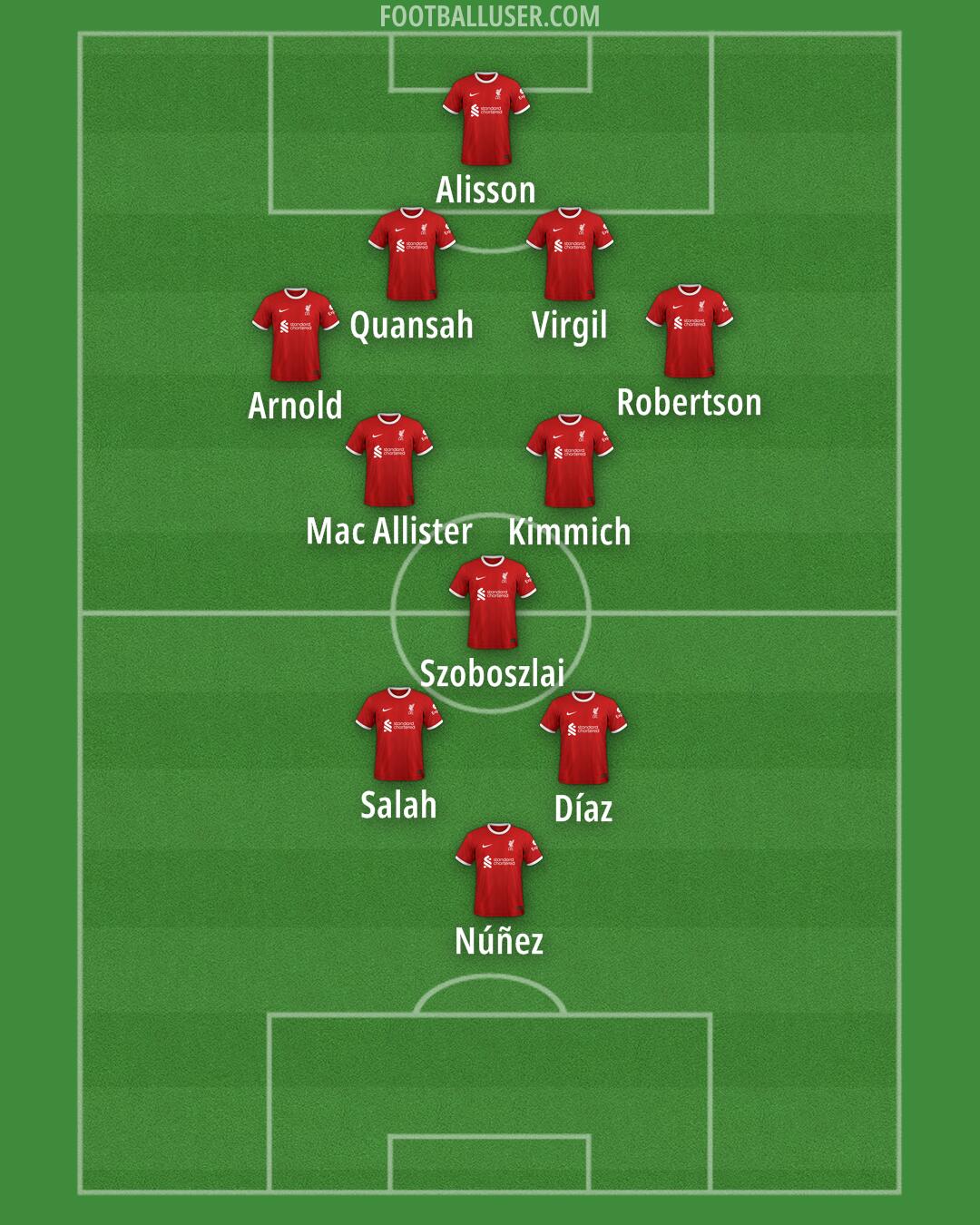
Virgil · Kimmich · Mac Allister · Quansah · Robertson · Arnold · Alisson · Salah · Díaz · Núñez · SzoboszlaiLiverpool relies on a high press and rapid transitions through a 4-3-3 formation. This lineup is built to win the ball back high up the pitch and use verticality to catch opponents before they can settle. By staying aggressive, Liverpool looks to squeeze the space and punish mistakes in the opponent's defensive third.
Alisson acts as the foundation in goal, capable of sweeping behind a high line to intercept long balls. The back line functions as a flat back four where Arnold operates as an attacking full back, looking to switch play and deliver crosses. Robertson provides width on the left and can push high to support the attack. In the center, Virgil is dominant in the air and organizes the defensive line, while Quansah provides cover to maintain the high line.
The midfield utilizes a three-man midfield with a carrier and creative elements. Kimmich sits deeper to shield the defence and recycle possession, acting as a primary link between the back line and the attackers. Mac Allister works to connect the lines, often receiving the ball on the half-turn to play through the lines. Szoboszlai plays as an attacking ten behind the striker, using his pressing intensity to win the ball high and drive the team forward with his running.
In the attacking phase, the team employs three attackers across the front. Díaz operates as an inverted winger on the left, looking to cut inside and threaten the box, while Salah stays wide on the right to isolate his marker and create goal scoring chances. Núñez acts as a pressing centre-forward, using his pace to make runs in behind the defence. This front line focuses on attacking in combinations and using the width provided by the full backs to stretch the defence.
This 4-3-3 offers significant tactical advantages through the ability to press high in coordinated waves. Liverpool can create wide overloads by having Arnold and Salah occupy the same flank, forcing the opposition to shift constantly. The midfield setup also allows for speed of transition, moving the ball from the deep pivot to the forwards in very few passes.
This formation is designed for teams that want to control matches through aggression and high intensity. It is best suited for facing opponents who struggle to play out from the back under heavy pressure.