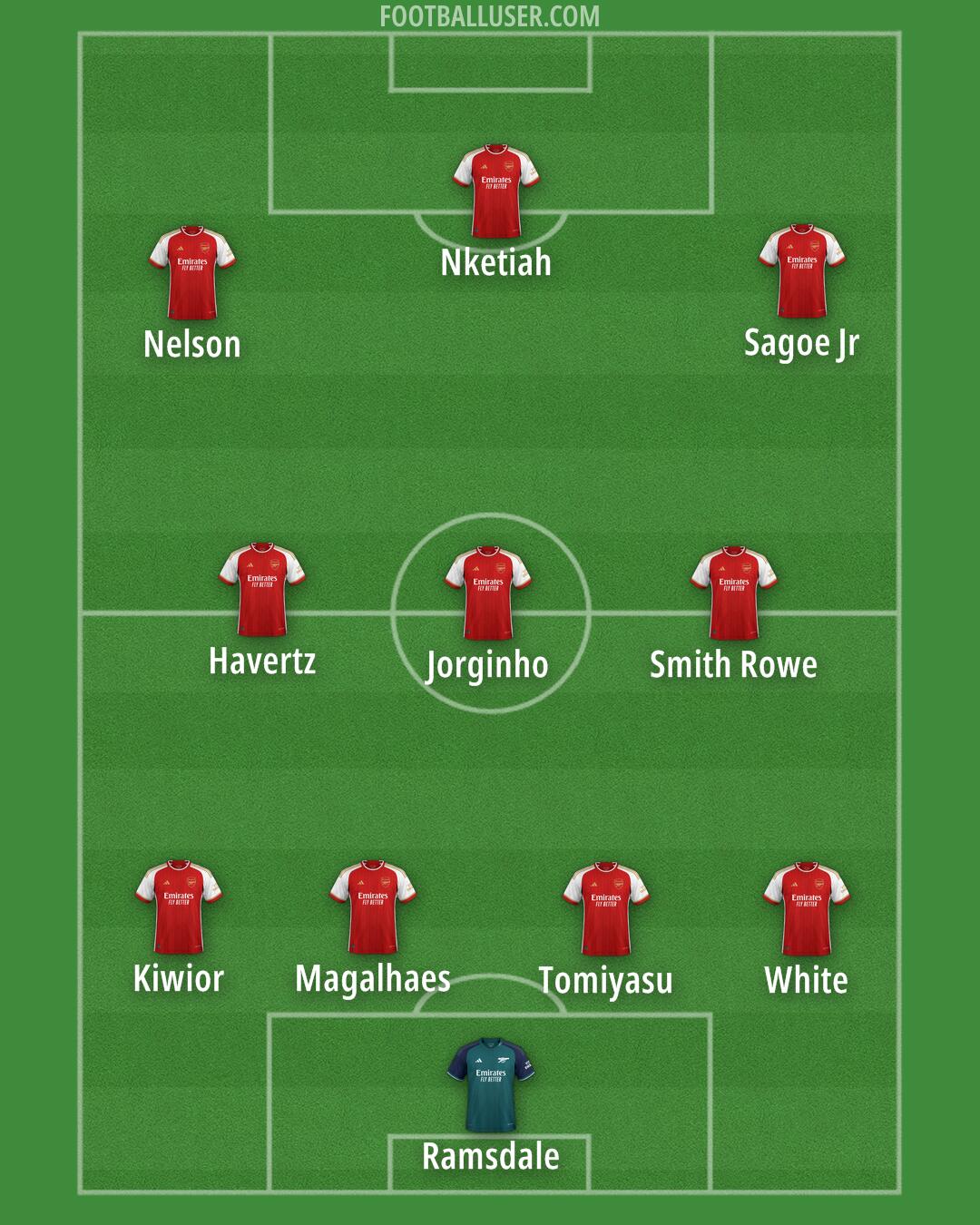
Arsenal Football Formation
 July 6, 2024


Starting Lineup
Nketiah · Nelson · Sagoe Jr · Havertz · Jorginho · Smith Rowe · Kiwior · Magalhaes · Tomiyasu · White · RamsdaleArsenal plays with a high press and possession based identity using a 4-3-3 formation. This lineup is built to control the ball and squeeze the space in the opponent's half. The goal is to maintain control through short passes and quick ball movement to move the opposition out of position.
Ramsdale acts as the last line of defense in goal. The back four works as a zonal line to maintain compactness. White operates as an attacking full back to provide width, while Tomiyasu and Magalhaes act as central defenders who are dominant in the air. Kiwior sits at left back to cover the wide area and help play out from the back. The defensive unit shifts together to block passing lanes and maintain a high line.
The middle third employs a three-man midfield with a deep-lying playmaker to control the tempo. Jorginho sits deep to shield the defense and recycle possession. Smith Rowe and Havertz act as the interior midfielders who connect the defense to the attack. Smith Rowe works to carry the ball forward, while Havertz uses his physical presence to link up play and arrive late into the box. This trio works to win the second ball and keep the ball moving through the thirds.
The front line features three attackers across the pitch. Nketiah leads the line as a pressing centre-forward to force long balls from the opposition. Nelson and Sagoe Jr operate as wide wingers who hug the touchline to stretch the defense. This allows Nketiah to find space in the channels or link up play between the lines. The wingers look to cut inside or deliver crosses to find Nketiah in the box.
Arsenal gains tactical advantages through numerical superiority in the central areas. The midfield trio can squeeze the space in the middle to prevent the opponent from playing through the lines. Another strength is the ability to press high in coordinated waves, using the front three to trigger a press. This forces the opponent into mistakes and allows the team to win it back high up the pitch.
This 4-3-3 formation is built to dominate possession and control the rhythm of the game. It is best suited for matches against teams that sit deep and defend in a low block.