Aston Villa Football Formation
 July 6, 2024


Starting Lineup
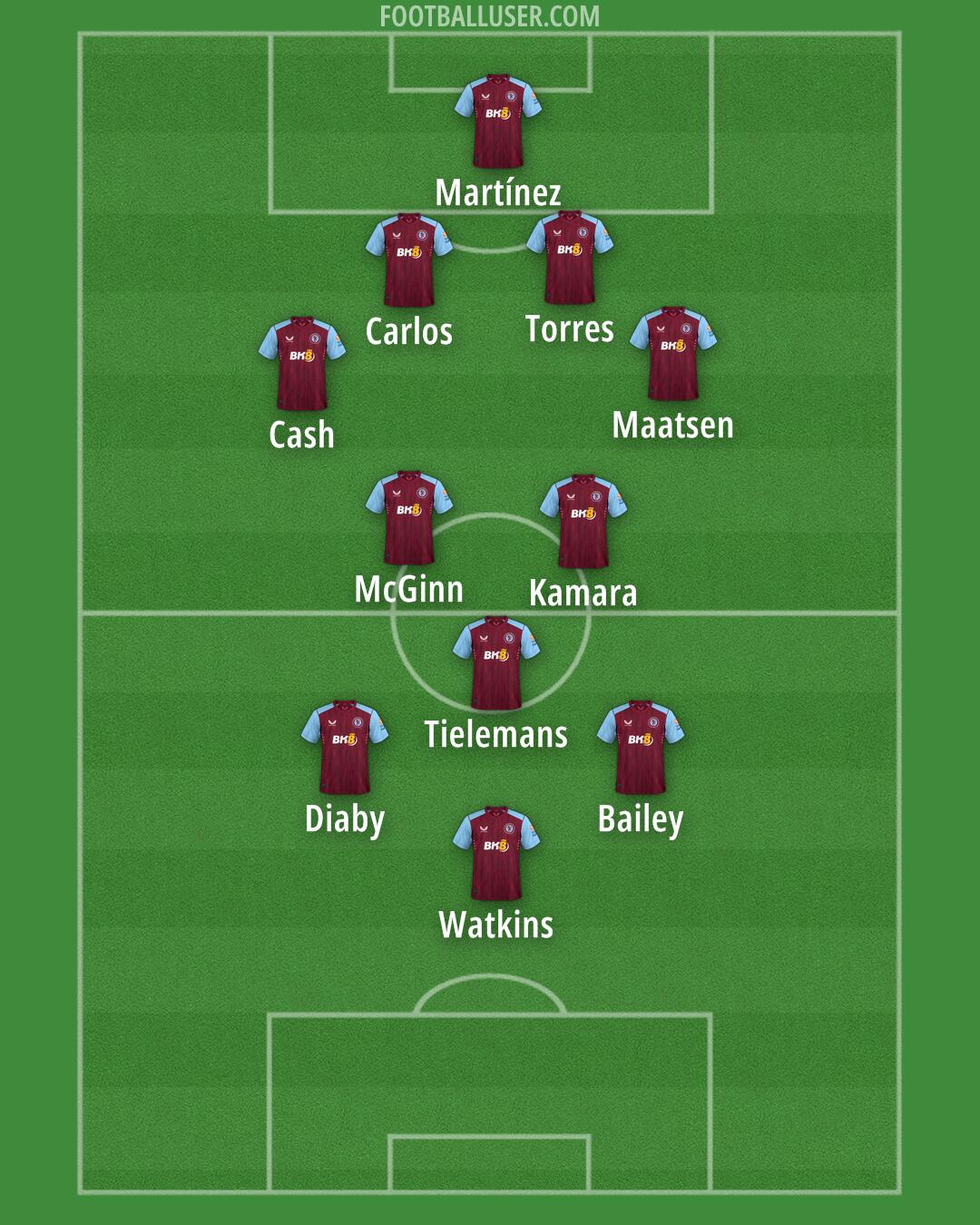
Martínez · Torres · Maatsen · Carlos · Cash · Watkins · Kamara · McGinn · Diaby · Bailey · TielemansAston Villa look to control games through high pressing and quick transitions in a 4-3-3. This lineup is built to squeeze the space high up the pitch and use pace to break the opposition lines. The goal is to win the ball back quickly and move it forward with intent to catch the defense out of position.
Emiliano Martínez plays between the posts to act as a sweeping presence behind a high line. The back four consists of Maatsen at left back and Cash at right back, both tasked to push high and provide width. In the center, Torres and Carlos form the defensive unit, with Carlos acting as a ball playing defender to help play out from the back while Torres covers the space behind. This defensive unit stays compact to prevent long balls and forces play wide.
The midfield operates with a three man midfield with a carrier and a creative presence. Kamara acts as the anchor to shield the defense and win the second ball, while McGinn works as an inverted eight who drives forward with the ball and presses aggressively. Tielemans plays in the advanced role, looking to receive on the half-turn and play through the lines to find the attackers. This trio links the defense to the attack by recycling possession and finding vertical passes.
In the attacking third, Aston Villa utilize three attackers across the front. Watkins leads the line as a pressing centre-forward who works to pin the last defender and make runs in behind. On the flanks, Bailey and Diaby act as wide wingers who hug the touchline to stretch the defense. This movement creates space in the middle for Tielemans to arrive late into the box or for Watkins to find space between the lines.
One major advantage for Aston Villa is the ability to press high in coordinated waves, making it difficult for opponents to build from the back. The team also benefits from wide overloads when Maatsen and Cash overlap the wingers to create crossing opportunities. This allows the side to isolate wide players in one on one situations once they break the first line of pressure.
This 4-3-3 formation relies on high intensity and quick verticality to dominate territory. It is best suited for matches against teams that struggle to play out from the back under heavy pressure.