Man City Football Formation
 July 10, 2024


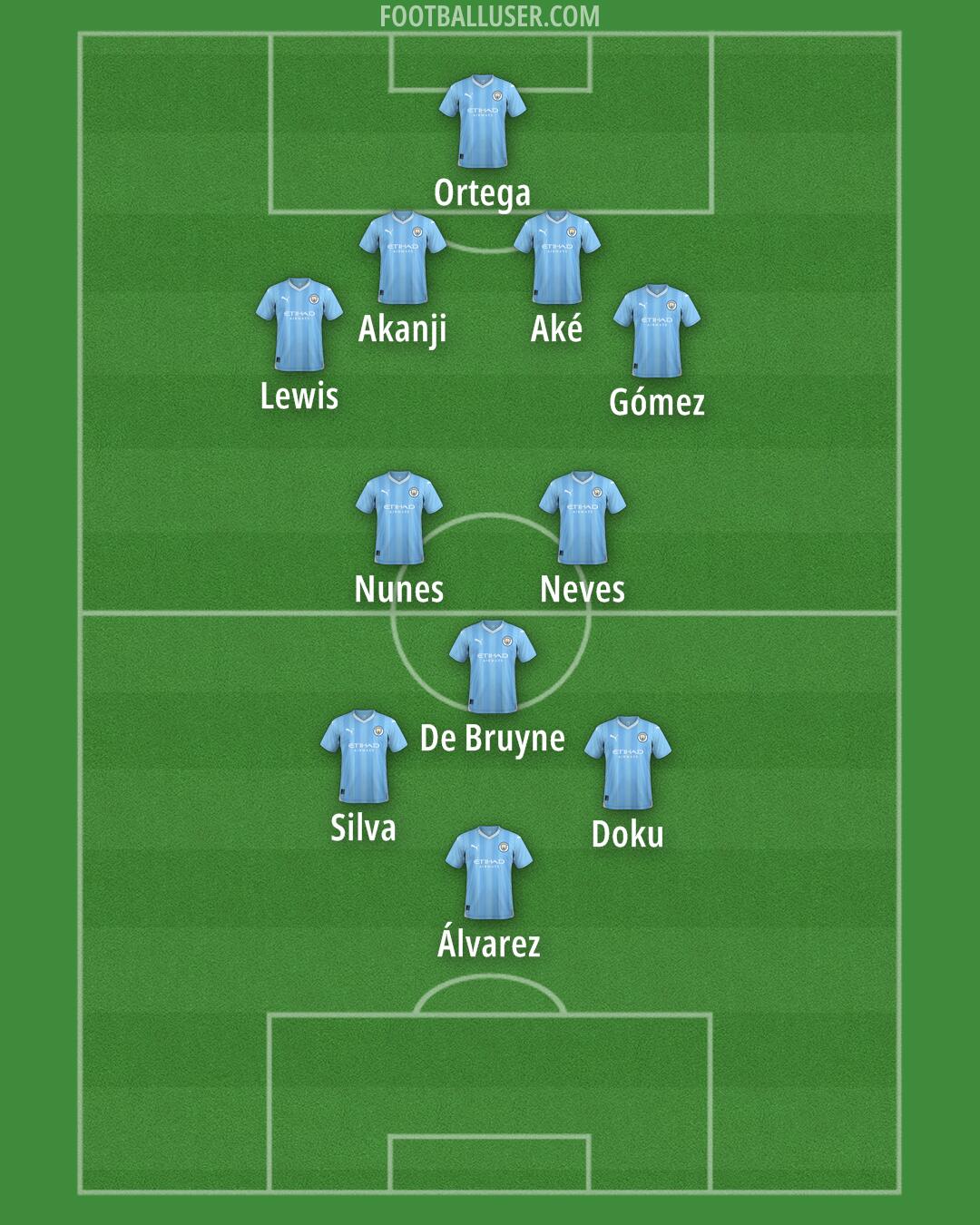
Starting Lineup
Ortega · Akanji · Aké · Lewis · Gómez · Neves · Nunes · De Bruyne · Doku · Silva · ÁlvarezManchester City focuses on heavy possession and controlling the tempo through high levels of ball retention in a 4-3-3. This formation is built to dominate the ball and use it to move the opposition out of position. The goal is to keep the ball in advanced areas to maintain constant pressure.
Ortega starts between the posts to organize the defensive line. The back four consists of Lewis and Gómez on the flanks with Akanji and Aké in the middle. Akanji acts as a ball playing defender who can step up to intercept play, while Aké provides cover and aerial strength. Lewis can move forward to provide width, while Gómez holds a more defensive role to secure the left side. The unit works together to play short from the back and build play through the thirds.
The midfield operates as a three man midfield with a carrier and a creative hub. Neves works to shield the defence and win the second ball in central areas. Nunes acts as a carrier to drive forward with the ball and link the defensive unit to the attack. De Bruyne plays as an attacking ten behind the striker, using his passing range to split the defence with a through ball. This midfield group works to recycle possession and find the feet of the striker to keep the pressure on.
The attacking front line uses three attackers across the front to stretch the defence. Álvarez acts as a pressing centre forward who works to win the ball high up the pitch. Doku plays as an inverted winger on the left, looking to cut inside and use his dribbling style to beat markers. Silva operates on the right wing, often pulling wide to create space before looking to combine in tight spaces. This trio uses combinations and quick movement to create runs in behind the opposition.
Manchester City gains a massive advantage through numerical superiority in midfield when De Bruyne pushes higher. The team also uses the pace of Doku to isolate wide players in one on one situations. These overlapping movements from the full backs and the high press from the front line allow the team to win it back high up the pitch frequently.
This 4-3-3 formation is designed for total dominance through ball control and high intensity. It is best suited for matches against teams that sit deep and defend in a low block.