
Venezia Football Formation
 July 18, 2024


Starting Lineup
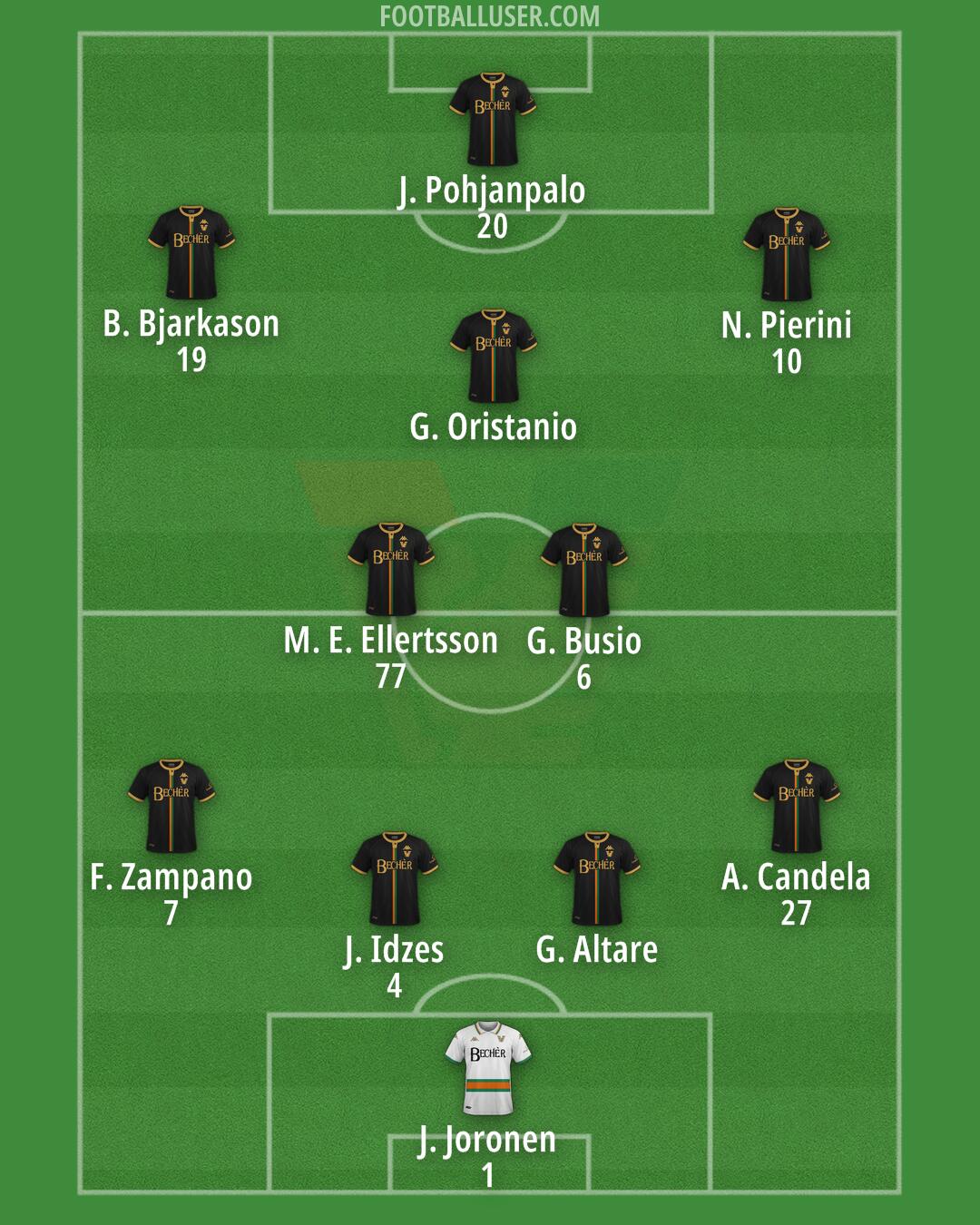
J. Joronen (1) · A. Candela (27) · F. Zampano (7) · G. Altare · J. Idzes (4) · G. Busio (6) · M. E. Ellertsson (77) · N. Pierini (10) · G. Oristanio · B. Bjarkason (19) · J. Pohjanpalo (20)Venezia focuses on a vertical style of play to catch opponents off guard, utilizing a 4-3-3 formation. This lineup looks to transition quickly from a defensive block into direct attacking moves. The goal is to use speed and directness to stretch the opposition, making it a team built for high intensity and rapid movement once the ball is won.
J. Joronen stands between the posts to organize the back line. The defensive unit operates with a flat back four where F. Zampano and A. Candela occupy the full back roles. Zampano is tasked to push up the left flank while Candela provides support on the right. In the middle, J. Idzes and G. Altare act as the central pair, with Idzes often tasked to win the header and Altare covering the space behind. The unit aims to keep a compact shape to deny space between the lines.
The midfield is built around a three-man unit designed to control the center of the pitch. M. E. Ellertsson and G. Busio work to win the second ball and provide the engine for the team, with Busio often looking to carry the ball forward. G. Oristanio operates as an attacking ten behind the striker, looking to find pockets of space between the lines to link the midfield to the front three. This trio works to press in a mid-block to force long balls from the opposition.
Up front, Venezia employs three attackers to pin the opposition defense. J. Pohjanpalo acts as the main striker, using his strength to hold up the ball and bring others into play. On the wings, B. Bjarkason and N. Pierini provide width and threat, with Bjarkason looking to cut inside to find shooting lanes. The forwards press from the front to disrupt the build up, creating opportunities for runs in behind or cutbacks from the byline during quick transitions.
One major advantage for Venezia is the speed of transition when they win possession in the middle third. The connection between the midfield trio and the front three allows them to hit in behind on the transition before the defense can set the offside trap. They also find success in wide overloads when the full backs join the wingers to create two on one situations.
This 4-3-3 formation relies on high energy and directness to break down organized sides. It is a setup best suited for games where the team can exploit the space left by an attacking opponent.