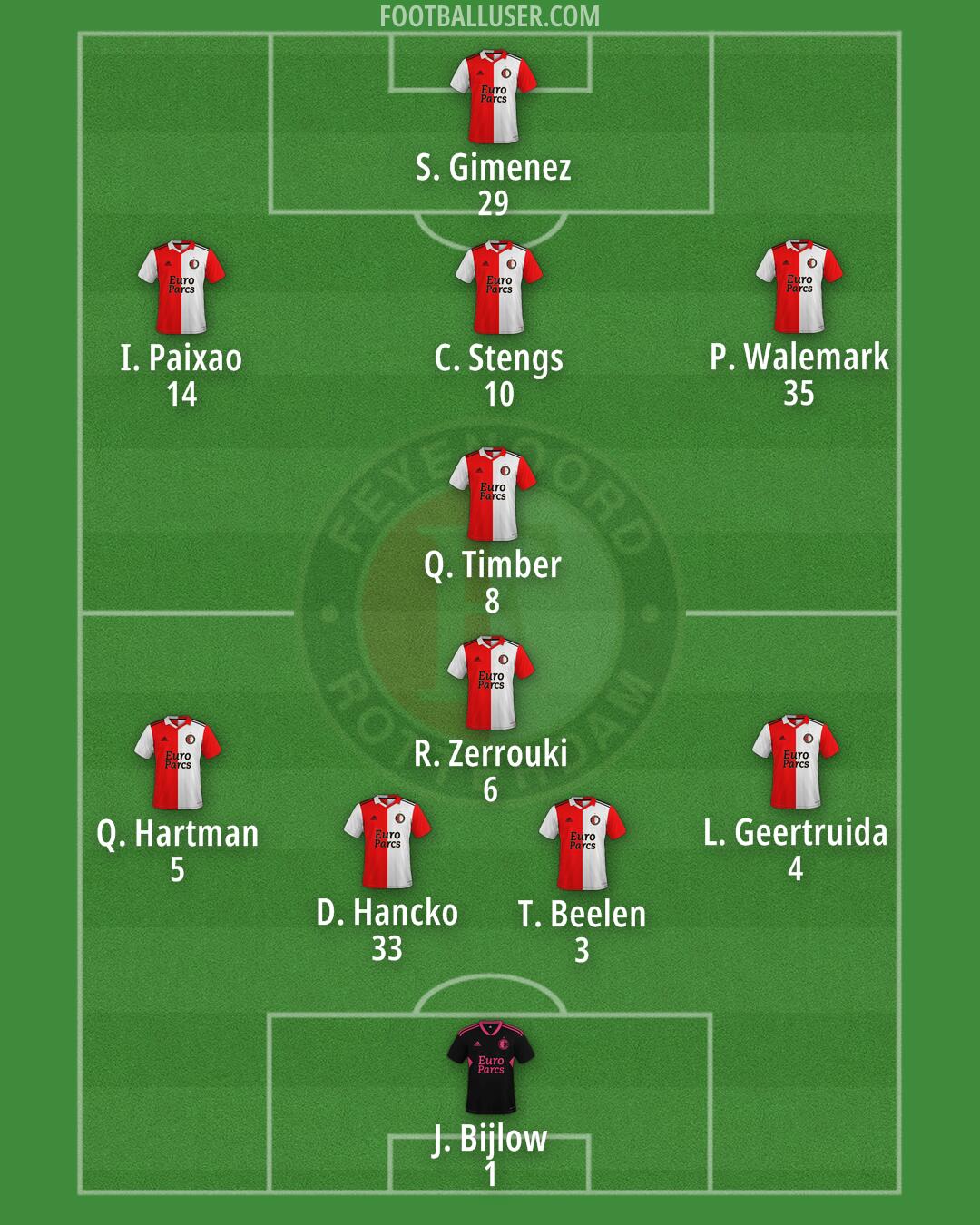

Feyenoord Football Formation
 July 21, 2024


Starting Lineup
J. Bijlow (1) · L. Geertruida (4) · T. Beelen (3) · D. Hancko (33) · Q. Hartman (5) · R. Zerrouki (6) · Q. Timber (8) · C. Stengs (10) · P. Walemark (35) · I. Paixao (14) · S. Gimenez (29)Feyenoord focuses on defensive solidity and quick transitions through a 5-4-1 formation. This lineup is built to sit deep and protect the middle before hitting the opposition on the break. The team looks to absorb pressure and then use the pace of their attackers to exploit space left behind the opposing defenders.
J. Bijlow stays between the posts to command the area and organize the back line. The defensive unit operates in a back five where R. Zerrouki acts as the central anchor. T. Beelen plays as the right center back to cover the space while D. Hancko sits on the left to defend the channel. L. Geertruida acts as a right wing back to provide width and track back when needed. Q. Hartman works as the left wing back to support the attack and defend the flank. This defensive group works together to stay compact and deny any space between the lines.
The midfield operates in a flat four to maintain a compact block. Q. Timber sits in the pivot to shield the defense and win the second ball. C. Stengs and P. Walemark work as central midfielders to connect the defense to the attack. I. Paixao operates on the left side of this midfield line to help press in a mid-block. This group can shift left or right to block passing lanes and ensure the team remains difficult to play through.
Up front, S. Gimenez acts as the lone striker and target man. He holds up the ball to allow the midfielders to push forward. When the team wins possession, the wing backs L. Geertruida and Q. Hartman push high to provide width. This creates situations where the team can find the feet of the striker or use the wide areas to deliver crosses. The attack relies on quick movements to catch the opposition while they are out of position.
Feyenoord gains a massive advantage through their ability to stay compact when defending. They often create numerical superiority in the defensive block to make it hard for opponents to find gaps. The speed of transition allows them to punish teams that commit too many players forward.
This 5-4-1 formation is ideal for a team looking to frustrate a dominant opponent through a disciplined defensive block. It works best in games where Feyenoord needs to absorb pressure and rely on counter attacks to win.