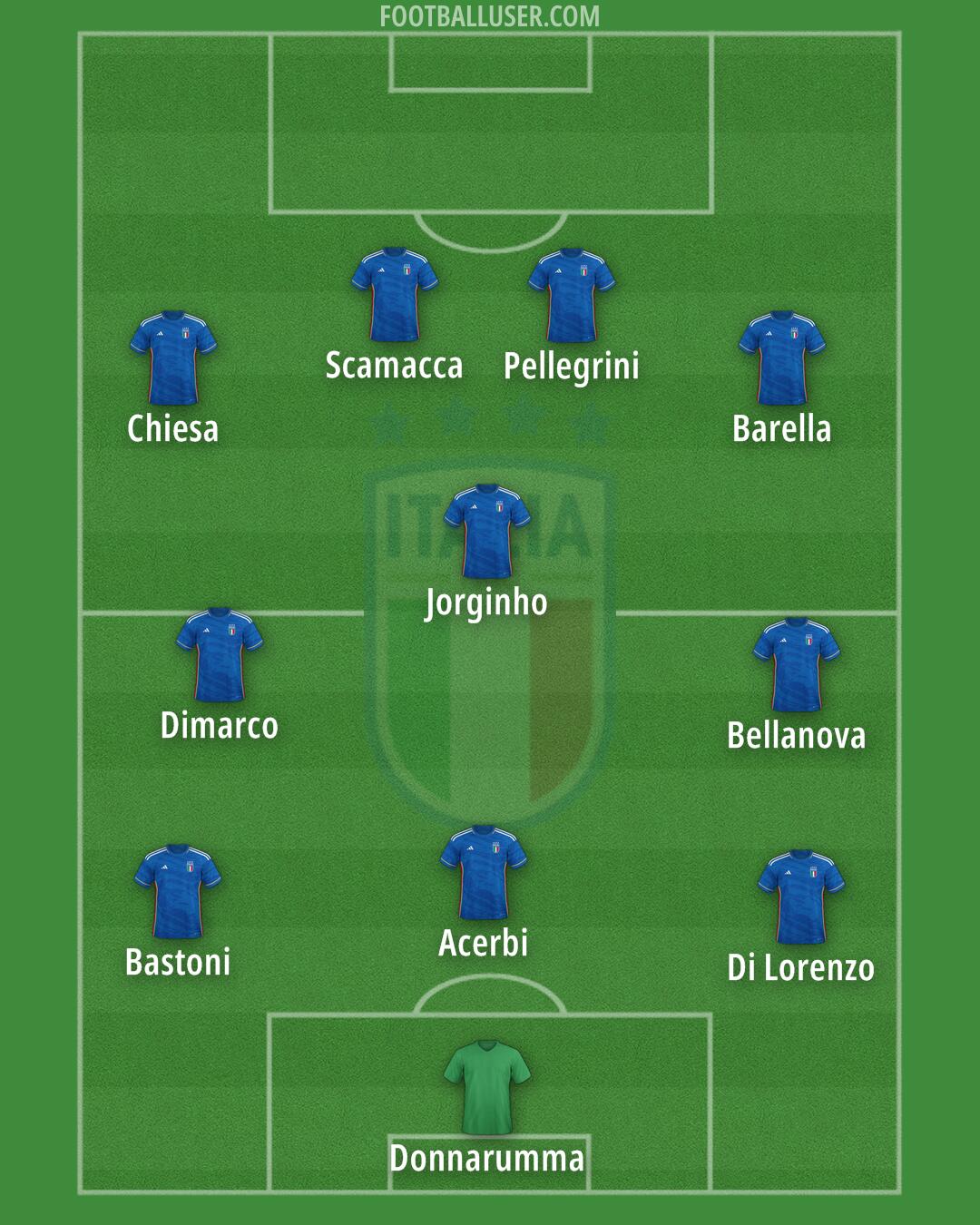

Italy National Football Team Formation
 July 21, 2024


Starting Lineup
Scamacca · Chiesa · Pellegrini · Barella · Jorginho · Dimarco · Bellanova · Bastoni · Acerbi · Di Lorenzo · DonnarummaItaly seeks to control games through high intensity and aggressive attacking numbers using a 3-3-4 formation. This lineup is built to overwhelm opponents in the final third and win the ball back high up the pitch. The goal is to use constant pressure and wide movement to break down defensive lines and keep the play moving forward.
Donnarumma operates between the posts to manage the defensive line. The back three consists of Acerbi as the central defender, with Bastoni acting as the left centre-back and Di Lorenzo playing as the right centre-back. Acerbi acts as the leader of the line, providing coverage while Bastoni and Di Lorenzo step up to intercept passes. The unit functions by holding a high line to squeeze the space and keep the distance between the defense and the midfield small.
In the middle of the pitch, Jorginho operates as an attacking ten behind the two strikers. Dimarco and Bellanova act as two midfielders who work to link the defense and the attack, often pushing high to support the forwards. Jorginho uses his passing range to control the tempo and find teammates in advanced positions. Dimarco and Bellanova must track back to cover the wide areas when the team loses possession, ensuring the midfield remains compact.
The attacking unit is highly aggressive with four players pushing the opposition back line. Pellegrini and Scamacca act as a duo of centre-forwards, with Scamacca often acting as a target man to hold up the ball. Barella plays on the right wing to cut inside and create chances, while Chiesa operates on the left wing with his ability to drive at defenders. These four forwards press in pairs from the front to force a long ball from the opponent.
The main tactical advantages for Italy include wide overloads from the movement of Dimarco and Bellanova and the ability to press high in coordinated waves. By using four attackers, the team can pin the last defender and create runs in behind. This formation also allows for rapid transitions when the ball is won back high up the pitch.
This 3-3-4 formation provides a heavy attacking presence designed to dominate possession and force errors. It is best suited for matches where Italy needs to break down a low block through sheer numbers in the box.