
Roma Football Formation
 July 22, 2024


Starting Lineup
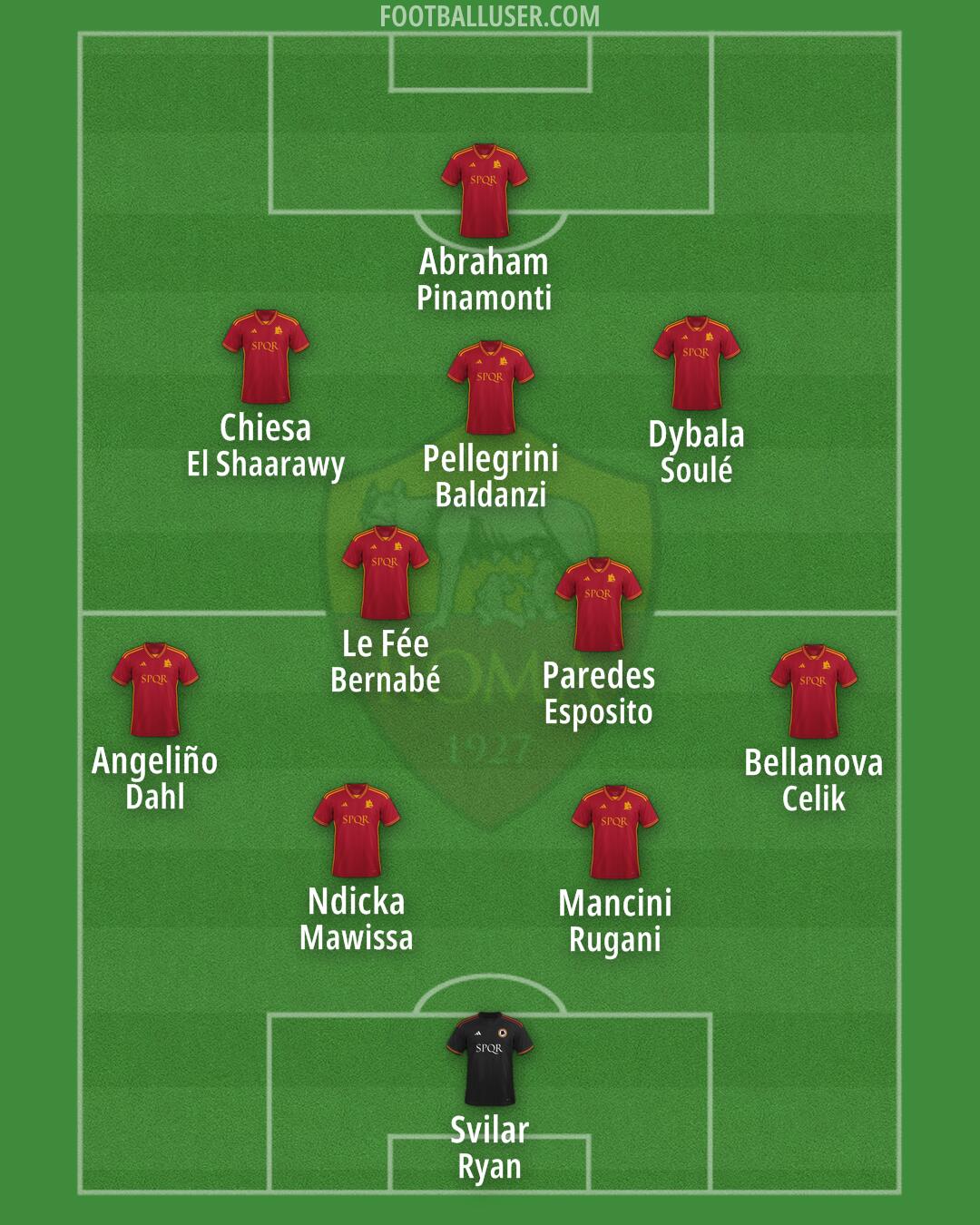
Paredes (Esposito) · Le Fée (Bernabé) · Pellegrini (Baldanzi) · Dybala (Soulé) · Chiesa (El Shaarawy) · Abraham (Pinamonti) · Angeliño (Dahl) · Ndicka (Mawissa) · Mancini (Rugani) · Bellanova (Celik) · Svilar (Ryan)Roma aims to play a high intensity game built on rapid transitions and heavy pressure, utilizing a 2-4-4 formation. This lineup seeks to dominate the pitch by pushing bodies forward to win the ball back high up the pitch. By spreading the players across the attacking half, the team intends to overwhelm the opposition with numbers in the final third and force turnovers through aggression.
Svilar starts between the posts to organize the back line. The defensive unit is very aggressive with only two central defenders, Mancini and Ndicka, who must remain concentrated to prevent being caught out of position. Mancini provides aerial strength and physical presence, while Ndicka acts as the covering defender to sweep behind when the team pushes high. This narrow defensive block requires the midfielders to work hard to protect the space behind them.
The midfield works in a central block to bridge the gap between the two defenders and the four attackers. Paredes acts as the pivot to shield the defence and recycle possession, while Le Fée plays as the attacking ten to create chances. Bellanova and Angeliño operate in the half spaces, providing energy to drive forward with the ball and connect the lines. This group must press aggressively to win the ball back high up the pitch and prevent the opposition from playing through the lines.
The front line is extremely wide and dangerous, using four attackers to stretch the defence. Dybala plays as an inverted winger on the right, looking to cut inside and create. On the left, Chiesa uses his pace to attack the flank or run in behind. In the central areas, Abraham acts as a physical presence to hold up the ball, while Pellegrini plays as a second striker to make late runs into the box. This attacking quartet is designed to attack in combinations and isolate wide players in one on one situations.
Roma offers significant tactical advantages through this lineup. The team can create wide overloads and numerical superiority in the attacking third. By committing so many players forward, they create high pressure in coordinated waves, which can pin the last defender and force mistakes. The speed of transition is a key weapon, as the team is always ready to hit in behind on the transition once the ball is recovered.
This 2-4-4 formation is built for a high risk, high reward style of football. It is best suited for games where Roma needs to break down a low block or overwhelm an opponent through sheer offensive volume.