Birmingham Football Formation
 July 22, 2024


Starting Lineup
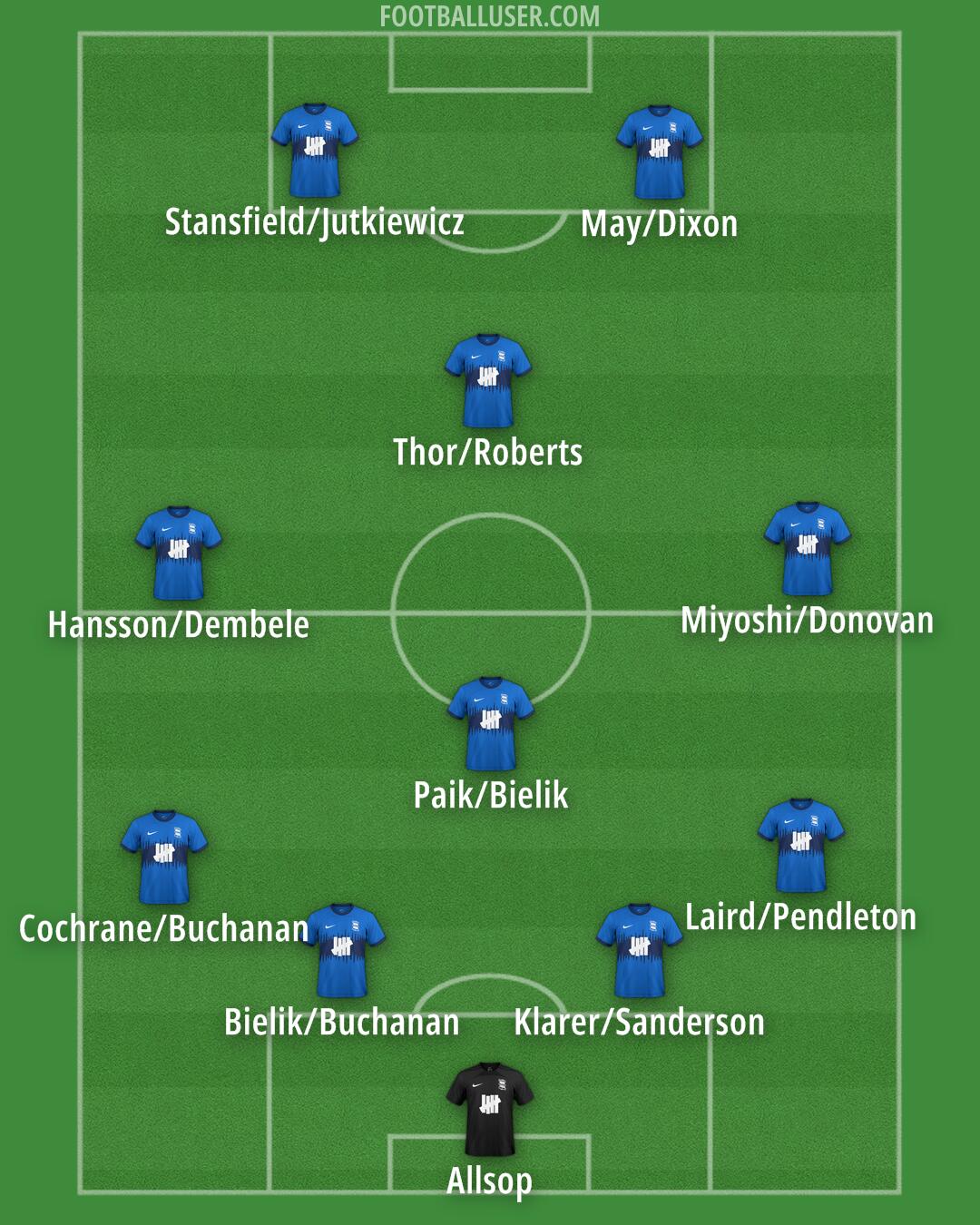
Allsop · Laird/Pendleton · Klarer/Sanderson · Bielik/Buchanan · Cochrane/Buchanan · Paik/Bielik · Thor/Roberts · Miyoshi/Donovan · Hansson/Dembele · Stansfield/Jutkiewicz · May/DixonBirmingham aims to be defensively solid and rely on quick transitions using a 5-3-2 formation. This lineup is built to sit deep when out of possession and then strike with verticality once the ball is won. By staying compact, Birmingham can frustrate opponents and use the space behind their defensive line to launch attacks.
Allsop guards the goal as the last line of defense. The defensive unit functions with a back five that can shift between a narrow block and a wider stance. Paik sits as the central man in the trio, acting as the primary defender to win the second ball. To his sides, Bielik or Buchanan play as left centre-backs, while Klarer or Sanderson occupy the right centre-back spot to defend zonally. The wing backs, Cochrane or Buchanan on the left and Laird or Pendleton on the right, are tasked with providing width and tracking back to maintain a strong defensive line.
The midfield consists of a three-man midfield with a carrier and creative elements. Hansson or Dembele works on the left side to connect the defensive and attacking lines. Miyoshi or Donovan operates on the right to help recycle possession. Thor or Roberts plays as an attacking ten behind the strikers, looking to arrive late into the box or find the feet of the forwards. This midfield group works to squeeze the space between the lines and ensure the team stays compact when the opposition tries to play through the middle.
Birmingham employs two forwards in a partnership to lead the line. Stansfield or Jutkiewicz leads the attack, often playing as a target man to hold up the ball. May or Dixon plays as the second striker, looking to make runs in behind or combine in tight spaces with the main forward. The wide areas are supported by the wing backs who will overlap the winger to deliver crosses into the box. When the team wins the ball, they look to break quickly and exploit the space left by the opponent.
The main tactical advantages of this formation include the ability to maintain extreme compactness when defending in a low block. The presence of three central defenders allows the team to protect the middle of the pitch effectively. Furthermore, the wing backs provide the width necessary to stretch the defence during transitions, creating isolation for the forwards.
This 5-3-2 formation provides a reliable platform for teams that want to absorb pressure and hit on the break. It is best suited for matches against ball dominant sides where controlling space is more important than controlling the ball.