
Roma Football Formation
 August 6, 2024


Starting Lineup
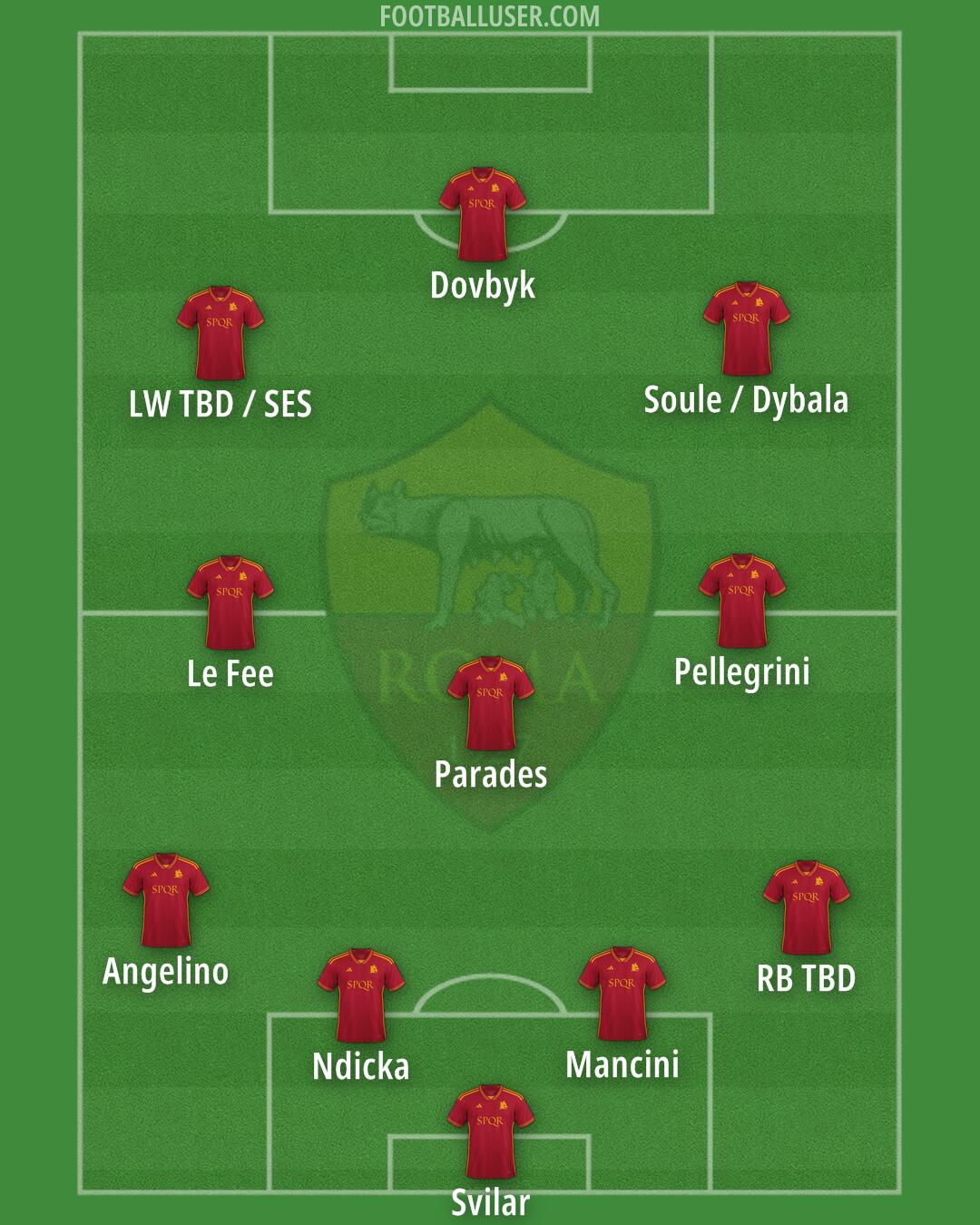
Svilar · Mancini · Ndicka · Angelino · RB TBD · Parades · Le Fee · Pellegrini · Soule / Dybala · LW TBD / SES · DovbykRoma focuses on high energy and vertical play within a 4-3-3 formation. This lineup is built to win the ball back high up the pitch and move quickly toward the goal. By using this setup, the team looks to stretch the defence and create chances through direct passing and rapid transitions.
Svilar sits between the posts to start the build up from the back. The defensive line uses a flat back four where Mancini acts as a dominant force in the air and a leader in the unit. Ndicka plays alongside him to cover space and intercept passes. Angelino pushes up as an attacking full back to provide width on the left, while the RB TBD must track back to secure the flank. This unit works to squeeze the space between the lines and maintain a high line to keep the team compact.
The midfield functions with a single pivot system. Paredes sits in front of the back four to shield the defence and recycle possession. Le Fee acts as a carrier to drive forward with the ball and link the defensive and attacking lines. Pellegrini operates as an inverted eight, making late runs into the box and finding pockets of space between the lines. This three man midfield works to compress the midfield and prevent the opposition from playing through the center.
Roma utilizes a front three to pin the last defender. Dovbyk acts as a physical presence to hold up the ball and win the header in the box. On the flanks, Soule or Dybala operate as inverted wingers who cut inside to create goal scoring chances. The LW TBD provides additional width to ensure the team can spread wide. These attackers press from the front to force a long ball and use combinations to break the line.
This formation offers significant tactical advantages through its ability to press high in coordinated waves. The presence of Angelino allows for wide overloads from overlapping full backs, which creates numerical superiority in the final third. Additionally, the midfield trio allows Roma to win the second ball and control the tempo when they need to sit deep.
The 4-3-3 formation provides Roma with a balanced way to transition from a mid block to a direct attack. It is best suited for matches against teams that play with a high defensive line and leave space behind their defenders.