Man City Football Formation
 August 15, 2024


Starting Lineup
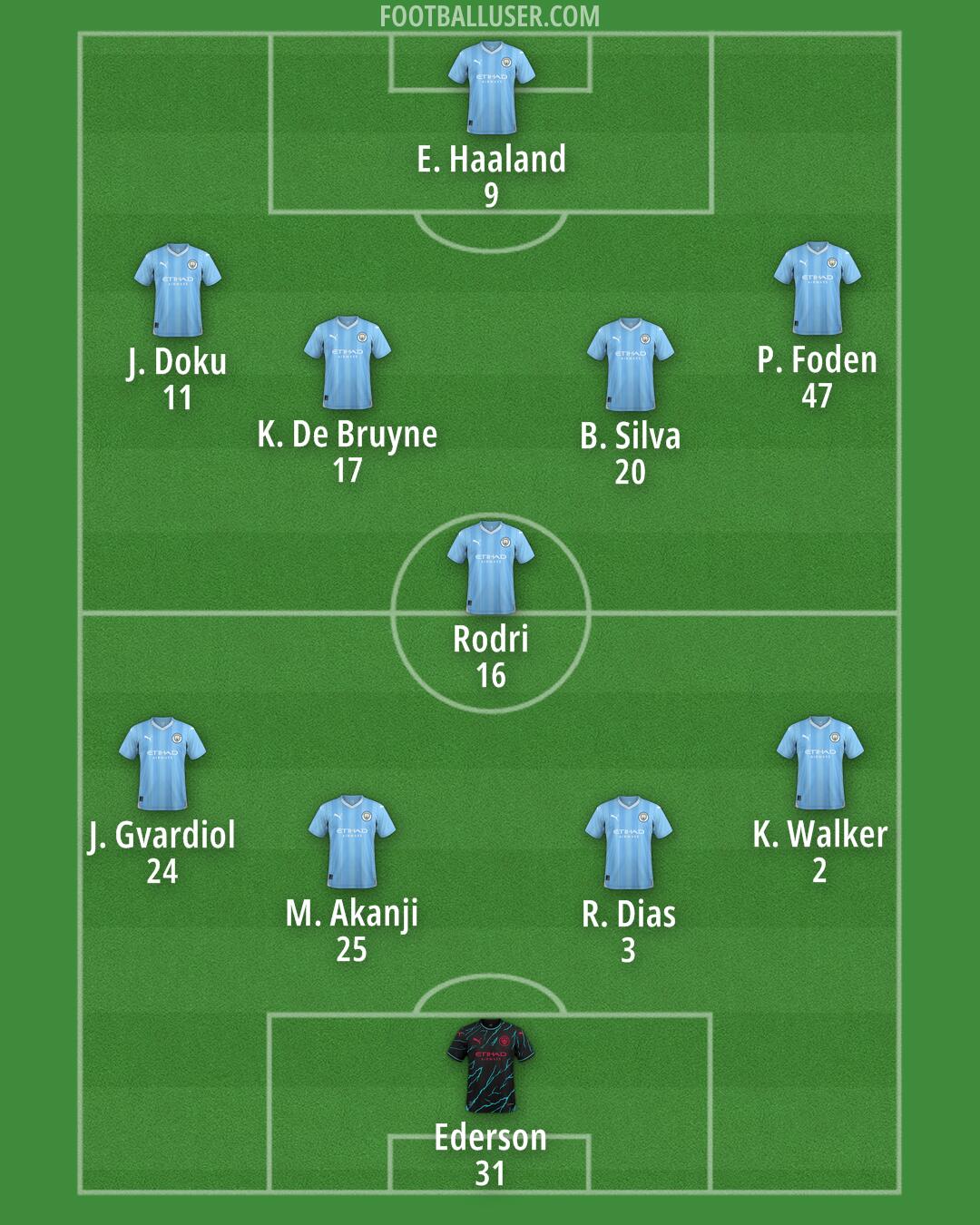
Ederson (31) · K. Walker (2) · R. Dias (3) · M. Akanji (25) · J. Gvardiol (24) · Rodri (16) · P. Foden (47) · B. Silva (20) · K. De Bruyne (17) · J. Doku (11) · E. Haaland (9)Man City aims to control games through high intensity and heavy pressing using a 5-4-1 formation. This lineup is built to squeeze the pitch and use quick transitions to punish opponents. The team relies on ball retention and verticality to move from a defensive block into a lethal attacking force.
Ederson acts as the first line of build up, playing short from the back to start attacks. The defensive unit operates with a back five that provides massive coverage across the width of the pitch. Rodri sits in the center as a dominant ball playing defender who can step into midfield to create a temporary overload. R. Dias acts as a covering defender with high concentration, while M. Akanji provides aerial strength and ability to defend zonally. The wing backs, K. Walker and J. Gvardiol, are tasked with covering the flanks, with Walker using his recovery speed to defend deep and Gvardiol pushing higher to support the midfield.
The midfield works in a flat four to maintain compactness and control the central areas. B. Silva and K. De Bruyne operate as the central engine, with De Bruyne using his immense passing range to break the line and Silva working to recycle possession. These two connect the back five to the front line by moving between the lines. J. Doku and P. Foden occupy the wide areas to provide width and stretch the defence. Doku looks to take on defenders with his dribbling style, while Foden finds pockets of space to arrive late into the box.
In the final third, E. Haaland acts as a lone pressing centre forward to pin the last defender and lead the line. The attack is built through wide combinations where J. Doku and P. Foden look to cut inside or deliver crosses. The team uses the wing backs to provide width, allowing the attackers to operate in the half spaces. When Man City wins the ball high up the pitch, they look to hit in behind on the transition with quick passes into the feet of Haaland.
A major advantage of this Man City formation is the ability to press high in coordinated waves, making it difficult for opponents to play out from the back. The back five ensures the team remains defensively solid while the wide players create overloads. This setup also offers great flexibility to shift between a narrow block and an expansive attacking lineup.
This formation provides a heavy defensive base that allows for rapid, direct attacking bursts. It is best suited for games against teams that sit deep and require patient penetration or high-speed counters against high lines.