
Sevilla Football Formation
 August 15, 2024


Starting Lineup
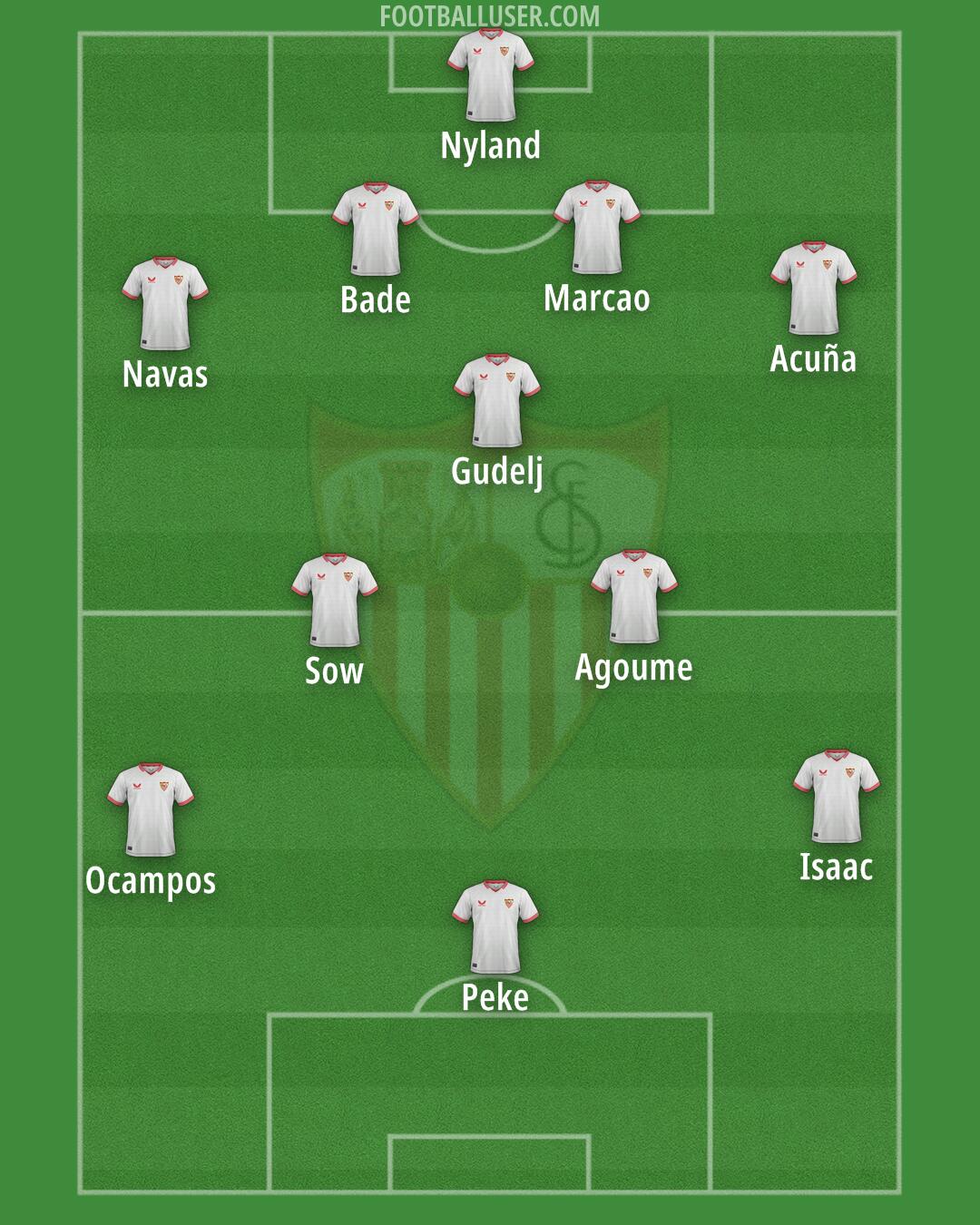
Nyland · Navas · Bade · Marcao · Acuña · Isaac · Peke · Ocampos · Gudelj · Sow · AgoumeSevilla focuses on a heavy defensive block and quick transitions using a 5-2-3. This formation is built to absorb pressure and hit opponents with verticality when the ball is won back. The lineup allows for a compact defensive unit that can quickly shift to support the front line.
Nyland stays between the posts to command the area and organize the defenders. The back line operates as a back five where Gudelj acts as the central anchor, while Marcao and Bade serve as the wider centre-backs. Marcao and Bade are tasked to cover the space behind the wing backs and win the second ball. Acuña and Navas play as attacking wing backs who provide width. Acuña pushes high to overlap the winger, while Navas works to carry the ball forward on the opposite flank. The defensive unit maintains a narrow block to deny central passing lanes.
A two man midfield is used to protect the back five and link the lines. Agoume and Sow work as a double pivot to shield the defence and recycle possession. Agoume focuses on winning the ball and playing short from the back, while Sow looks to drive forward with the ball to connect the defensive unit to the attack. They must work together to compress the midfield and prevent the opposition from playing through the lines.
The attacking unit uses three players across the front to stretch the defence. Peke acts as a lone striker to hold up the ball and pin the last defender. Isaac and Ocampos play as wide attackers who look to cut inside and create chances in the half spaces. Isaac stays wide to pull defenders away, whereas Ocampos searches for space to arrive late into the box. The team looks to break quickly and hit in behind on the transition through these three forwards.
One major strength of this Sevilla lineup is the ability to create wide overloads from the attacking wing backs. Acuña and Navas can push high to overwhelm the opposition flanks. Another advantage is the compactness when defending in a low block, making it hard for opponents to find gaps. The team can also use the speed of transition to catch opponents out of position.
This formation provides a solid foundation for a team that wants to defend deep and strike on the break. It is best suited for games against teams that dominate possession and leave space behind their defensive line.