Chelsea Football Formation
 August 21, 2024


Starting Lineup
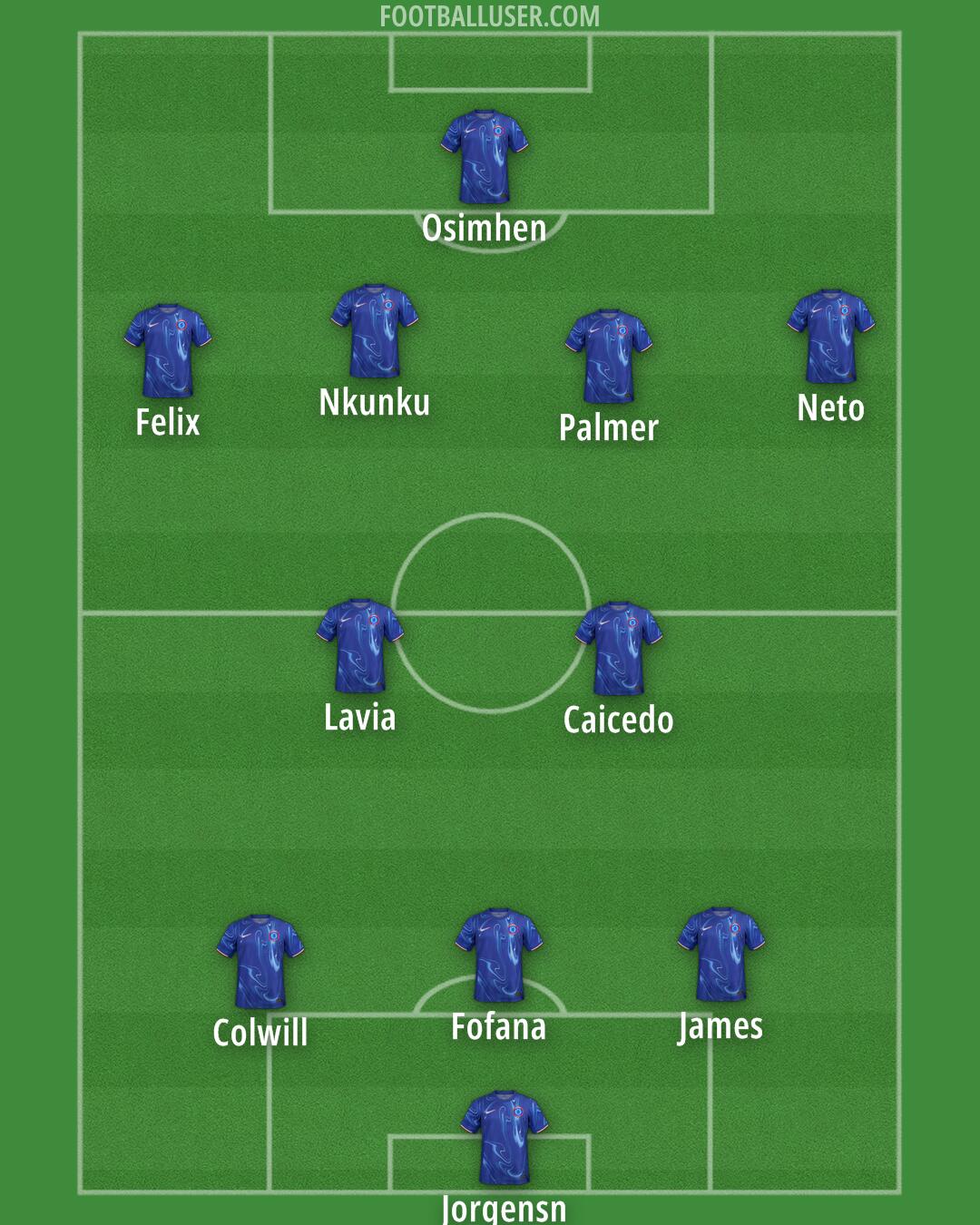
Osimhen · Felix · Neto · Palmer · Nkunku · Lavia · Caicedo · Colwill · Fofana · James · JorgensnChelsea aims to play a defensively solid game based on a 5-4-1 formation. This lineup is built to sit deep and strike on the transition by using a compact block to deny space between the lines. The goal is to frustrate the opposition and use speed to punish them once the ball is won back.
Jorgensn starts between the posts to command the area. The back line operates as a narrow defensive block with three central defenders. Lavia acts as the left center back to cover ground, while Caicedo plays as the right center back to help protect the zone. Fofana sits in the middle to win headers and clear the lines. On the flanks, James acts as an attacking wing back to provide width, whereas Colwill occupies the left wing back role to push up and support the midfield.
The midfield functions as a flat four designed to squeeze the space in the center of the pitch. Nkunku and Palmer occupy the central roles, with Palmer looking to carry the ball forward and Nkunku connecting the lines. Felix plays on the left to press aggressively and win the ball high, while Neto operates on the right to stretch the defense. This unit works to shield the defense and ensure they can quickly transition from a mid-block to an attacking stance.
Chelsea utilizes a lone striker in Osimhen to lead the line. He acts as a pressing center forward to harass the opposition back line and hold up the ball to allow others to join the attack. The wide players, Felix and Neto, look to create chances through runs in behind or by getting to the byline to deliver crosses. The formation relies on the movement of Palmer and Nkunku to arrive late into the box and support the central presence of Osimhen.
One major advantage of this Chelsea formation is the ability to maintain compactness when defending, making it difficult for opponents to play through the middle. The team also creates wide overloads when James and Colwill push forward to support the wingers. This allows the side to switch play quickly and isolate wide players in one on one situations during a break.
This formation relies on a strong defensive unit and clinical finishing in transition. It is best suited for matches against teams that dominate possession and require a disciplined low block to frustrate them.