Chelsea Football Formation
 August 21, 2024


Starting Lineup
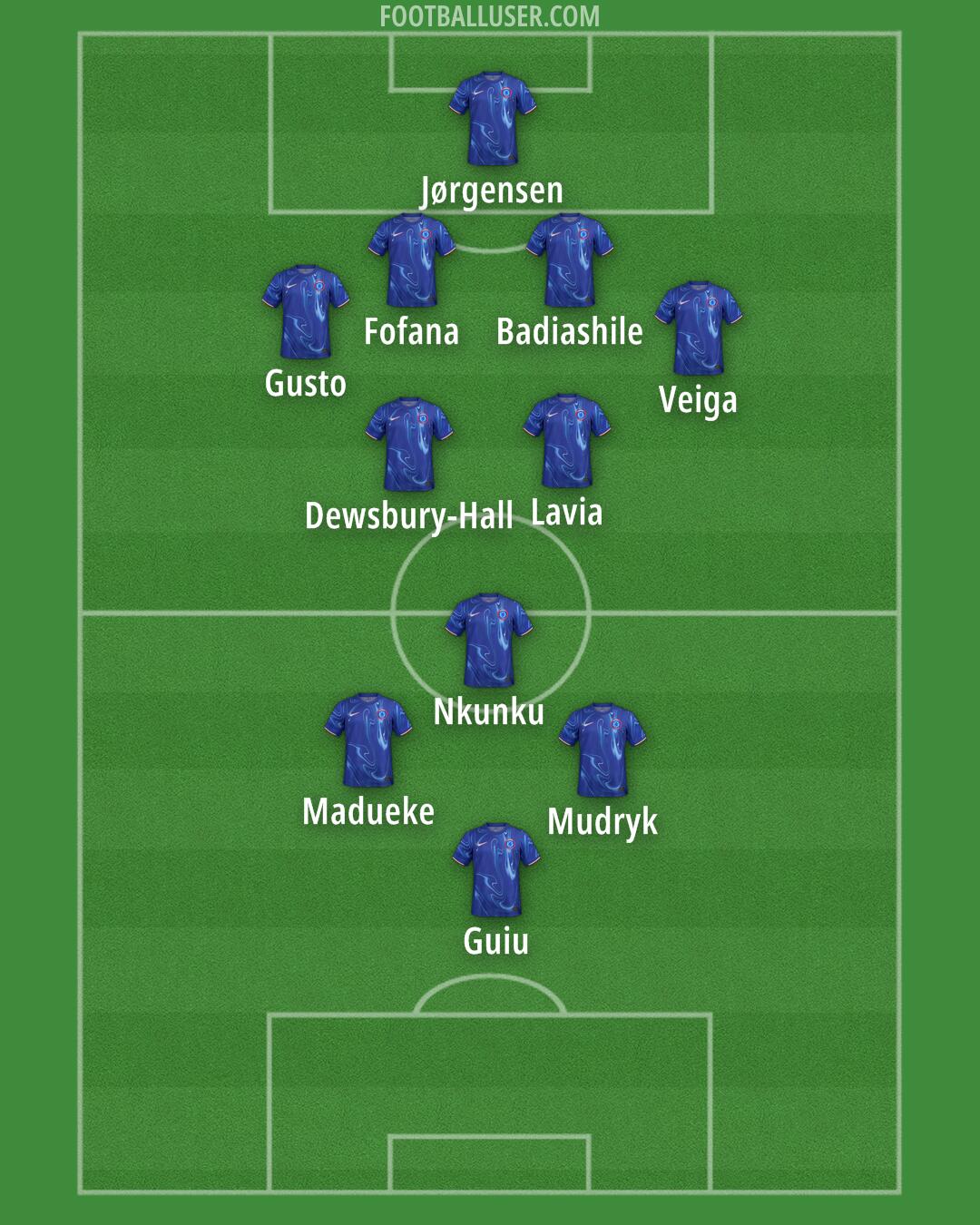
Jørgensen · Badiashile · Fofana · Gusto · Veiga · Lavia · Dewsbury-Hall · Nkunku · Madueke · Mudryk · GuiuChelsea focus on an aggressive high press using a 4-3-3 formation. The Blues want to win the ball high up the pitch to catch the opposition out of position and strike quickly. This lineup is built to play vertical football, looking to progress through the thirds with directness rather than just keeping possession.
In goal, Jørgensen stays alert to sweep behind the line when the team pushes up. The back four features Badiashile and Fofana as the central defenders, with Gusto and Veiga playing as the full backs. Badiashile and Fofana must defend zonally and be ready to step up to set the offside trap. Gusto and Veiga are expected to push forward to provide width, which means the central defenders must be ready to cover the wide areas. The unit works to keep the lineup compact when defending in a mid-block.
The midfield relies on a trio to control the center of the pitch. Lavia sits as the single pivot to shield the defence and pick up runners. Dewsbury-Hall plays as an inverted eight, driving forward to carry the ball and connect the defensive unit to the attack. Nkunku operates as an attacking ten in the hole, looking to find space between the lines and arrive late into the box. This group helps Chelsea recycle possession and move the ball from deep.
The attacking front line uses a lone striker in Guiu to lead the press from the front. Guiu works to hold up the ball and find the feet of his teammates. Mudryk and Madueke play as wide wingers to stretch the defence. Mudryk uses his pace to run in behind the opposition back line, while Madueke looks to cut inside and combine in tight spaces. This formation creates many chances through runs in behind and cutbacks from the byline.
A major tactical advantage is the ability to press high in coordinated waves to force a long ball. The team also gains numerical superiority in wide areas when Gusto and Veiga overlap the wingers. Finally, the speed of transition is a key factor, as the team can break quickly using the movement of the front three.
This 4-3-3 is built around high intensity and quick attacking movements. It is best suited for facing opponents that play a high line or struggle to play out from the back.