Liverpool Football Formation
 August 27, 2024


Starting Lineup
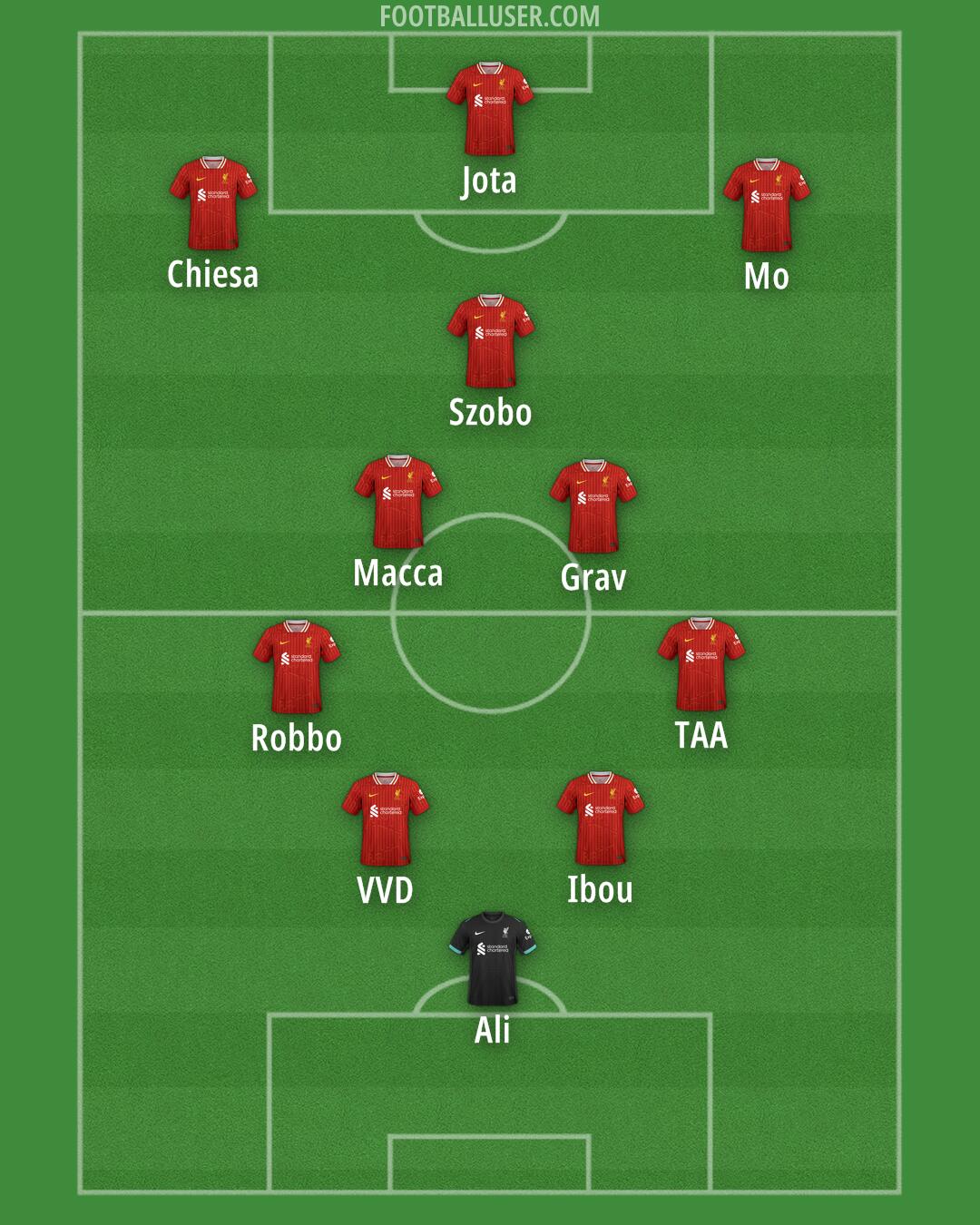
Chiesa · Mo · Jota · Szobo · Grav · Macca · TAA · Robbo · VVD · Ibou · AliLiverpool focuses on a high press and lightning fast transitions using a 4-3-3. This formation is built to win the ball high up the pitch and immediately threaten the opposition with verticality. The team aims to squeeze the space in the opponent's half to force mistakes and play through the lines quickly.
Ali sits between the posts to start the build up. The back line operates as a flat back four that can step up to set the offside trap. VVD acts as a ball playing defender with massive aerial strength, while Ibou covers the space behind as a mobile centre-back. On the flanks, TAA pushes high to provide width and deliver crosses, whereas Robbo acts as an attacking full back to overlap the winger. The whole defensive unit shifts together to maintain compactness and defend zonally.
The midfield relies on a three-man unit that connects the defense to the attack. Grav provides stability by sitting deep to shield the defense and win the second ball. Macca works as an inverted eight, driving forward with the ball and pressing aggressively to win it back high up the pitch. Szobo operates as an attacking ten behind the striker, looking to arrive late into the box and pick up runners. This group works to compress the midfield and deny the pivot of the opposition.
Liverpool employs three attackers to stretch the defense. Jota acts as a pressing centre-forward who works to pin the last defender and find the feet of the striker. On the wings, Mo cuts inside from the right to find goalscoring opportunities, using his clinical finishing and pace. Chiesa plays on the left as an inverted winger to create space for Robbo to overlap. The front line works in combinations to create runs in behind and deliver cutbacks from the byline.
This formation offers significant tactical advantages, specifically the ability to press high in coordinated waves to win the ball in dangerous areas. Liverpool also gains wide overloads from the overlapping full backs, which forces the opposition to pull wide and leave gaps in the middle. The speed of transition from the midfield to the front three allows the team to hit in behind on the transition before the opponent can recover.
The 4-3-3 lineup is designed to dominate games through relentless pressure and quick vertical play. It is best suited for matches against teams that struggle to play out from the back or leave large spaces behind their defensive line.