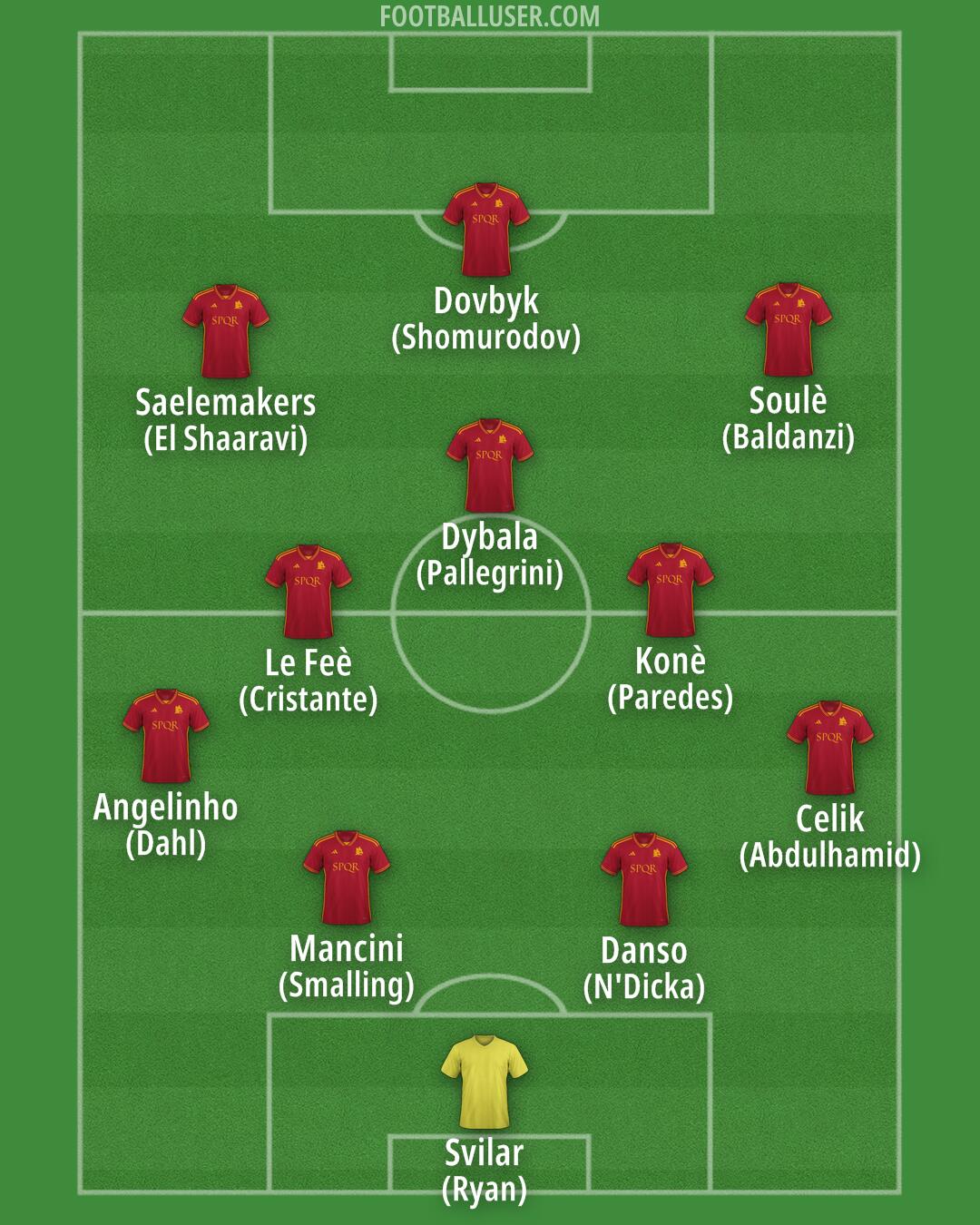

Roma Football Formation
 August 29, 2024
 caligola67


Starting Lineup
Svilar (Ryan) · Mancini (Smalling) · Danso (N'Dicka) · Angelinho (Dahl) · Celik (Abdulhamid) · Dybala (Pallegrini) · Konè (Paredes) · Le Feè (Cristante) · Soulè (Baldanzi) · Saelemakers (El Shaaravi) · Dovbyk (Shomurodov)Roma looks to win the ball high up the pitch and play through the lines with a 4-3-3 formation. This lineup focuses on high pressing and rapid transitions to catch opponents out of position. The team intends to control the tempo by using a high defensive line and quick ball movement to stretch the opposition.
Svilar stands between the posts to organize the back line. Roma uses a flat back four where Celik acts as a full back to provide width and Angelinho pushes forward from the left to overlap the midfield. Mancini and Danso form the central pair, with Mancini acting as a ball playing defender while Danso provides aerial strength and physical presence. This defensive unit aims to stay compact and squeeze the space to prevent any direct passes into the box.
The midfield operates as a three-man midfield with a carrier and a creative hub. Konè acts as the engine to carry the ball forward and win the second ball, while Le Feè links the defensive and attacking lines by recycling possession. Dybala plays as an attacking ten behind the striker, finding pockets of space between the lines to create chances. This group works to compress the midfield and ensure the team remains balanced when they lose the ball.
In the final third, the team uses three attackers across the front to pin the last defender. Dovbyk acts as a target man to hold up the ball and win headers, providing a focal point for the attack. Saelemakers and Soulè play as wide wingers who cut inside to create overloads in the half spaces. This front line is designed to hit in behind on the transition and use combination play to break the line.
One main advantage for Roma is the ability to press high in coordinated waves to win it back high up the pitch. The movement of Dybala and the wide attackers creates numerical superiority in the attacking third. Another strength is the speed of transition when the ball is won, allowing the team to exploit space quickly before the opponent can recover.
This 4-3-3 formation is built to dominate games through aggressive pressing and verticality. It is best suited for matches against teams that play a high line and leave space behind their defenders.