
Real Madrid Football Formation
 August 31, 2024


Starting Lineup
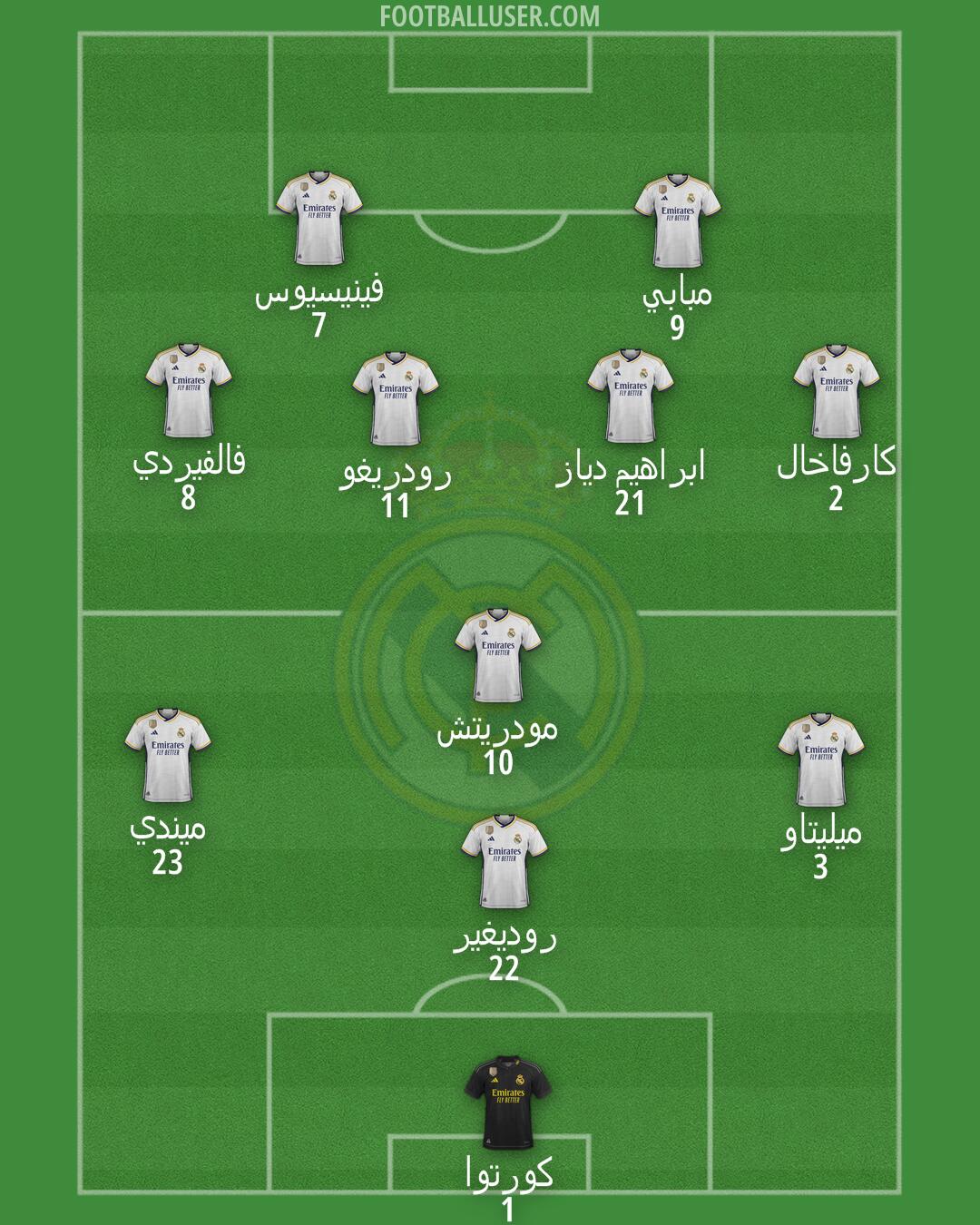
مبابي (9) · رودريغو (11) · فينيسيوس (7) · مودريتش (10) · فالفيردي (8) · ابراهيم دياز (21) · كارفاخال (2) · ميليتاو (3) · روديغير (22) · ميندي (23) · كورتوا (1)Real Madrid prioritizes quick transitions and direct attacking play through a 4-4-2. This lineup aims to win the ball and strike quickly before the opposition can get organized. The goal is to use speed and verticality to punish teams that leave space behind their defense.
كورتوا acts as the last line of defense to secure the goal. The back line consists of a flat back four with روديغير and مودريتش operating as the central defenders. روديغير uses his aerial strength to defend set pieces and crosses. ميندي plays as the left back to provide stability, while ميليتاو operates on the right side to cover wide areas. The defensive unit works to maintain a compact block to prevent through balls.
The midfield operates as a four man unit to control the center and the flanks. كارفاخال plays on the right side to provide width and support the attack. فالفيردي operates on the left, using his high work rate to track back and cover the wide area. In the center, رودريغو and ابراهيم دياز act as the engine room to connect the defense to the front line. رودريغو helps to press in a mid-block while ابراهيم دياز looks to carry the ball forward to break the lines.
Real Madrid utilizes two forwards in a partnership to lead the attack. فينيسيوس plays as the left striker, often cutting inside to create goal scoring chances with his dribbling style. مبابي plays as the right striker, looking to make runs in behind the defense to exploit space. The two attackers work to press the opposition back line to force errors. They combine in tight spaces and look to exploit the channels between the defenders.
One major advantage of this formation is the speed of transition when the team wins the ball. The combination of fast wingers and central midfielders allows Real Madrid to hit teams on the break effectively. The team also benefits from the ability to create wide overloads when the full backs push up to support the wide midfielders.
This 4-4-2 formation relies on rapid counter attacks and high individual quality in the final third. It is best suited for matches against teams that play a high line and leave significant space behind their defenders.