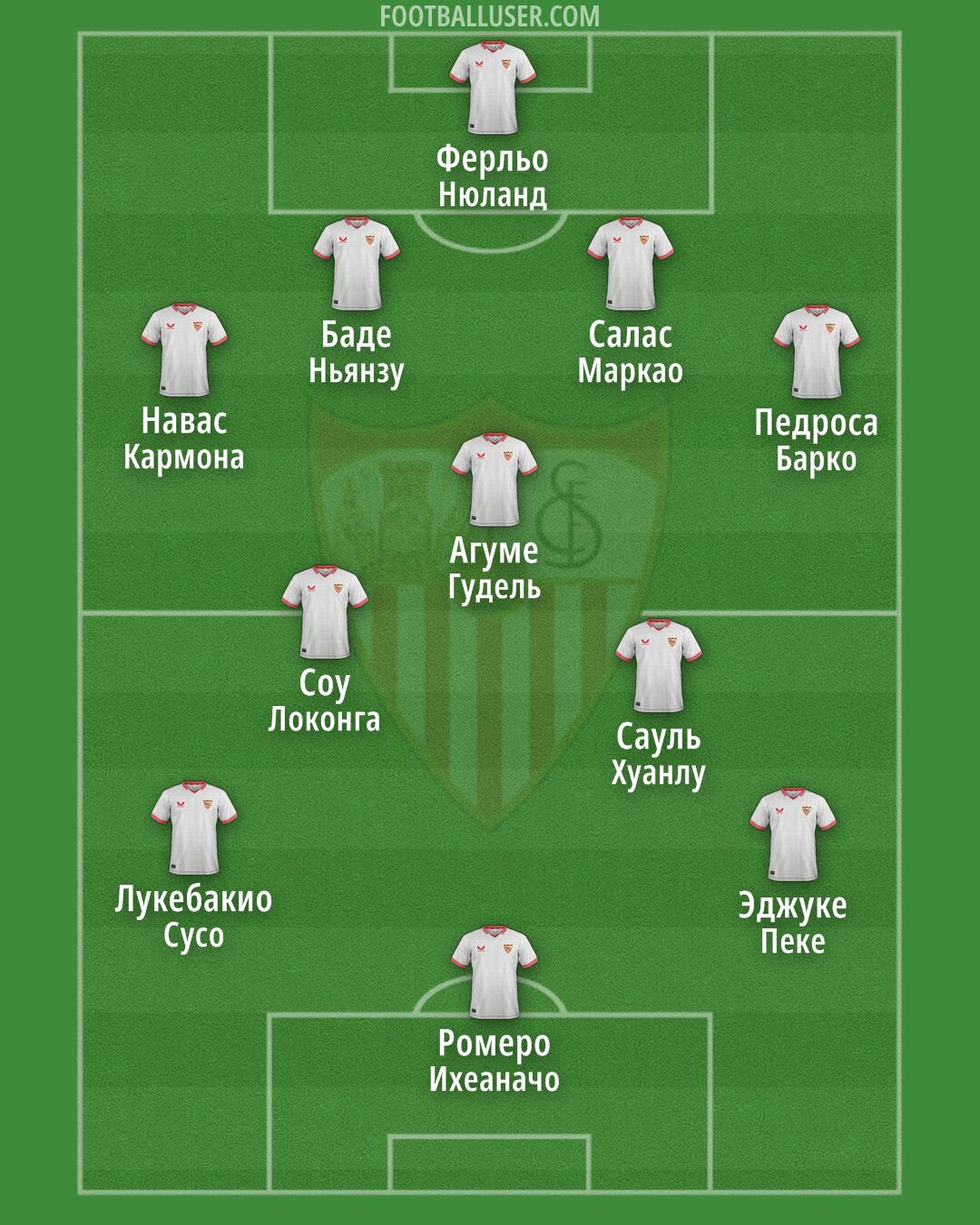

Sevilla Football Formation
 September 3, 2024


Starting Lineup
Ферльо (Нюланд) · Навас (Кармона) · Баде (Ньянзу) · Салас (Маркао) · Педроса (Барко) · Агуме (Гудель) · Соу (Локонга) · Сауль (Хуанлу) · Лукебакио (Сусо) · Эджуке (Пеке) · Ромеро (Ихеаначо)Sevilla seeks to win the ball high up the pitch and strike with speed, utilizing a 5-2-3 formation. This lineup is built to play with a high press and rapid transitions once possession is regained. The goal is to use the width of the pitch to stretch the opposition and create space for vertical runs.
Ферльо protects the goal as the last line of defense. The back five operates with a central trio of Агуме, Салас, and Баде. Агуме holds the center while Салас and Баде cover the half spaces to ensure the unit stays compact. Навас acts as an attacking wing back on the right, pushing high to support the attack, while Педроса performs the same role on the left. These wide defenders are expected to provide width and deliver crosses when the team moves into the final third.
The midfield consists of a two man unit featuring Соу and Сауль. This double pivot is tasked with controlling the center and winning second balls. Сауль works to connect the defensive line to the attack by carrying the ball forward, while Соу focuses on pressing aggressively to win the ball back high up the pitch. Together, they must squeeze the space between the lines to prevent the opposition from playing through them.
Sevilla employs three attackers to pin the last defender. Ромеро acts as the lone striker, working to hold up the ball and find the feet of his teammates. On the flanks, Эджуке and Лукебакио operate as inverted wingers who cut inside to create goal scoring opportunities. This movement creates space for the wing backs to overlap the winger. The forwards press the opposition back line constantly to force a long ball and maintain pressure.
This formation offers significant advantages through wide overloads from the overlapping runs of Навас and Педроса. The team can also create numerical superiority in the attacking third by having the wingers move centrally. When defending, the narrow defensive block ensures compactness, making it difficult for opponents to find gaps between the players.
Sevilla relies on this setup to dominate transitions and exploit space behind the opposition defense. This formation is best suited for matches against teams that play a high line and leave gaps in the wide areas.