Wolves Football Formation
 September 20, 2024


Starting Lineup
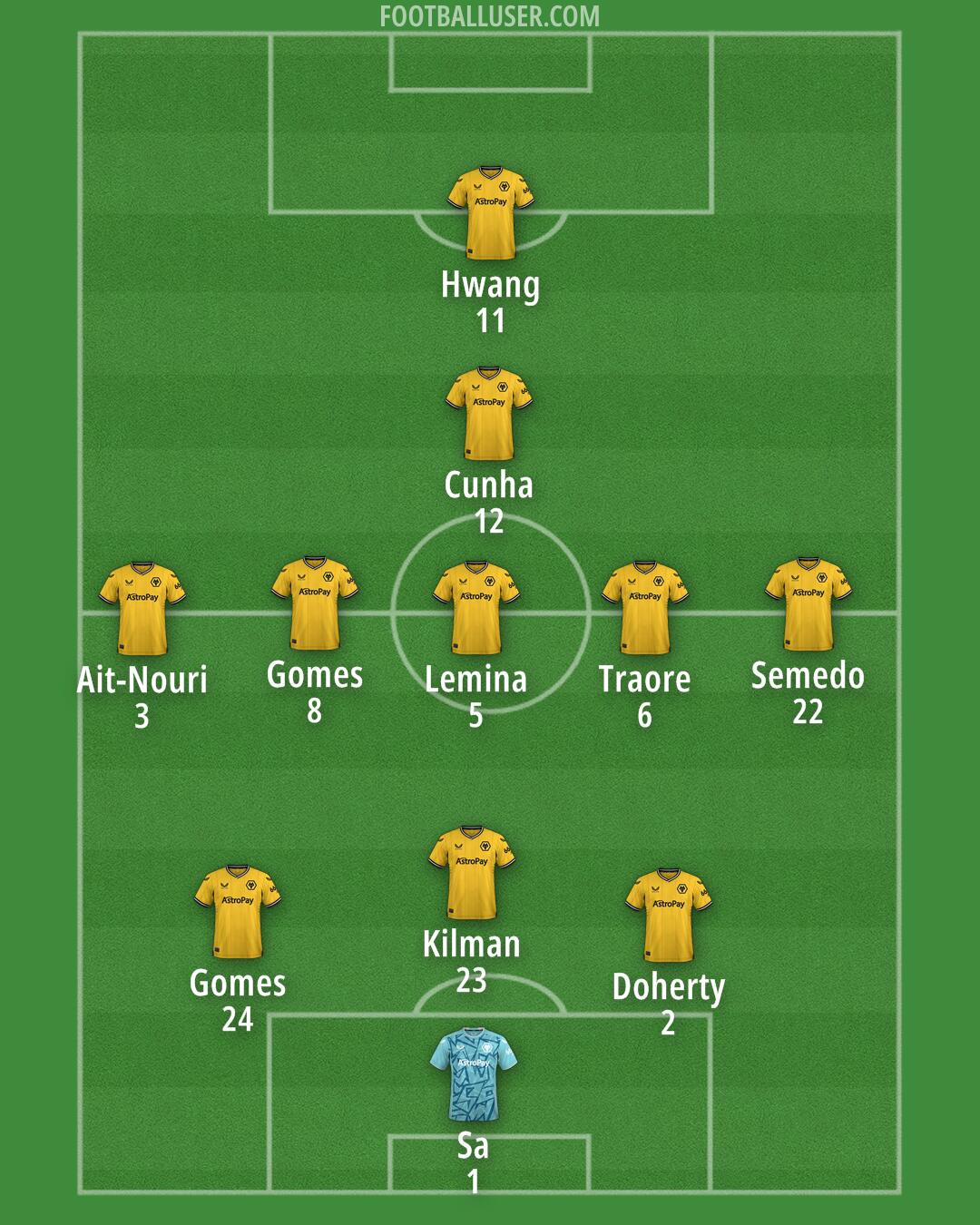
Sa (1) · Gomes (24) · Kilman (23) · Doherty (2) · Ait-Nouri (3) · Gomes (8) · Lemina (5) · Traore (6) · Semedo (22) · Cunha (12) · Hwang (11)Wolves look to control the rhythm through a heavy midfield presence in this 3-6-1 formation. This lineup is built to dominate the middle of the pitch and use a high press to win the ball back quickly. By crowding the center, the team can recycle possession and move the ball through the thirds with control.
Sa sits between the posts to command the area and organize the defensive unit. A back three of Doherty, Kilman, and Gomes provides a solid base to defend against central runs. Kilman acts as the central anchor to clear the lines and win the header, while Gomes and Doherty provide coverage to the sides. This back line can step up to squeeze the space and manage the offside trap when the team plays with a high line.
The midfield is the engine of the Wolves lineup, operating as a central block that connects the defense to the attack. Lemina sits in the middle to shield the defense and win the second ball, allowing the more advanced players to move forward. Traore and Gomes occupy the central spaces to drive forward with the ball and press aggressively in a mid-block. On the flanks, Semedo and Ait-Nouri act as wide midfielders who provide width and track back to help the defense. This group works to compress the midfield and deny the turn to opposition players.
Cunha plays as a second striker in the hole, operating between the opposition lines to create chances. This movement allows Hwang to act as a pressing centre-forward who can hold up the ball and wait for support. The attack relies on combinations in tight spaces, with Cunha looking to play through the lines to find Hwang or pull wide to create overloads. When the team transitions, the wide players like Semedo and Ait-Nouri push forward to support the front line and deliver crosses.
One major advantage of this 3-6-1 is the numerical superiority in midfield, which makes it difficult for opponents to find passing lanes. The team can also use the wide midfielders to create overloads against the opposition full backs. This makes the formation very strong when trying to control games through possession and high-intensity pressing.
This formation relies on a congested central area to control the tempo of the match. It is best suited for facing teams that struggle to play through a crowded midfield or those that rely on slow build up play.