Wolves Football Formation
 September 25, 2024
 MrFinba


Starting Lineup
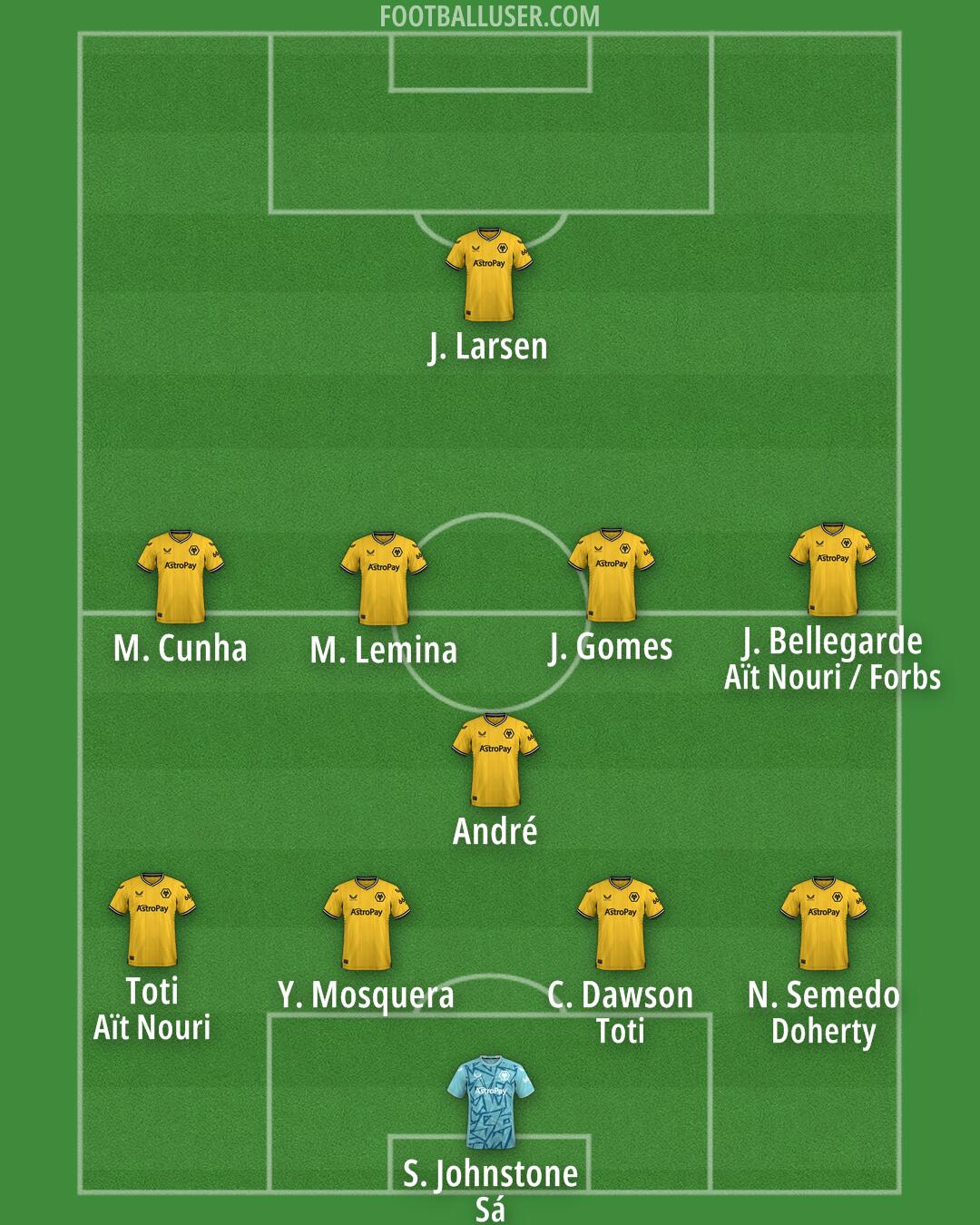
S. Johnstone (Sá) · N. Semedo (Doherty) · C. Dawson (Toti) · Y. Mosquera · Toti (Aït Nouri) · André · M. Cunha · M. Lemina · J. Gomes · J. Bellegarde (Aït Nouri / Forbs) · J. LarsenWolves focus on being defensively solid and hitting teams on the break, utilizing a 5-4-1 formation. This lineup is built to sit deep and remain compact, inviting pressure before using speed to exploit space in transition. The goal is to deny the opposition central access while remaining a threat through quick vertical movements.
S. Johnstone guards the goal as the lone keeper behind a back five. André sits in the center of the defense to anchor the unit, acting as a central shield. C. Dawson plays as the right center back, while Y. Mosquera occupies the left center back position to provide coverage. N. Semedo operates as a right wing back, looking to provide width and support the attack, whereas Toti acts as the left wing back to balance the defensive line. This five man unit can shift into a narrow defensive block to protect the middle of the pitch.
The midfield works in a flat four to maintain horizontal compactness. J. Gomes and M. Lemina occupy the central roles, where they work to win the second ball and protect the center. M. Lemina uses his ball carrying ability to drive the team forward once possession is regained. J. Bellegarde and M. Cunha provide the width in the midfield line, with M. Cunha often tasked to press from the front and track back to support the defense. This group connects the defensive unit to the lone striker through quick passes and carries.
Wolves rely on a lone striker, J. Larsen, to lead the line. Larsen acts as a target man to hold up the ball and allow the midfield to push up the pitch. The attackers focus on pressing the opposition back line to force a long ball. M. Cunha and J. Bellegarde push up to support him, creating combinations in transition. The team looks to exploit the wide areas when N. Semedo and Toti move forward to offer overlapping support, creating chances through quick balls into the channels or cutbacks.
This formation offers significant tactical advantages through its defensive compactness and ability to absorb pressure. The five man back line makes it very difficult for opponents to find space between the lines or through the middle. Wolves can also use the speed of transition to catch teams out of position, especially when the wing backs push up to create wide overloads.
The 5-4-1 formation provides Wolves with a reliable way to stay organized and difficult to break down. It is best suited for matches against dominant teams where sitting deep and countering at pace is necessary.