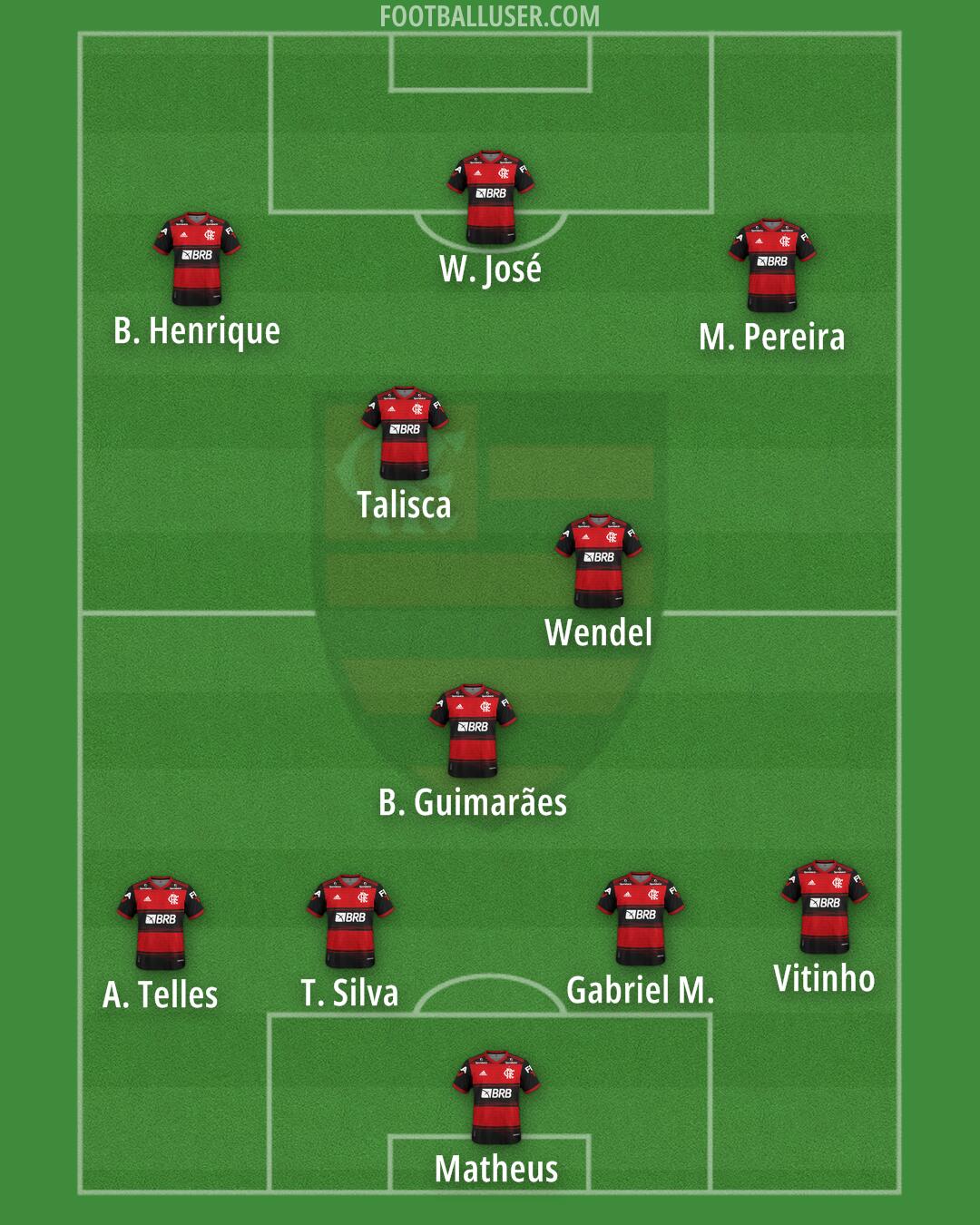

Flamengo Football Formation
 September 28, 2024
 psimoestr


Starting Lineup
Matheus · Vitinho · Gabriel M. · T. Silva · A. Telles · B. Guimarães · Wendel · Talisca · M. Pereira · W. José · B. HenriqueFlamengo seeks to control matches through a high press and verticality using a 4-3-3. This formation is built to pin the opposition back and win the ball high up the pitch to create quick scoring chances. By spreading the pitch wide, the team aims to stretch the defence and create gaps for runners to exploit.
Matheus stays between the posts to command the area and start play. The back line operates as a flat back four with Vitinho and A. Telles providing width. Vitinho acts as an attacking full back to push high, while A. Telles can cut inside to help control the middle. T. Silva uses his experience to lead the line, acting as a ball playing defender who can step up to intercept play, while Gabriel M. provides cover and remains dominant in the air. The defensive unit works to squeeze the space between the lines and maintain a high line to keep the team compact.
The midfield is a three man midfield with a carrier and a creative spark. B. Guimarães acts as the single pivot to shield the defence and recycle possession. Wendel works as an inverted eight, driving forward with the ball to link the defensive and attacking lines. Talisca plays as an attacking ten behind the striker, looking to find pockets of space and arrive late into the box. This trio works to win the second ball and ensure Flamengo stays strong in the central areas during transitions.
Flamengo uses three attackers across the front to stretch the opposition. B. Henrique and M. Pereira operate as inverted wingers who cut inside to create goalscoring opportunities. W. José plays as a pressing centre-forward to lead the line and hold up the ball for others. The forwards press from the front to force a long ball from the opposition. This front three relies on overlaps from the full backs and quick combinations to hit in behind on the transition.
One major advantage for this lineup is the ability to press high in coordinated waves, making it difficult for opponents to build out from the back. The team also finds success through wide overloads, as the full backs push up to support the wingers. This creates numerical superiority in wide areas and allows the team to switch play quickly to find free players.
This 4-3-3 formation provides a potent mix of defensive stability and attacking intent. It is best suited for games where the team needs to dominate possession and overwhelm the opponent in the final third.