
Palmeiras Football Formation
 September 28, 2024
 psimoestr


Starting Lineup
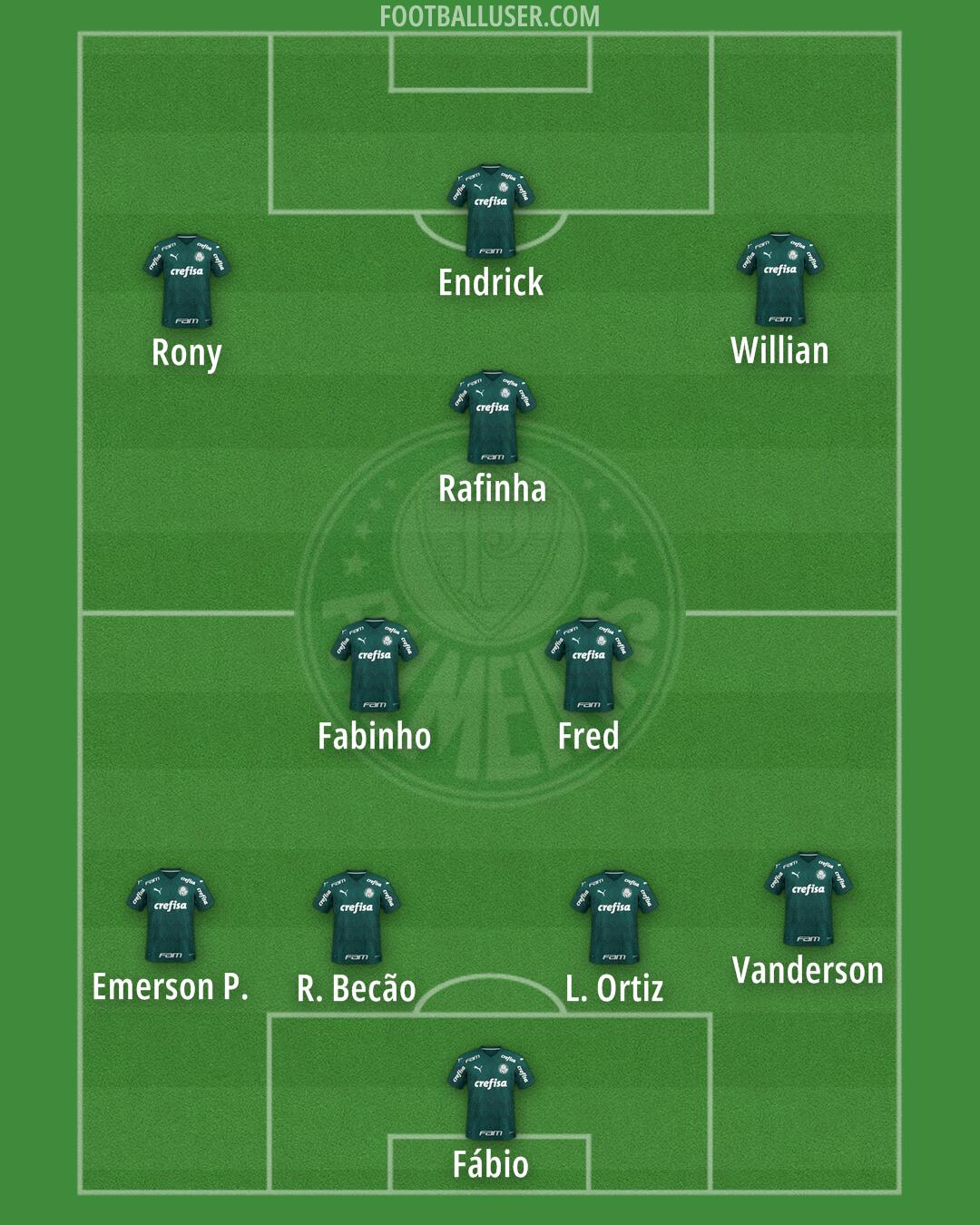
Fábio · Vanderson · L. Ortiz · R. Becão · Emerson P. · Fabinho · Fred · Rafinha · Willian · Endrick · RonyPalmeiras plays with a 4-3-3 formation. This team seeks to play a high press and vertical style of football. They look to win the ball high up the pitch and move the play forward with speed to catch the opposition off guard.
Fábio guards the goal as the last line of defence. The back four functions as a zonal line to manage space. L. Ortiz and R. Becão form the central pairing, with R. Becão using his aerial strength to win headers and L. Ortiz covering the space behind. Vanderson and Emerson P. act as attacking wing backs who overlap the winger to provide width. The defensive unit works to squeeze the space and keep the opponent pinned back.
The midfield features a three-man group with a mix of roles. Fabinho and Fred act as a double pivot to shield the defence and win the second ball. Fred drives forward with the ball to link the play, while Fabinho can drop between the centre-backs to receive and recycle possession. Rafinha operates as an attacking ten behind the striker, looking to arrive late into the box or play through the lines. This group helps Palmeiras move the ball from the back to the front.
Up front, the team uses three attackers to stretch the defence. Endrick acts as a pressing centre-forward who looks to make runs in behind. On the flanks, Rony cuts inside from the left to create central presence, while Willian plays on the right to spread wide. The forwards aim to hit in behind on the transition and use combinations to break the line. They work to pin the last defender and create space for Rafinha to move into.
This formation offers the advantage of being able to press high in coordinated waves. The team can also create wide overloads when Vanderson and Emerson P. push up the pitch. Another strength is the speed of transition, allowing the players to counter at pace once the ball is won. This lineup allows Palmeiras to find numerical superiority in the middle of the pitch when the midfielders shift to support the attack.
The 4-3-3 formation is built for high intensity and quick attacking bursts. It works best against opponents who struggle to play out from the back or leave large gaps behind their midfield.