Wolves Football Formation
 October 13, 2024


Starting Lineup
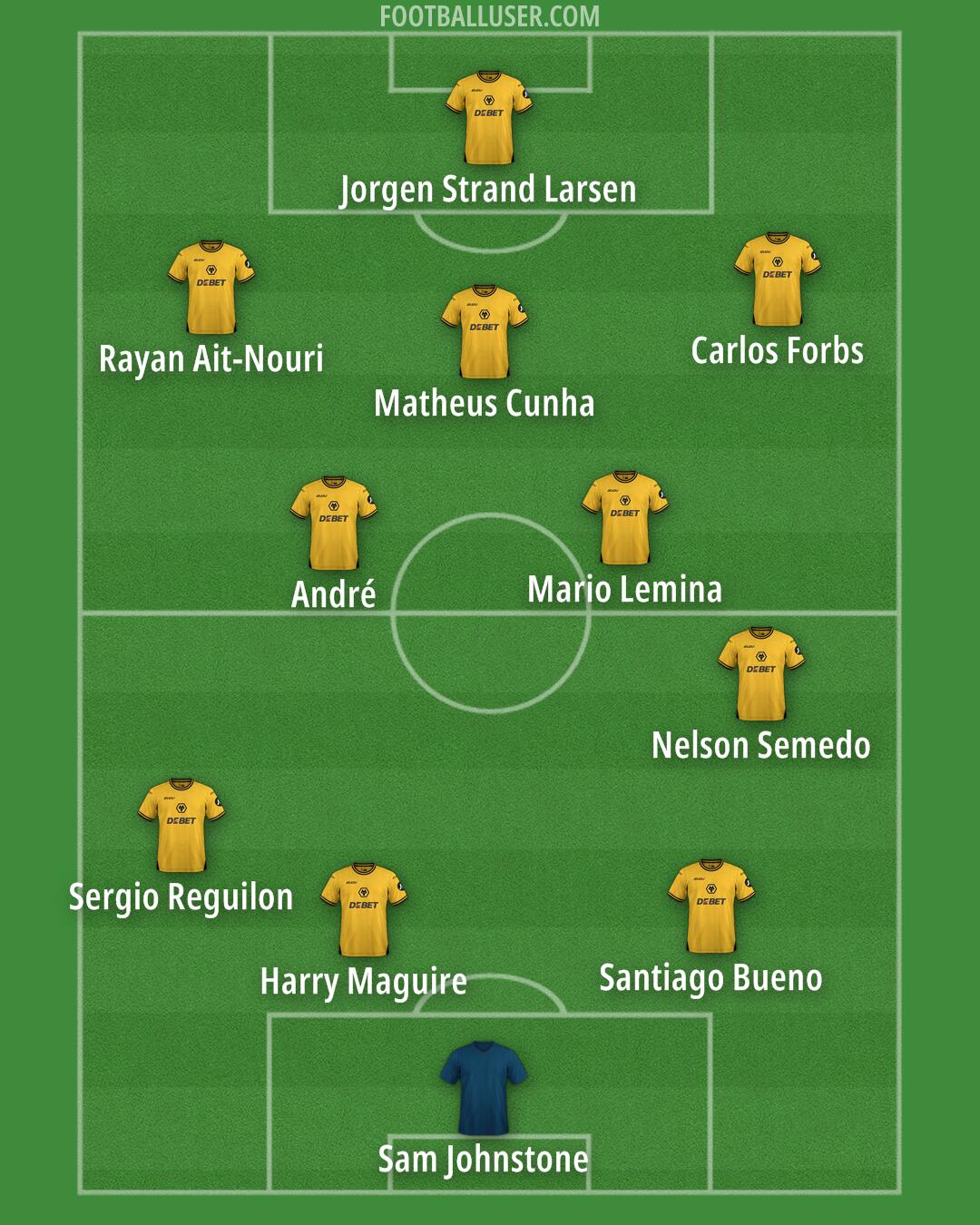
Matheus Cunha · Sam Johnstone · Jorgen Strand Larsen · Carlos Forbs · Nelson Semedo · Rayan Ait-Nouri · André · Mario Lemina · Santiago Bueno · Harry Maguire · Sergio ReguilonHigh intensity and verticality define how Wolves want to play. This team relies on a 3-3-4 formation to pin the opposition back and force errors. The goal is to win the ball high up the pitch and strike quickly before the defense can get set.
Sam Johnstone stays between the posts to organize the unit. The defense uses a back three that can play a high line to squeeze the space. Santiago Bueno acts as the right centre-back while Sergio Reguilon occupies the left centre-back role. Harry Maguire sits in the middle as the central defender, using his aerial strength to win the header and clear the lines during defensive transitions.
A three-man midfield manages the center of the pitch. Nelson Semedo plays as the single pivot to shield the defence and sit deep. André and Mario Lemina work as the two central midfielders to bridge the gaps. André focuses on his ability to carry the ball forward, while Mario Lemina works to win the second ball and recycle possession. This trio must press in a mid-block to ensure the team does not get bypassed easily.
The attack is aggressive with four players across the front. Rayan Ait-Nouri plays as the left winger to stretch the defence, and Carlos Forbs operates on the right to provide width. In the middle, Jorgen Strand Larsen acts as a target man to hold up the ball, while Matheus Cunha works as a second striker in the hole to connect the lines. This lineup aims to hit in behind on the transition and use the two strikers to create runs in behind or pull defenders out of position.
One major advantage of this Wolves formation is the ability to create numerical superiority in the final third. By playing four attackers, they can pin the last defender and overwhelm the opposition back line. The team also benefits from the speed of transition, allowing them to break quickly once the midfield wins the ball back high up the pitch or intercepts a pass.
This formation is designed for heavy attacking pressure and relentless forward movement. It is most effective against teams that defend in a low block and can be stretched by the wide players.