
Partizan Football Formation
 October 29, 2024


Starting Lineup
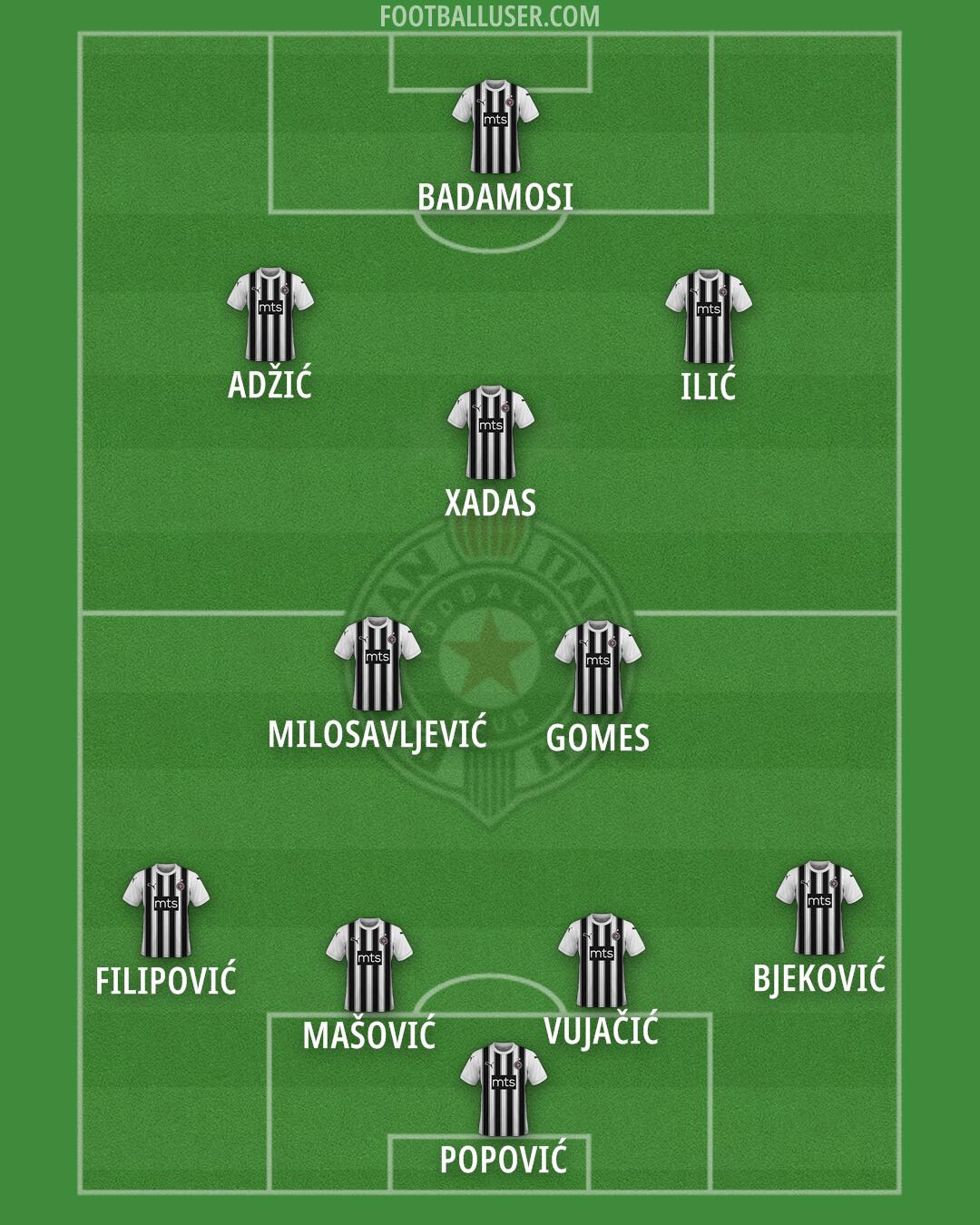
POPOVIĆ · VUJAČIĆ · MAŠOVIĆ · FILIPOVIĆ · BJEKOVIĆ · MILOSAVLJEVIĆ · GOMES · XADAS · ILIĆ · ADŽIĆ · BADAMOSIPartizan favors a direct style of play built on high energy and quick transitions, utilizing a 4-3-3 formation. This lineup focuses on winning the ball back quickly to catch the opposition before they can reset their defensive lines. The team seeks to stretch the pitch through wide players to create space for central combinations.
In goal, Popović acts as the last line of defense. The back four operates as a zonal line to maintain compactness. Bjeković plays as a defensive wing back on the right, while Filipović provides width on the left. In the middle, Mašović and Vujačić form the central pairing, with Mašović focusing on covering space and Vujačić looking to win the header during defensive set pieces. They work to keep the line high to squeeze the space between the units.
The midfield relies on a three-man unit to control the center of the pitch. Milosavljević operates as one of the central midfielders, helping to connect the defensive line to the attack. Gomes works alongside him to drive forward with the ball and press aggressively to win the ball high up the pitch. Xadas plays as the attacking ten behind the striker, looking to find the feet of the forward or arrive late into the box to score. This trio works to intercept passes and recycle possession quickly.
The attacking front three focuses on wide threats and central penetration. Adžić plays as an inverted winger on the left, looking to cut inside and create goalscoring chances. Ilić occupies the right wing to stretch the defense and provides service into the box. Badamosi operates as the lone striker, tasked to hold up the ball and pin the last defender. The forwards press from the front to force a long ball from the opposition, allowing the midfield to step up and win the second ball.
Partizan gains a significant advantage through their ability to press in coordinated waves, making it difficult for opponents to play out from the back. They also create wide overloads by using the full backs to support the wingers. This ability to transition at pace allows them to exploit gaps left by attacking opponents.
This 4-3-3 formation is built to dominate games through aggressive pressing and rapid vertical movements. It is best suited for matches against teams that play with a high line or struggle to handle intense pressure in their own half.