Arsenal Football Formation
 October 30, 2024


Starting Lineup
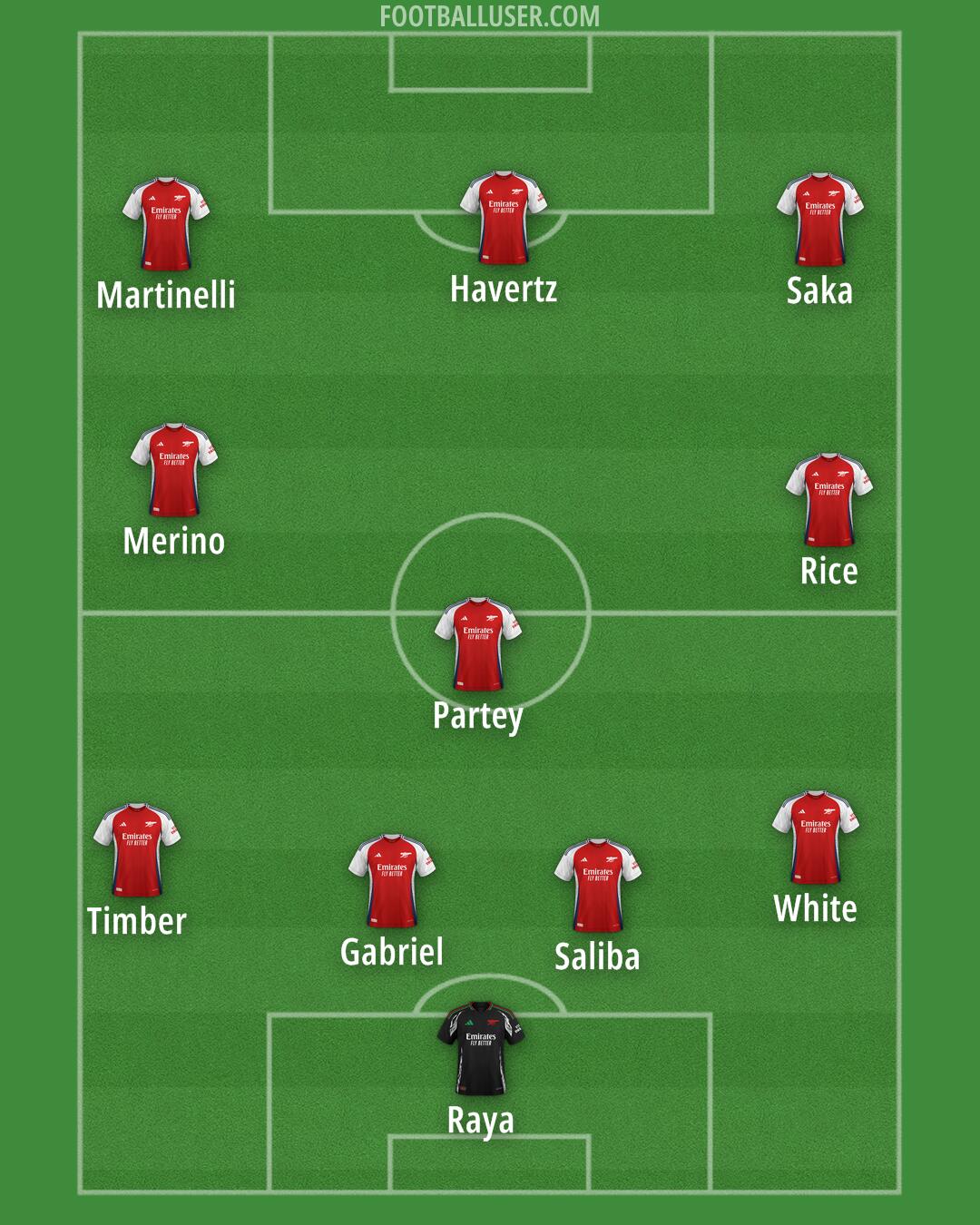
Martinelli · Havertz · Saka · Rice · Partey · Merino · Timber · Gabriel · Saliba · White · RayaArsenal focuses on a high press and intense control of the pitch through a 4-3-3 formation. This lineup is built to win it back high up the pitch and control games through heavy possession. The Gunners use this system to squeeze the space in the opposition half and dictate the tempo from deep.
David Raya acts as the goalkeeper, playing out from the back to start attacks. The defense consists of a flat back four with Ben White at right back and Jurrien Timber at left back. Both full backs push high to provide width. William Saliba and Gabriel form the central pairing, where Saliba uses his recovery speed to cover the space behind while Gabriel provides aerial strength. This defensive unit works to maintain a high line and keep the team compact.
The midfield operates as a three-man midfield with a single pivot. Thomas Partey sits in front of the back four to shield the defense and recycle possession. Beside him, Declan Rice works as an inverted eight, driving forward with the ball and making late runs into the box. Mikel Merino occupies the left central midfield role to help connect the defensive and attacking lines. This group is tasked to win the second ball and press in a mid-block when the first wave is bypassed.
In the attacking phase, Arsenal utilizes three attackers across the front. Kai Havertz acts as a pressing centre-forward, often dropping deep to find the feet of the striker or link up play between the lines. Bukayo Saka plays as an inverted winger on the right, cutting inside to create chances, while Gabriel Martinelli stays wide on the left to stretch the defence. The team relies on combinations in tight spaces and quick transitions to hit in behind the opposition.
This formation offers significant tactical advantages for Arsenal. The presence of Rice and Partey allows for numerical superiority in midfield, making it hard for opponents to play through the lines. The team also creates wide overloads from overlapping full backs who support the wingers. Additionally, the coordinated movement of the front three allows them to press in pairs and force a long ball from the opposition.
This 4-3-3 formation is designed for a side that wants to dominate the ball and squeeze the opponent. It is best suited for games against teams that sit deep and require constant pressure to break them down.