Chelsea Football Formation
 November 7, 2024


Starting Lineup
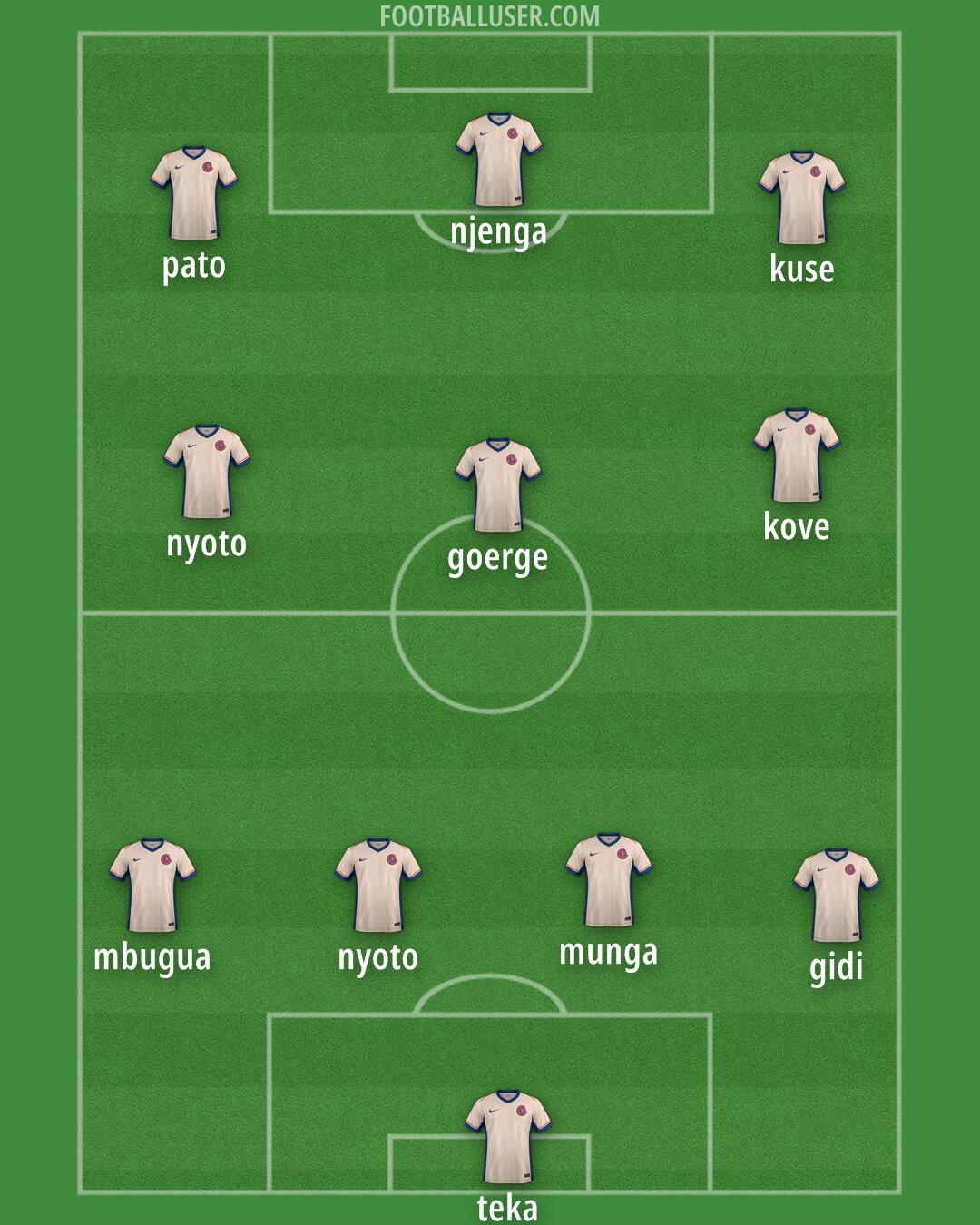
njenga · pato · kove · goerge · nyoto · kuse · mbugua · gidi · munga · nyoto · tekaChelsea relies on a high press and quick transitions within a 4-3-3 formation. This lineup is built to win it back high up the pitch and move the ball forward with speed to catch the opposition out of position. The team looks to control the tempo by pressing in a mid-block or high block to force errors in the opponent's half.
teka guards the goal as the last line of defense. The back line operates as a flat back four with gidi and mbugua acting as full backs. gidi provides cover on the right while mbugua handles the left. In the center, nyoto and munga form the pairing of central defenders, with nyoto tasked to cover space and munga to win the header during set pieces. The defensive unit works to squeeze the space and hold a compact shape to deny the turn to any incoming attackers.
The midfield consists of a three-man midfield with a carrier and creative roles. nyoto sits in the left central role to connect the defensive and attacking lines, while kove plays as the right central midfielder to drive forward with the ball. goerge operates in the central role to recycle possession and pick up runners. This trio works to compress the midfield and ensure they win the second ball to prevent the opposition from building play through the middle.
Chelsea utilizes three attackers across the front to stretch the defence. njenga acts as the pressing centre-forward to pin the last defender and lead the hunt for the ball. On the flanks, pato and kuse play as wide wingers who hug the touchline to provide width. Both pato and kuse look to cut inside to find the feet of the striker or deliver early crosses into the box. The attack is designed to create runs in behind and exploit spaces left by advancing defenders.
One major advantage for Chelsea is the ability to press high in coordinated waves, which can force a long ball from the opposition. The formation also creates wide overloads when gidi and mbugua push up to support the wingers. This allows the team to switch play quickly and isolate wide players in one on one situations, making them very dangerous in transition.
This 4-3-3 formation provides Chelsea with a vertical identity that punishes teams playing a high line. It is best suited for games against opponents who struggle to play out from the back under pressure.