Brighton Football Formation
 November 20, 2024


Starting Lineup
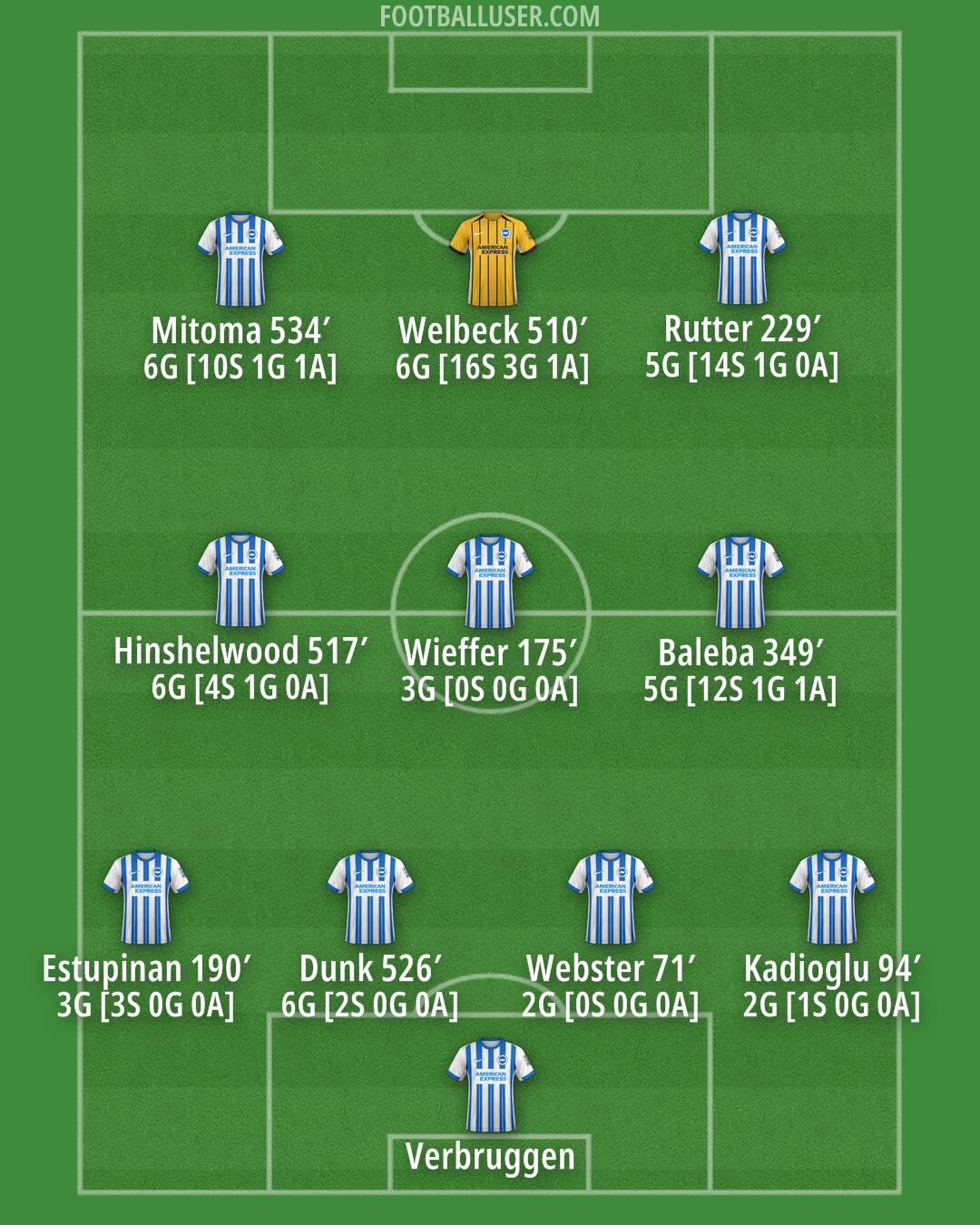
Mitoma 534′ (6G [10S 1G 1A]) · Rutter 229′ (5G [14S 1G 0A]) · Welbeck 510′ (6G [16S 3G 1A]) · Kadioglu 94′ (2G [1S 0G 0A]) · Estupinan 190′ (3G [3S 0G 0A]) · Dunk 526′ (6G [2S 0G 0A]) · Webster 71′ (2G [0S 0G 0A]) · Verbruggen · Hinshelwood 517′ (6G [4S 1G 0A]) · Wieffer 175′ (3G [0S 0G 0A]) · Baleba 349′ (5G [12S 1G 1A])Brighton prefers to sit deep and strike with heavy verticality using a 5-4-1. This formation is built to defend in a compact block and wait for the right moment to launch attacks against the opposition. The team looks to frustrate opponents by squeezing the space between the lines and making it difficult to play through the middle.
Welbeck starts between the posts to command the area. The defensive line consists of a back three with Wieffer acting as the central anchor to clear the lines and organize the unit. Baleba plays as the left centre-back to cover ground, while Hinshelwood occupies the right centre-back spot to win the header and win the second ball. Rutter operates as a left wing back to provide width, while Mitoma works as the right wing back to push forward and help the transition. The unit stays narrow to protect the central zone.
The midfield relies on a flat four to maintain a compact shape. Dunk sits in the left central midfield role to shield the defence and win the second ball. Webster plays in the right central midfield role to carry the ball forward and connect the back line to the attack. On the flanks, Estupinan operates as a left midfielder to help the wing back, while Kadioglu plays on the right to press aggressively and win the ball high. This midfield group works to close down passing lanes and force the opponent to play wide.
Brighton utilizes a lone striker in Verbruggen to lead the line. The attacking plan focuses on Verbruggen to hold up the ball and wait for support from the advancing wing backs. Rutter and Mitoma provide the necessary width by pushing high to stretch the defence. When the team wins the ball back, the aim is to hit in behind on the transition and use the wide players to deliver crosses. The forwards press from the front to force a long ball and win possession back in the final third.
One major advantage for Brighton is the ability to hold a compact shape when defending deep in their own half. The formation creates numerical superiority in the defensive third to deny the turn of any incoming attackers. Additionally, the setup allows for quick speed of transition once the midfield wins possession. This allows the wide players to exploit the space left behind by an advancing opposition.
This 5-4-1 lineup is designed to be defensively solid and clinical on the break. It is best suited for matches against teams that dominate possession and leave space behind their defensive line.