Ipswich Football Formation
 November 24, 2024


Starting Lineup
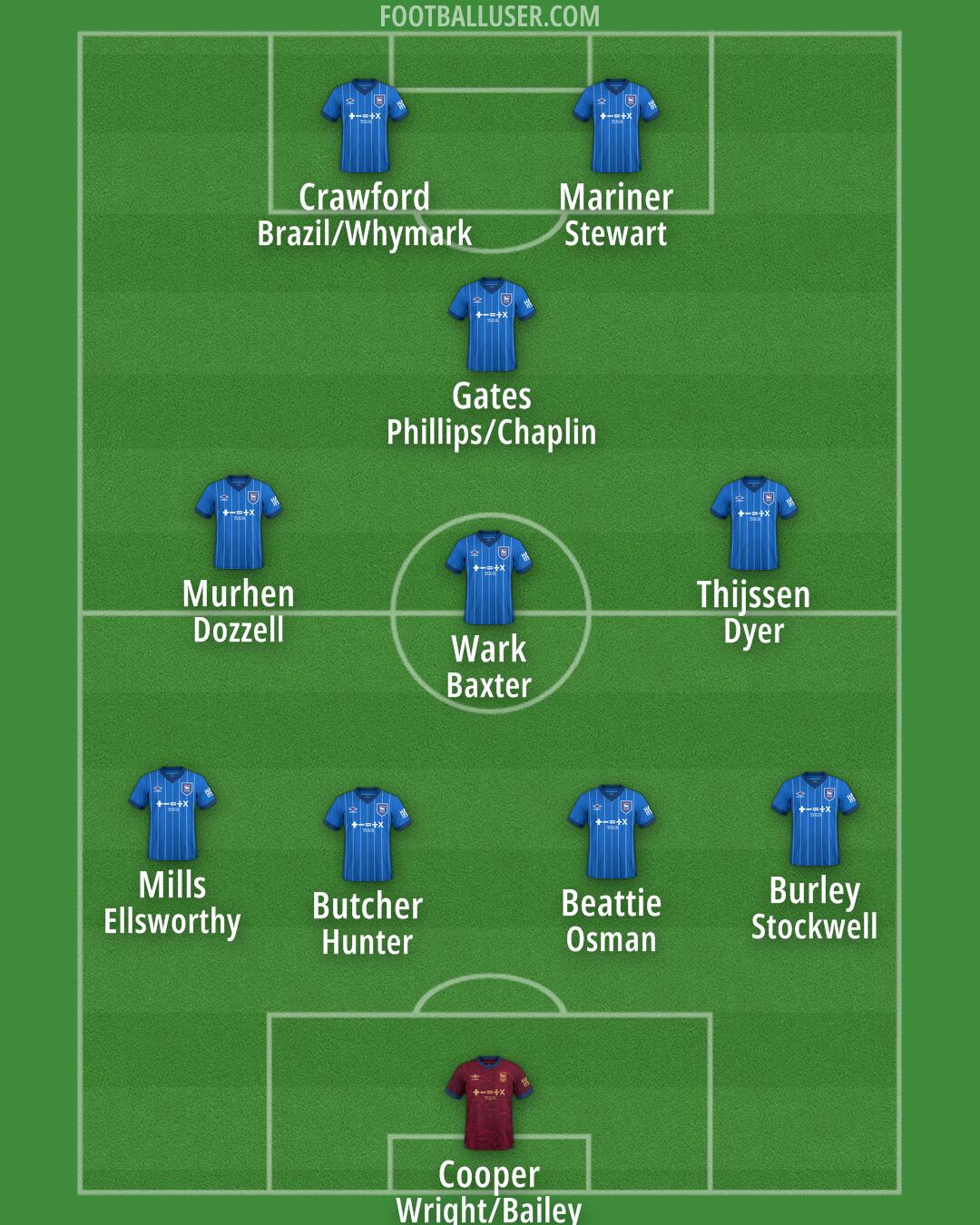
Cooper (Wright/Bailey) · Burley (Stockwell) · Beattie (Osman) · Butcher (Hunter) · Mills (Ellsworthy) · Wark (Baxter) · Thijssen (Dyer) · Murhen (Dozzell) · Gates (Phillips/Chaplin) · Mariner (Stewart) · Crawford (Brazil/Whymark)Ipswich aims to play a direct and vertical brand of football through a 4-4-2 formation. This lineup relies on quick transitions and winning second balls to move the play forward rapidly. The team looks to exploit space behind the opposition defense by using the pace of the front two to stretch the game.
Cooper operates between the posts to organize the defensive unit. The back line works as a flat back four where Mills and Burley provide width from the flanks. Butcher and Beattie act as the central pair, with Butcher looking to win headers and Beattie providing cover when the line steps up. The defenders aim to hold a compact shape to deny space between the lines and prevent the opposition from playing through the middle.
The midfield functions as a four man block to squeeze the space in the center. Murhen and Wark work to shield the defense and recycle possession while Thijssen looks to carry the ball forward to connect the lines. Gates operates in a more advanced role as an attacking ten behind the strikers to pick up runners and play through the lines. This midfield group must track back quickly to maintain the defensive block when the team loses the ball.
Ipswich utilizes two forwards in a partnership to lead the attack. Crawford and Mariner act as the primary threats, with Crawford working to find the feet of the striker and Mariner looking to hit in behind on the transition. The attackers press from the front to force a long ball and prevent the opposition from playing out from the back. By using wide wingers to spread the defense, the team creates opportunities to play one-two combinations and exploit the half-spaces.
One major advantage for Ipswich is the ability to press in a mid-block to force turnovers in central areas. The formation also offers the potential for wide overloads when the full backs push up to support the midfield. This creates numerical superiority in the final third and allows the team to deliver early crosses into the box.
This 4-4-2 formation provides a reliable platform for direct attacking and defensive solidity. It is best suited for matches against teams that play a high line and leave space behind their defenders.