Rangers Football Formation
 November 24, 2024


Starting Lineup
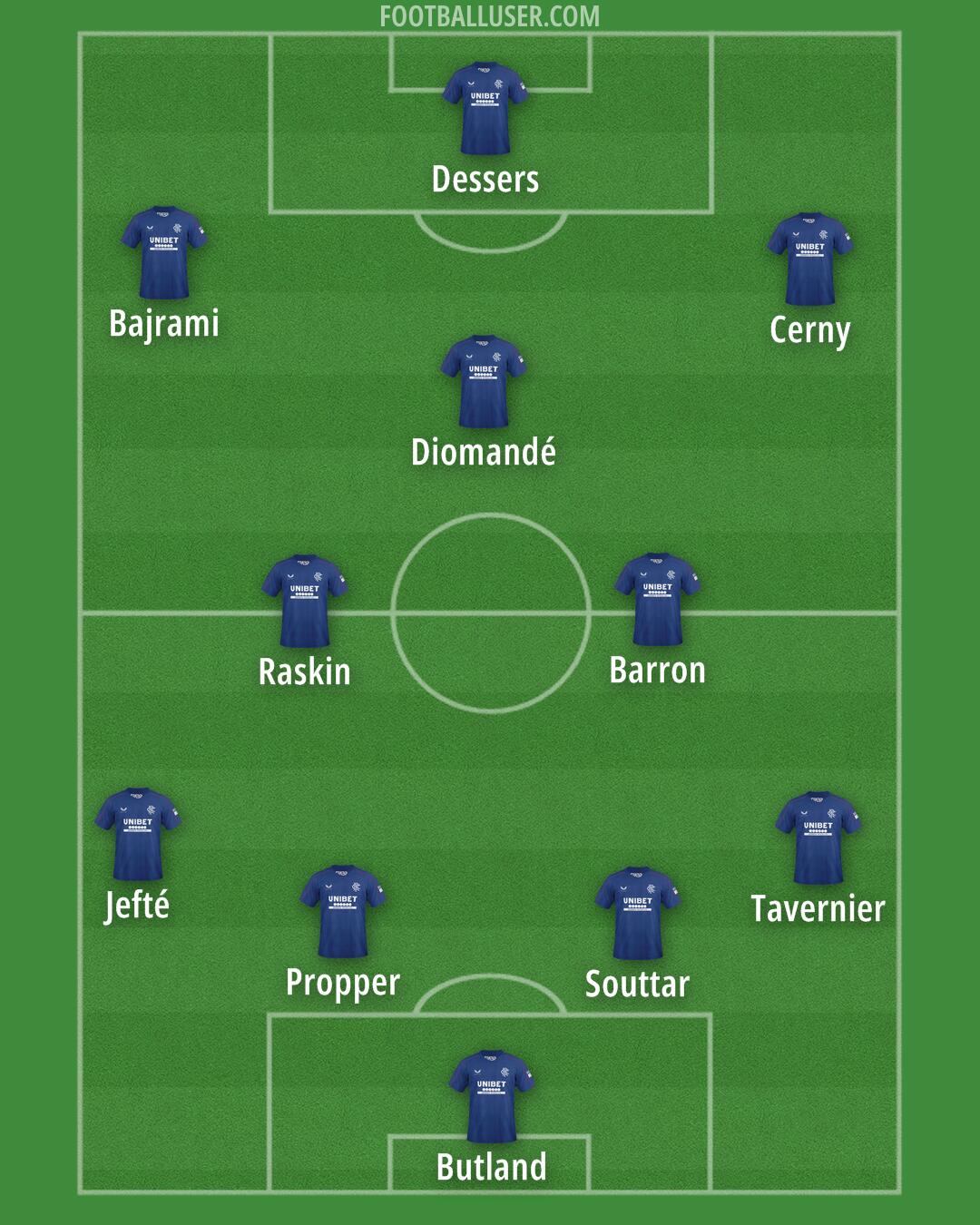
Butland · Jefté · Propper · Souttar · Tavernier · Raskin · Barron · Diomandé · Bajrami · Dessers · CernyRangers look to play a direct and vertical style of football with a 4-3-3 formation. This lineup is designed to win the ball back high up the pitch and move through the thirds with speed. The intention is to use the width of the pitch to stretch the opposition before hitting in behind on the transition.
Jack Butland acts as the last line of defense behind a back four. Souttar plays as the right-sided center-back and is dominant in the air, while Propper covers the left side of the central defense. Tavernier operates as an attacking full back on the right, often looking to overlap the winger and whip it in. Jefté provides balance on the left, helping to defend the wide area while looking to support the attack. The defensive unit works to hold the line and push up to squeeze the space.
The midfield consists of a three-man midfield with a carrier and creative outlets. Barron sits in the right central role to shield the defense and win the second ball, while Raskin operates on the left to connect the defensive and attacking lines. Diomandé plays as an attacking ten behind the striker, looking to find the feet of the striker or arrive late into the box. This group works to press in a mid-block to deny the opponent time on the ball.
In the final third, Rangers use three attackers to pressure the opposition back line. Cerny plays as an inverted winger on the right, cutting inside to create shooting opportunities, while Bajrami stays wide on the left to provide width. Dessers acts as a pressing centre-forward, using his strength to hold up the ball and win headers. The attack relies on link-up play between the lines to create chances, often looking to hit the channels or deliver early crosses.
One major advantage for Rangers is the ability to create wide overloads when Tavernier pushes forward. The team also possesses the ability to press high in coordinated waves, forcing a long ball from the opposition. This creates many chances to win the ball back in advanced positions and break quickly.
This 4-3-3 formation provides a balanced way to control games through both verticality and width. It is best suited for matches where the opponent plays a high line and can be punished in transition.