Norwich Football Formation
 November 27, 2024


Starting Lineup
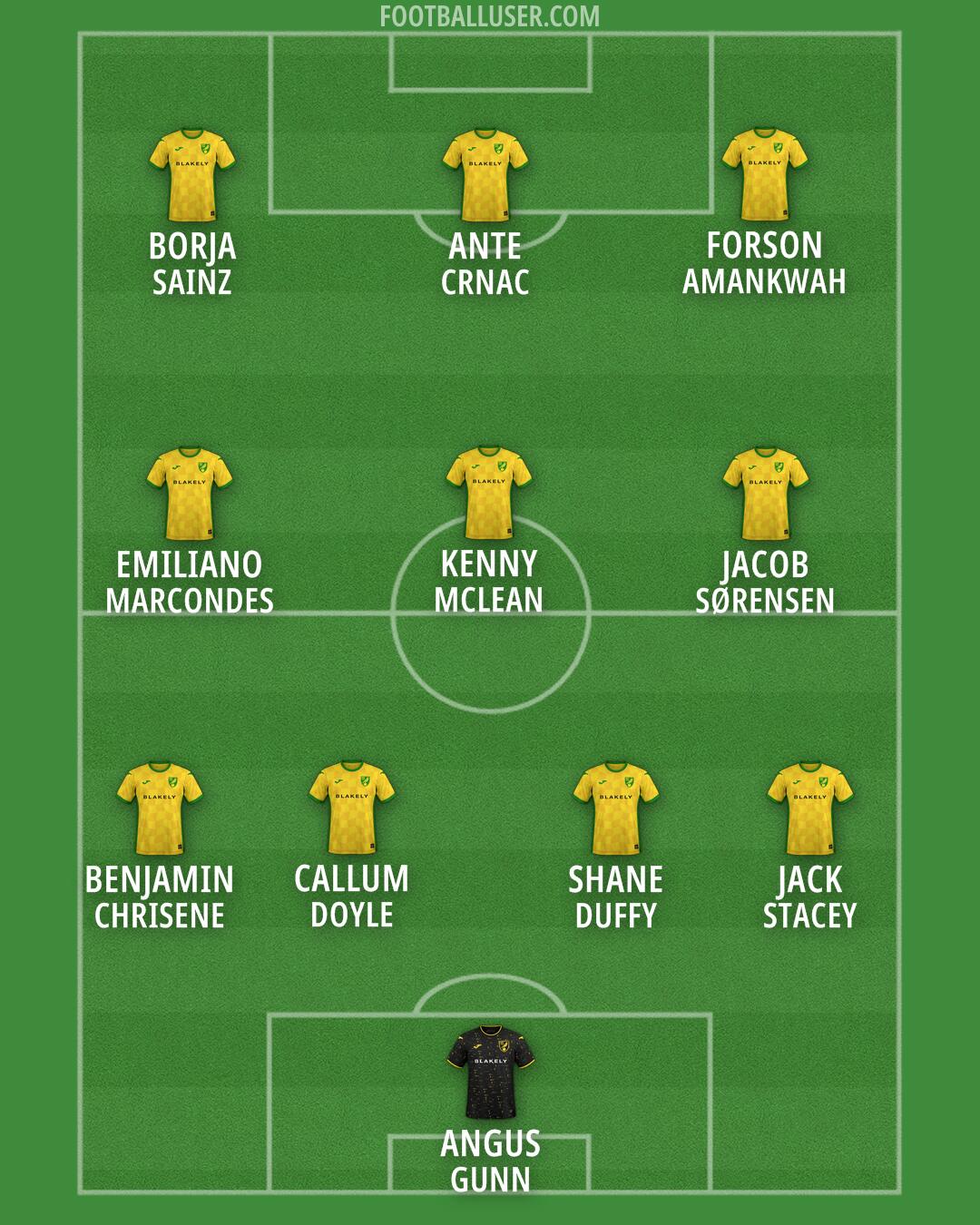
ANGUS (GUNN) · JACK (STACEY) · SHANE (DUFFY) · CALLUM (DOYLE) · BENJAMIN (CHRISENE) · JACOB (SØRENSEN) · KENNY (MCLEAN) · EMILIANO (MARCONDES) · FORSON (AMANKWAH) · ANTE (CRNAC) · BORJA (SAINZ)Norwich relies on a high press and quick transitions within a 4-3-3 formation. This lineup is built to win the ball high up the pitch and use verticality to catch the opposition off guard. The goal is to use the width of the pitch to stretch the defence and create space for runners in the middle.
Angus operates between the posts to start the build up from the back. The back four plays with a high line to squeeze the space in the middle of the pitch. Callum and Shane act as the central defenders, with Callum often acting as a ball playing defender to start attacks. Benjamin plays as an attacking full back on the left to provide width, while Jack maintains a more balanced role on the right to cover against counter attacks.
The midfield functions as a three man midfield with a carrier. Kenny sits in the center to shield the defence and recycle possession when the team needs to slow the tempo. Emiliano and Jacob act as the two eight roles, with Emiliano looking to drive forward with the ball and Jacob working to connect the defensive and attacking lines. This trio works to compress the midfield and win the second ball to keep the pressure high.
Norwich uses three attackers across the front to pin the opposition back. Ante acts as a pressing centre-forward, constantly working to disrupt the opposition build up. On the flanks, Borja and Forson operate as inverted wingers who cut inside to create chances. This movement allows the full backs to overlap the winger and deliver crosses into the box. The front three combine in tight spaces to find through balls that split the defence.
This 4-3-3 offers significant tactical advantages for Norwich. The ability to press high in coordinated waves can force mistakes from the opponent's defenders. Additionally, the movement of Borja and Forson creates wide overloads when they combine with the full backs. These movements force the opposition to defend deep and limit their ability to play out from the back.
This formation is built for a team that wants to dominate through intensity and quick ball movement. It is best suited for matches against teams that struggle to play under pressure in their own half.