Man Utd Football Formation
 November 28, 2024


Starting Lineup
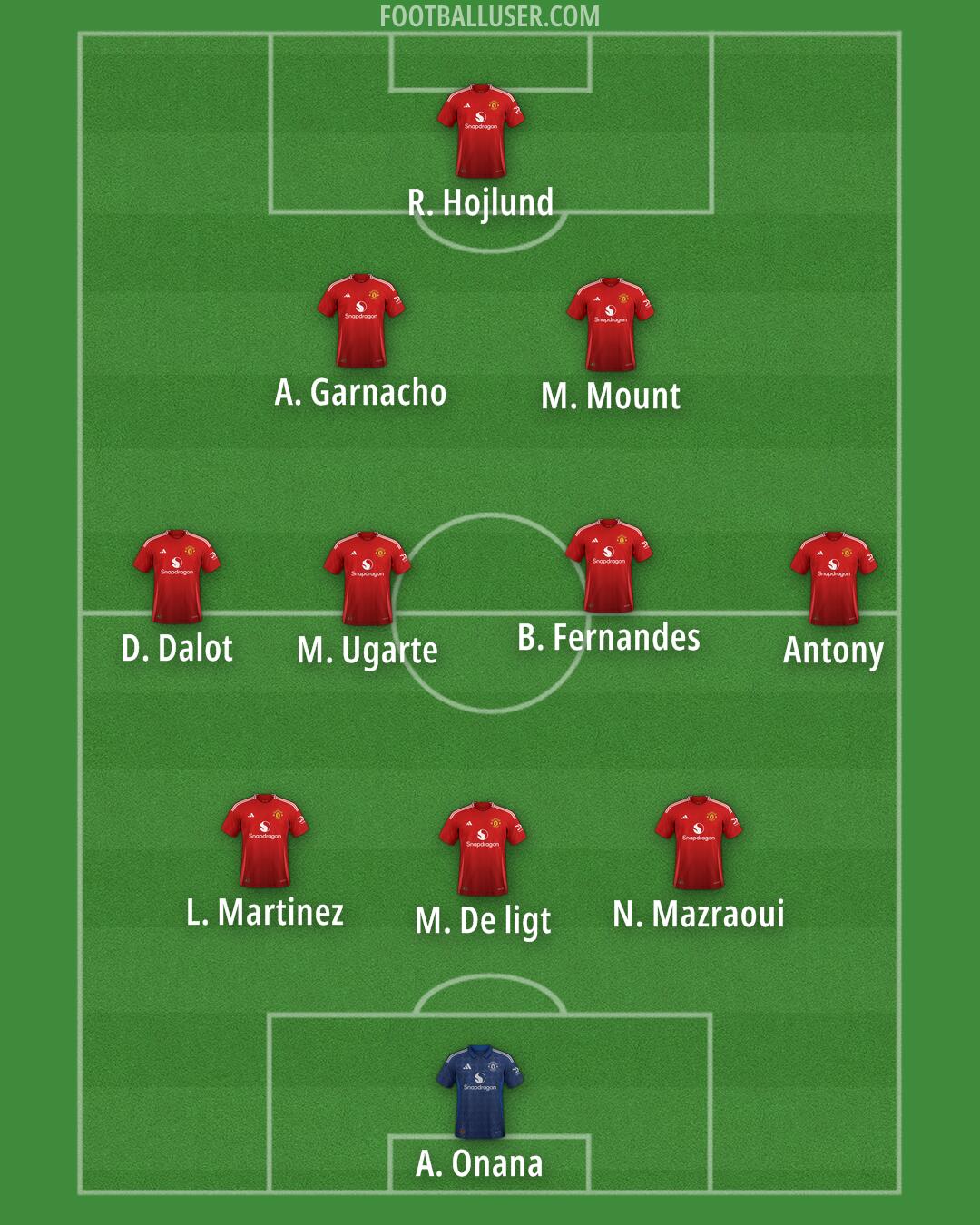
A. Onana · L. Martinez · M. De ligt · N. Mazraoui · M. Ugarte · B. Fernandes · Antony · D. Dalot · A. Garnacho · M. Mount · R. HojlundManchester United aims to play with a high press and rapid transitions using a 3-4-3 formation. This lineup focuses on controlling the middle of the pitch while maintaining enough verticality to catch opponents off guard. The team uses this shape to stretch the defence and create constant pressure in the attacking third.
A. Onana operates between the posts, acting as a sweeping goalkeeper who helps play out from the back. The back three features M. De Ligt acting as the central anchor, providing aerial strength and leadership. L. Martinez plays as the left centre-back, known for his ball playing ability and aggression, while N. Mazraoui occupies the right centre-back slot. The unit functions as a cohesive block that can step up to squeeze the space or drop back to defend against long balls.
In the middle of the pitch, Man Utd utilizes a four man midfield block to dominate the center. M. Ugarte works as a single pivot to shield the defence and win the second ball, while B. Fernandes operates in a more advanced role to create from deep and connect the lines. D. Dalot and Antony occupy the wide midfield roles, with D. Dalot providing more defensive cover on the left and Antony pushing higher on the right. This group works to win it back high up the pitch and recycle possession quickly.
The attack is built around a lone striker, R. Hojlund, who acts as a pressing centre-forward to harass the opposition back line. He is supported by two wide attackers, A. Garnacho and M. Mount, who operate as inverted wingers. A. Garnacho likes to cut inside from the left to find shooting lanes, while M. Mount looks to operate in the half spaces to link play. This front three creates runs in behind and looks to exploit the gaps between the opposition full backs and centre backs.
One major tactical strength of this Manchester United lineup is the ability to press high in coordinated waves to force a long ball. The team also benefits from wide overloads when the midfield players push up to support the wingers. This creates numerical superiority in the final third, allowing the players to combine in tight spaces and break the line with quick passes.
This 3-4-3 formation provides a balance of defensive solidity and attacking width. It is best suited for matches where the team needs to dominate possession and pin the opponent in their own half.