
Lanús Football Formation
 November 30, 2024


Starting Lineup
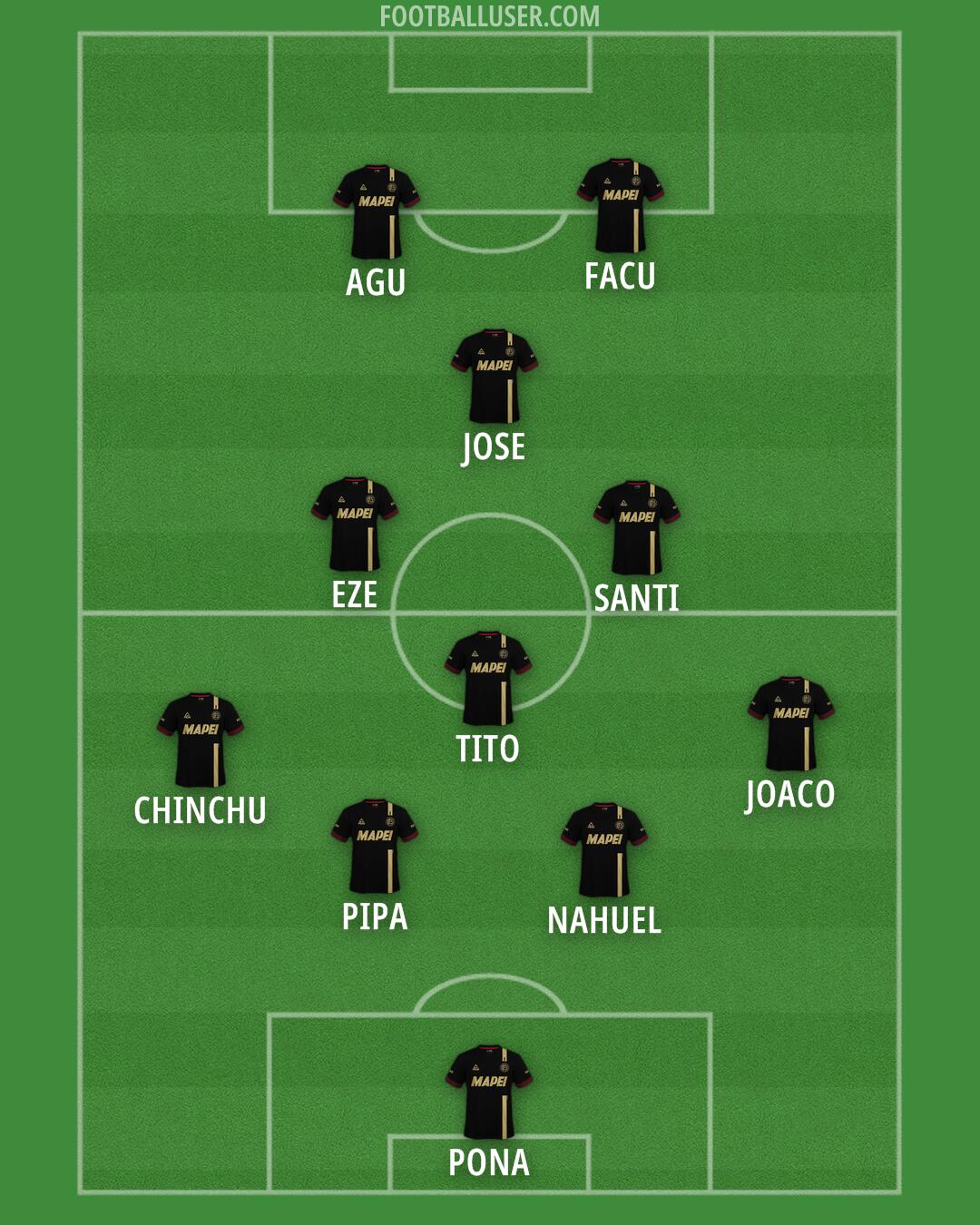
PONA · JOACO · NAHUEL · PIPA · CHINCHU · TITO · SANTI · EZE · JOSE · FACU · AGULanús aims to remain difficult to beat by staying compact and hitting teams on the break, employing a 5-3-2 formation. This lineup is designed to sit in a low block and deny space in the middle, looking to catch the opposition out when they commit too many players forward. The team focuses on defensive solidity before looking to transition quickly once the ball is won.
PONA stands between the posts to organize the defensive unit. The back five is built around TITO who holds the center, while NAHUEL and PIPA act as the right and left centre-backs. JOACO and CHINCHU operate as attacking wing backs, tasked with providing the team's primary width. When the team sits deep, the defensive unit stays narrow to force the opponent wide, with TITO and the other centre-backs ready to win the header or clear the lines.
The midfield trio is tasked with both protecting the defense and driving the play forward. SANTI and EZE act as the central duo to shield the back five and win the second ball in the middle of the pitch. JOSE plays as an attacking ten, sitting in the hole to connect the defensive and attacking lines. Both SANTI and EZE work to compress the midfield to deny the turn of opposition players, while JOSE looks to receive on the half-turn to split the defence with a through ball.
In the final third, AGU and FACU operate as a strike partnership. They often work in combinations to drag defenders out of position, with one player acting as a pressing centre-forward to trigger a press. The attack relies on the movement of JOACO and CHINCHU to get to the byline and whip it in for the strikers. Both forwards look to run in behind or hold up the ball to wait for the midfield to arrive late into the box.
A primary strength of this Lanús lineup is the ability to create wide overloads through the runs of the wing backs. This provides a way to stretch the defence and find space in the channels. Furthermore, the team stays compact to deny the pivot and forces the opponent to play long.
This 5-3-2 formation is a robust choice for a team that wants to defend deep and exploit space in transition. It is most effective against opponents that play with a high line and leave large gaps behind their defenders.