
Racing Club Football Formation
 December 15, 2024


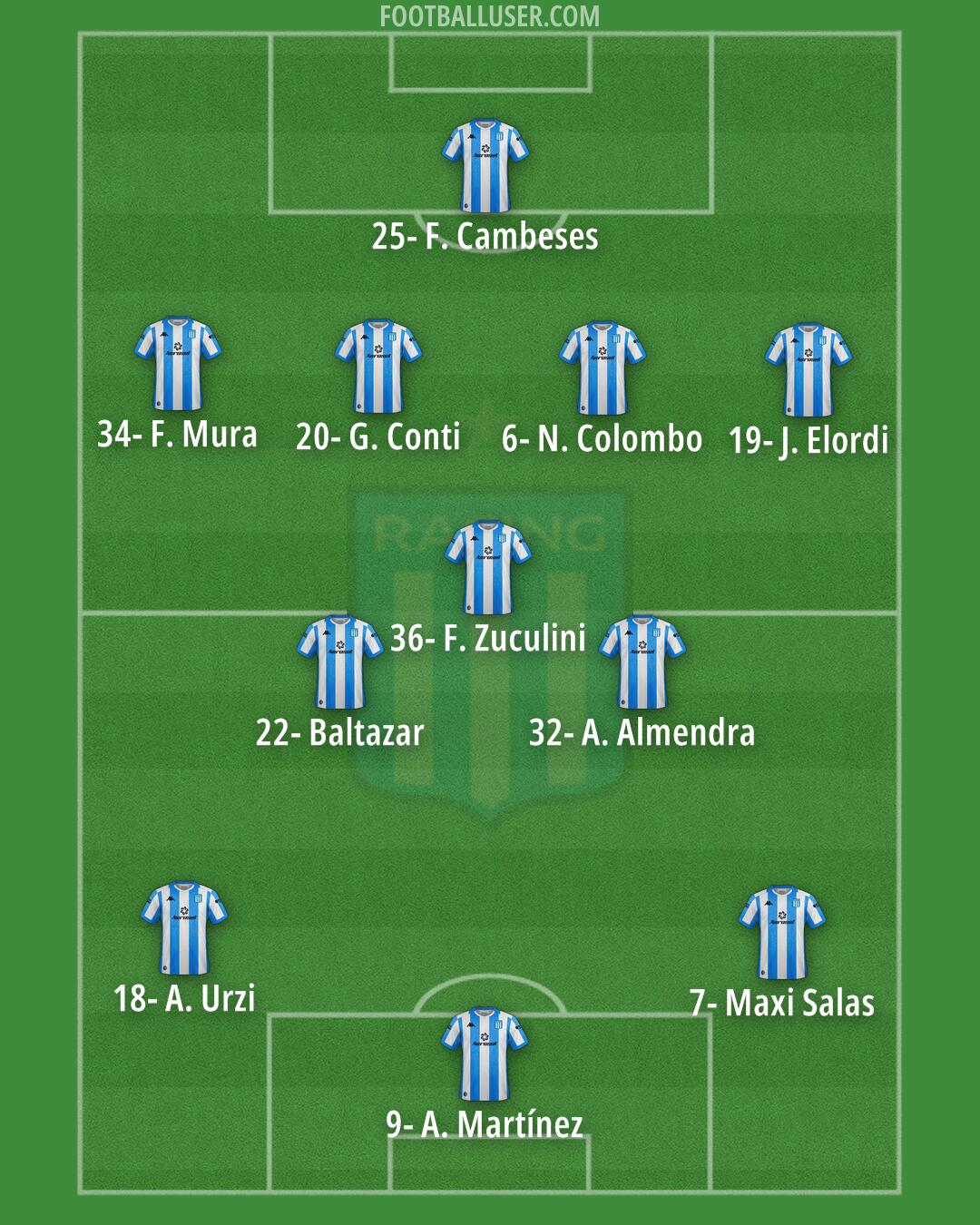
Starting Lineup
25- F. Cambeses20- G. Conti
36- F. Zuculini
6- N. Colombo
34- F. Mura
22- Baltazar
32- A. Almendra
19- J. Elordi
18- A. Urzi
7- Maxi Salas
9- A. Martínez
Racing Club looks to control the tempo through a high press and quick verticality using a 4-3-3 formation. This lineup relies on winning the ball high up the pitch to catch the opposition out of position. The goal is to use the width of the field to stretch the defense before playing through the lines to the attackers.
F. Cambeses acts as the last line of defense in goal. The back four stays relatively high to squeeze the space. G. Conti and N. Colombo form the central pairing, where Conti focuses on being dominant in the air and Colombo acts as a covering defender to sweep behind the line. On the flanks, F. Mura plays as an overlapping full back to provide width, while J. Elordi supports the left side to help protect the half spaces.
In the center of the pitch, Racing Club utilizes a three-man midfield to control the game. F. Zuculini operates as a single pivot to shield the defense and recycle possession. Next to him, Baltazar and A. Almendra act as inverted eights who connect the defensive and attacking lines. Almendra is known for his ability to carry the ball forward, while Baltazar works to press aggressively and win the second ball to maintain control.
The attacking unit works in combination to break the opposition. A. Martínez leads the line as a pressing centre-forward, looking to find the feet of his teammates or run in behind. On the wings, A. Urzi and Maxi Salas act as inverted wingers who cut inside to create central overloads. This movement creates space for F. Mura or J. Elordi to push up and deliver crosses, aiming to isolate wide players in one on one situations.
A major strength of this formation is the ability to press high in coordinated waves to win the ball back near the opponent's goal. The team also finds success through wide overloads when the full backs join the attack. This creates numerical superiority in the final third, making it difficult for a low block to defend the multiple runners arriving late into the box.
This 4-3-3 formation is built for a side that wants to dominate the ball and attack with intensity. It is best suited for matches against teams that play a high line and can be punished on the transition.