Liverpool Football Formation
 December 23, 2024


Starting Lineup
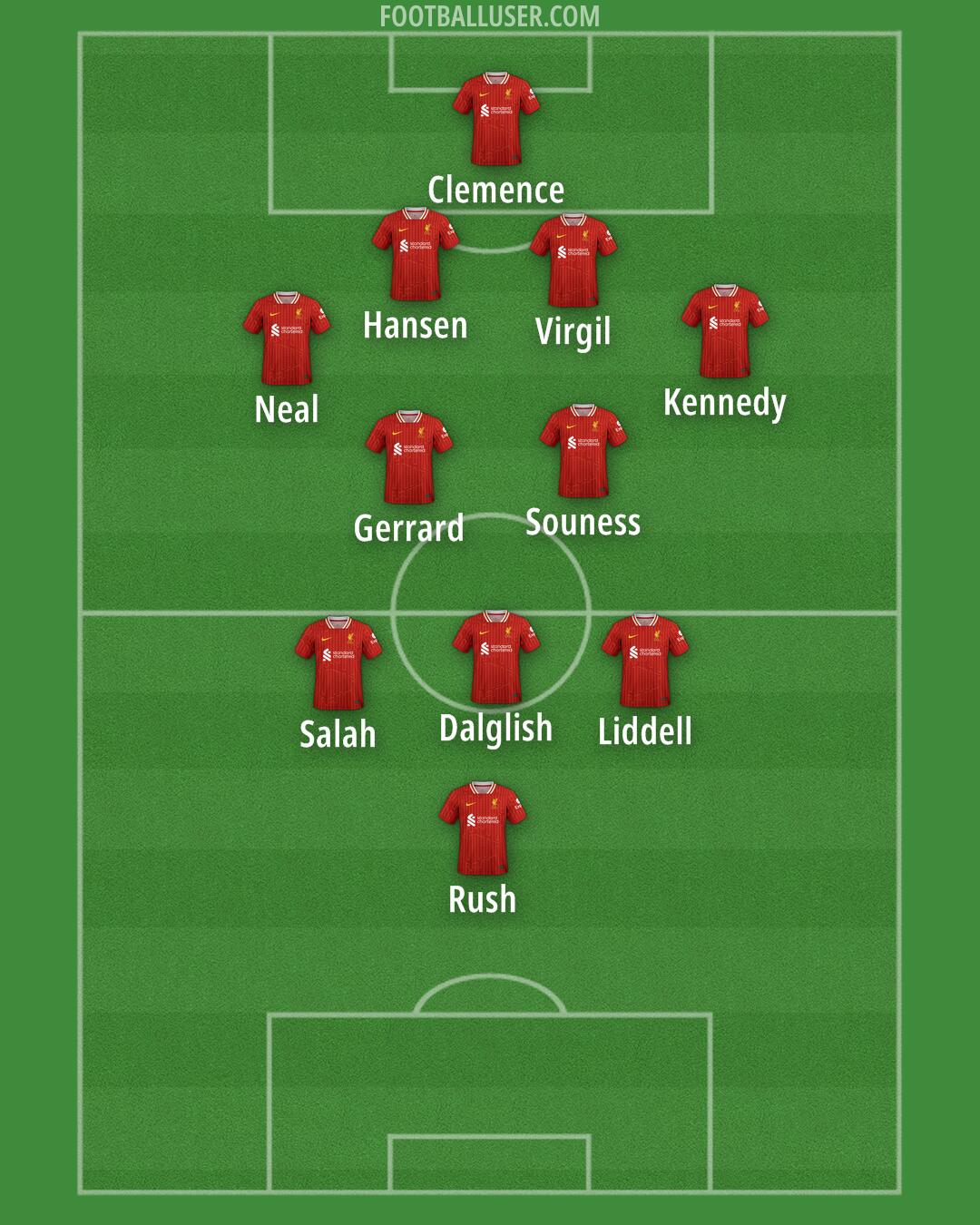
Liddell · Salah · Gerrard · Rush · Neal · Clemence · Virgil · Hansen · Souness · Dalglish · KennedyLiverpool plays a high tempo game built on directness and verticality in a 4-2-4 formation. This lineup aims to overwhelm the opposition with speed and numbers in the final third. By committing many players forward, the team looks to win the ball high up the pitch and strike quickly before the defense can reset.
Clemence operates between the posts to command the area. The back four consists of Neal and Kennedy as full backs, while Virgil and Hansen form the central defensive pairing. Virgil provides aerial strength and leadership to hold the line, while Hansen works as a ball playing defender to start attacks. The defensive unit must stay compact to prevent long balls, with the full backs ready to push up once the team wins possession.
A double pivot in midfield provides the engine for Liverpool. Souness and Gerrard work together to control the center of the park. Gerrard is known for his incredible passing range and ability to drive the ball forward, while Souness helps to shield the defense and win the second ball. This midfield duo connects the defense to the attack, ensuring the team can transition from a defensive block to an attacking surge in seconds.
The attacking line is aggressive with four players pushing high. Salah and Liddell operate as wide attackers, with Salah often looking to cut inside and find space. Dalglish and Rush lead the line as a central partnership. Dalglish acts as a playmaker who can drop into pockets of space, while Rush focuses on making runs in behind to exploit the space left by the defense. This group creates constant pressure on the opposition back line through quick combinations.
One major advantage of this formation is the ability to create wide overloads when the full backs push forward to support Salah and Liddell. Liverpool also benefits from a high press that forces the opponent into mistakes near their own goal. The numerical superiority in the attacking third makes it very difficult for a back four to track every runner, especially when the midfield arrives late into the box.
This 4-2-4 formation is designed to dominate games through sheer attacking intensity and quick transitions. It is most effective against teams that play a high line and struggle to manage the space behind their defenders.