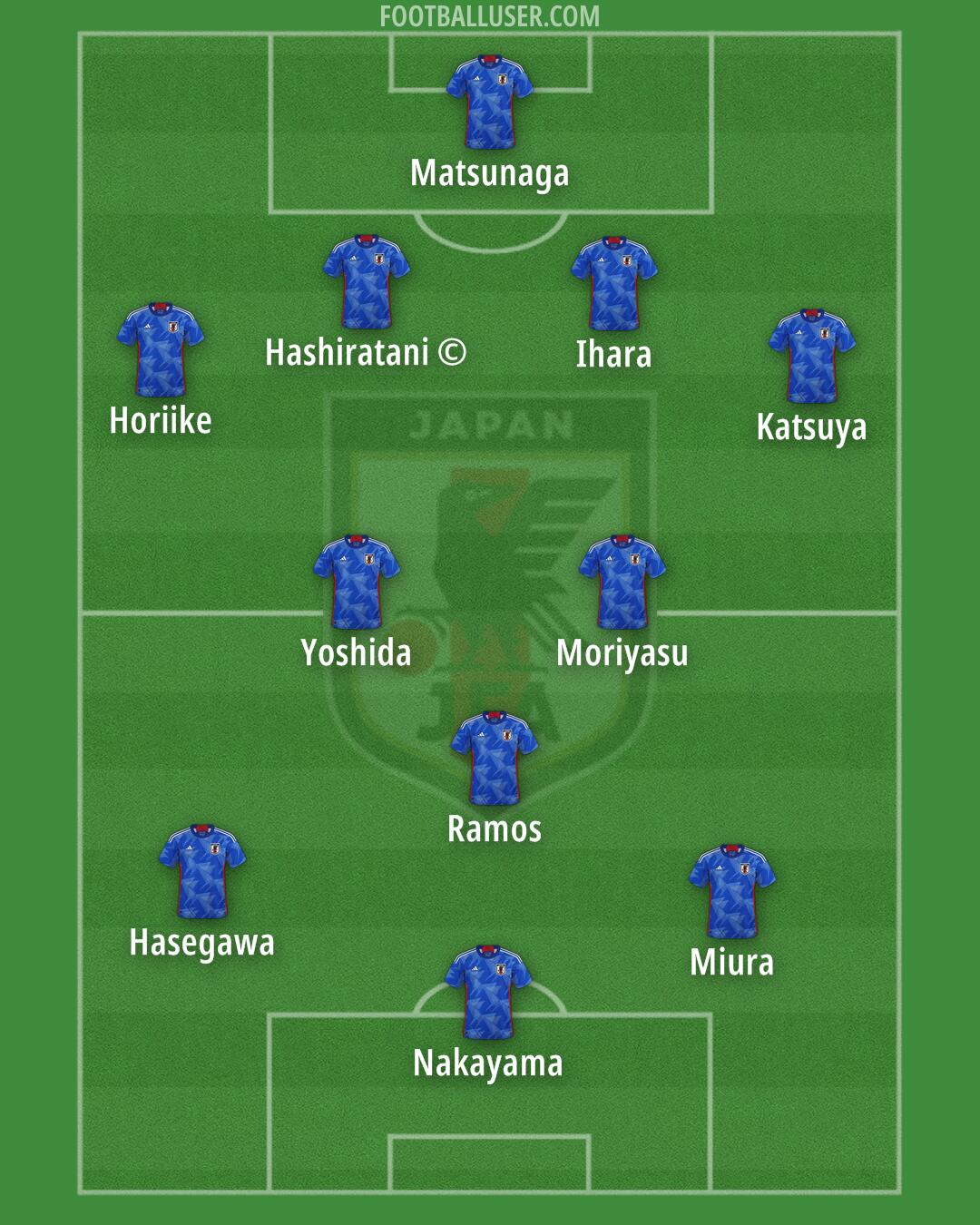

Japan National Football Team Formation
 December 24, 2024


Starting Lineup
Matsunaga · Hashiratani © · Ihara · Horiike · Katsuya · Yoshida · Moriyasu · Ramos · Nakayama · Miura · HasegawaWinning the ball back high up the pitch and launching quick attacks is the main goal for Japan as they play a 4-3-3 formation. This identity is built on a high press to force the opposition into mistakes through constant pressure and quick recovery of the ball in the final third.
Matsunaga stands in goal to command the area. The defense operates with a high line to squeeze the space in the middle of the pitch. Hashiratani, the captain, plays as a ball playing defender to distribute the ball from the right side of the center. Ihara works alongside him to cover the left side and win the header in aerial duels. Horiike functions as an attacking full back to overlap the winger on the right, while Katsuya stays more narrow to protect the defensive block.
The midfield operates as a double pivot with an attacking ten behind the striker. Ramos occupies the space in the hole to play through the lines and connect the defense to the attack. Yoshida and Moriyasu work in the central areas to control the tempo. Yoshida stays deeper to shield the defense and win the second ball. Moriyasu works to drive the ball forward and bridge the gap between the defensive and attacking lines.
The front line uses three attackers to stretch the defence. Nakayama leads the line as a pressing centre-forward to pin the last defender. Hasegawa plays as an inverted winger on the right to cut inside and create passing lanes. Miura stays wide on the left flank to spread wide and provide width for the team. Nakayama works to hold up the ball to allow the midfielders to push up. The team looks to hit in behind on the transition and use combinations in tight spaces to break the line.
One major advantage is the ability to press high in coordinated waves. This forces the opposition to play long and lose possession. The team also finds success through wide overloads from the overlapping runs of Horiike. The speed of transition allows the team to punish opponents quickly and exploit any gaps in the defense.
This 4-3-3 formation defines the aggressive identity of Japan. It is best suited for matches against teams that prefer to play short from the back.