
Belgium National Football Team Formation
 December 30, 2024


Starting Lineup
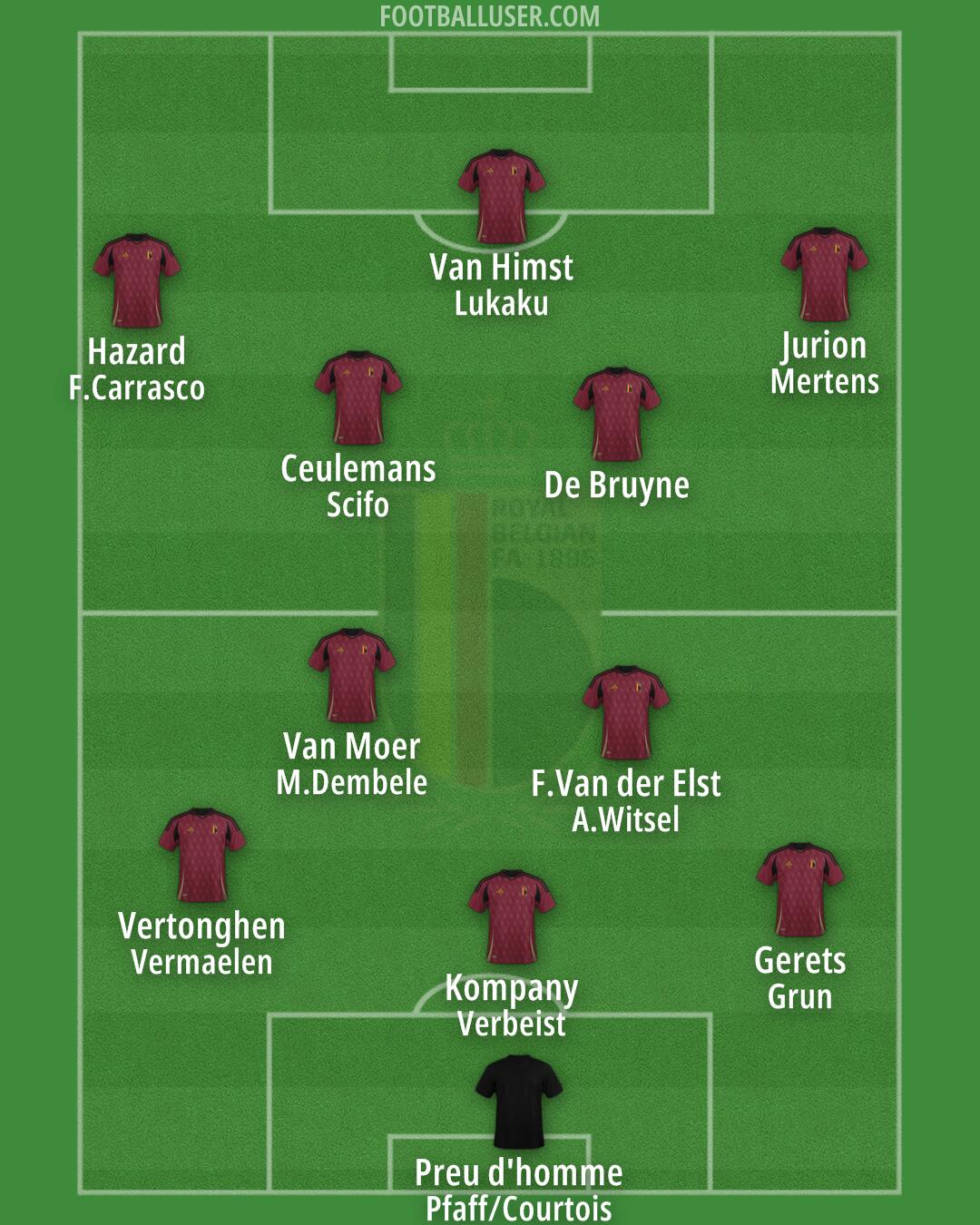
De Bruyne · Van Himst (Lukaku) · Ceulemans (Scifo) · Jurion (Mertens) · Hazard (F.Carrasco) · Kompany (Verbeist) · Gerets (Grun) · Van Moer (M.Dembele) · Preu d'homme (Pfaff/Courtois) · F.Van der Elst (A.Witsel) · Vertonghen (Vermaelen)Belgium aims to play with high intensity and quick transitions using a 5-2-3 formation. The Red Devils use this lineup to stay solid when defending and then strike fast when they win the ball back. This system relies on the ability of wide players to stretch the pitch while the central players work to move the ball quickly through the thirds.
Preu d'homme guards the goal as the team sits in a compact mid-block. The back line consists of a back three with Kompany acting as the central leader to clear the lines and organize the unit. F.Van der Elst operates as the right centre-back to cover the space behind the wing back, while Van Moer plays as the left centre-back to provide aerial strength. Gerets acts as an attacking wing back on the right to provide width, and Vertonghen works as the left wing back to push high up the pitch. The defensive unit works to stay narrow to prevent passes through the middle.
A two-man midfield provides the engine for the Belgium squad. De Bruyne operates in the right central midfield role, using his renowned passing range to find teammates in advanced positions. Ceulemans plays alongside him in the left central midfield role to help win the second ball and connect the defense to the attack. These two must work hard to cover the space left by the advancing wing backs and ensure they do not get bypassed in transition.
The attacking unit uses three players to pressure the opposition back line. Van Himst acts as the lone striker to hold up the ball and lead the press from the front. On the flanks, Hazard plays as an inverted winger on the left to cut inside and create chances, while Jurion stays wide on the right to provide width. The forwards work to make runs in behind the defense to exploit gaps during transitions. This setup creates many combinations as the wing backs overlap the wingers to overload the wide areas.
One major advantage for Belgium is the ability to create wide overloads when Gerets and Vertonghen push forward. This creates extra passing lanes and forces the opposition to pull defenders out of position. The team also benefits from the speed of transition, as De Bruyne can immediately hit in behind with a long pass once the ball is recovered. The compactness when defending in a back five makes it difficult for opponents to play through the center.
This 5-2-3 formation is built for teams that want to absorb pressure and then hit the opponent on the break. It is a perfect choice for matches where the team needs to defend a lead against a dominant side.