
Real Madrid Football Formation
 January 6, 2025


Starting Lineup
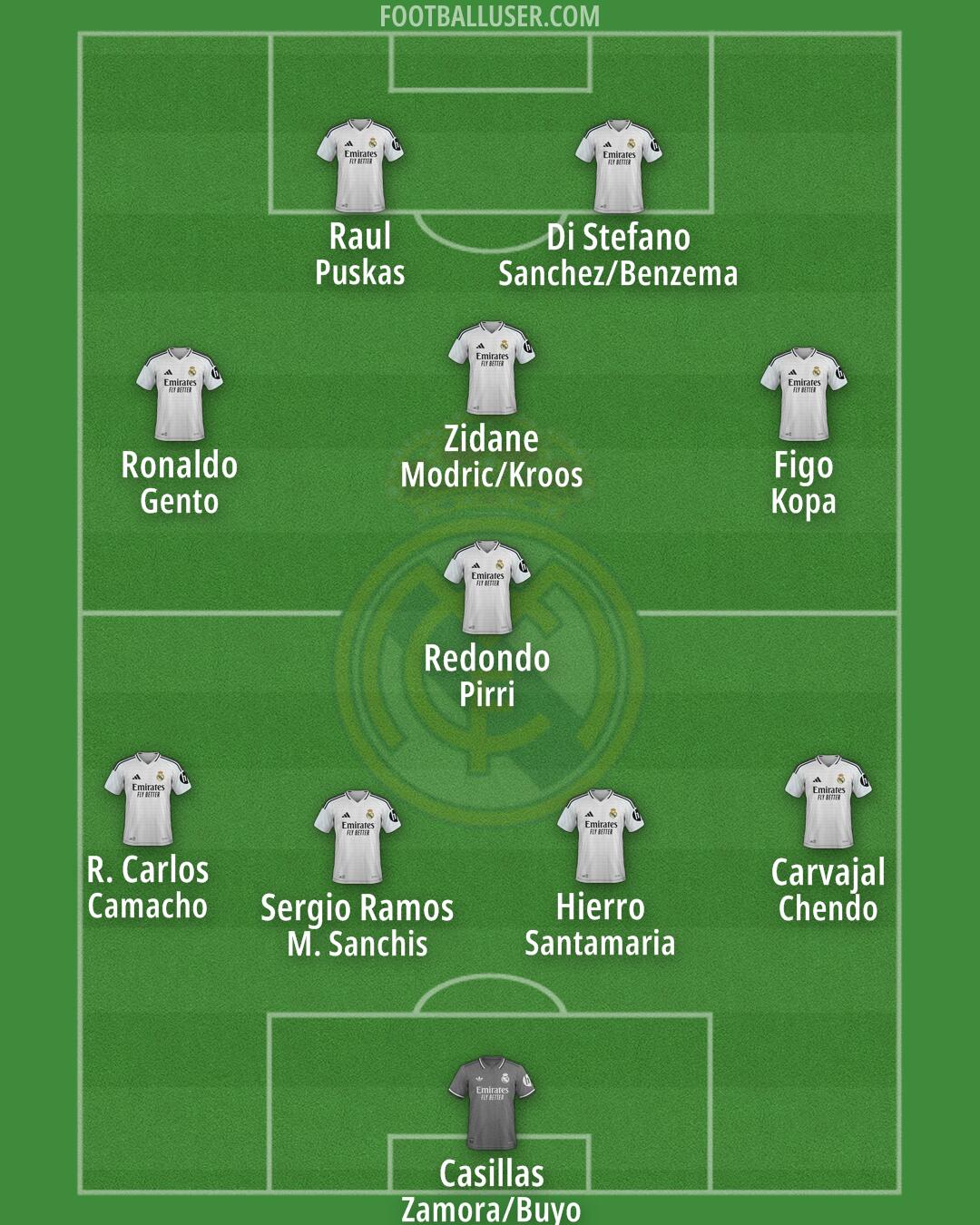
Casillas (Zamora/Buyo) · Carvajal (Chendo) · Hierro (Santamaria) · Sergio Ramos (M. Sanchis) · R. Carlos (Camacho) · Redondo (Pirri) · Zidane (Modric/Kroos) · Figo (Kopa) · Ronaldo (Gento) · Raul (Puskas) · Di Stefano (Sanchez/Benzema)Real Madrid aims to control matches through high intensity and technical dominance in a 4-4-2. This formation is built to play a heavy pressing game that allows the team to win the ball high up the pitch and transition into attack with incredible speed. The lineup focuses on overwhelming the opponent in both central and wide areas to dominate the tempo.
Casillas starts in goal to organize the defensive line. The back four works as a coordinated unit with Roberto Carlos acting as an attacking wing back to provide width on the left. Carvajal provides balance on the right, allowing the team to push higher. In the center, Sergio Ramos uses his aerial strength and aggressive tackling to win the ball, while Hierro acts as a ball playing defender to help play out from the back. They defend zonally to keep the team compact when the opposition has the ball.
The midfield operates as a central powerhouse designed to control the center of the pitch. Redondo sits as a single pivot to shield the defense and win the second ball. Beside him, Zidane operates in the half spaces, using his famous vision and close control to connect the defensive and attacking lines. Figo provides width from the right and can cut inside to create chances, while Ronaldo operates in the central areas to drive forward with the ball. This midfield group works to press in a mid-block and quickly recycle possession to find the attackers.
Real Madrid employs two forwards in a partnership to stretch the defense. Raul plays as a pressing centre-forward who works hard to disrupt the opposition back line and find space between the lines. Di Stefano plays as a second striker in the hole, often dropping deep to link up play with the midfield. This movement creates runs in behind for the forwards and allows the team to attack in combinations. The front line is designed to pin the last defender and create space for late runs from the midfield.
This formation offers significant tactical advantages through its ability to create numerical superiority in the midfield during attacking phases. The attacking wing backs allow the wide players to move inside, creating wide overloads. The team also benefits from a high press in coordinated waves, which can force a long ball from the opponent.
This 4-4-2 setup is built for dominance and rapid attacking transitions. It is best suited for matches against teams that try to build play slowly from the back.