Liverpool Football Formation
 January 10, 2025


Starting Lineup
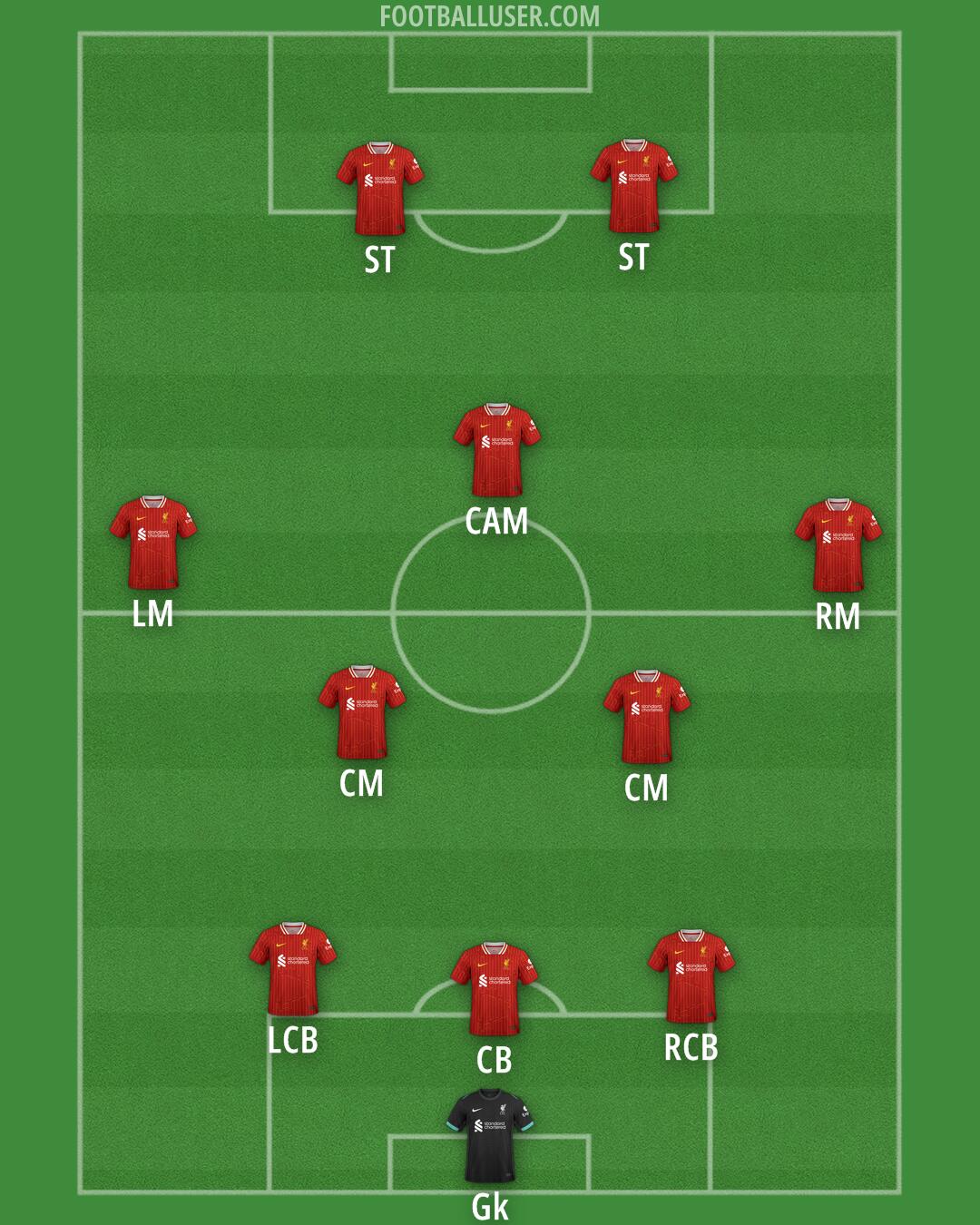
Gk · CB · RCB · LCB · LM · RM · CM · CAM · CM · ST · STLiverpool focuses on a high press and rapid transitions using a 3-5-2 formation. This lineup aims to squeeze the space in the opposition half and win the ball back high up the pitch. The team looks to play with verticality, moving the ball quickly from the defensive third to the forwards to catch the opponent out of position.
The goalkeeper starts the build up from the back to ensure the team can play short from the back. In front of them, the back three functions as a narrow defensive block. The RCB and LCB act as wide centre-backs who can push out to cover the flanks, while the central CB holds the line to provide stability. This three man unit is designed to defend zonally and stay compact, ensuring they can cover the space behind the midfield when the team pushes high.
The midfield works as a five man unit to control the center of the pitch. The two central midfielders acting as a double pivot, RDM and LDM, shield the defence and recycle possession. Moving higher, the RCM and LCM operate in the half spaces to provide width and help the team progress through the thirds. The AM plays as an attacking ten behind the strikers, looking to find the feet of the strikers or arrive late into the box. This midfield group must work hard to press in a mid-block and prevent the opponent from playing through the lines.
In the attacking third, Liverpool utilizes two forwards in a partnership. The LS and RS operate as a dual threat, often looking to run in behind the defensive line. They often combine in tight spaces to pull defenders out of position. The wingers in the midfield roles must provide width by spreading wide, which helps to stretch the defence. When the team wins the ball, the forwards press from the front to force a long ball and regain control quickly.
One major strength of this Liverpool lineup is the ability to press high in coordinated waves, making it difficult for opponents to build from the back. The formation also provides numerical superiority in midfield, which allows the team to control the tempo of the game. By using the wide midfielders to occupy the flanks, the team creates space in the middle for the AM and the two strikers to operate.
This 3-5-2 formation is built for a high intensity game that relies on winning the ball back quickly. It is best suited for matches against teams that struggle to play out from the back under pressure.