
Dinamo Football Formation
 January 18, 2025


Starting Lineup
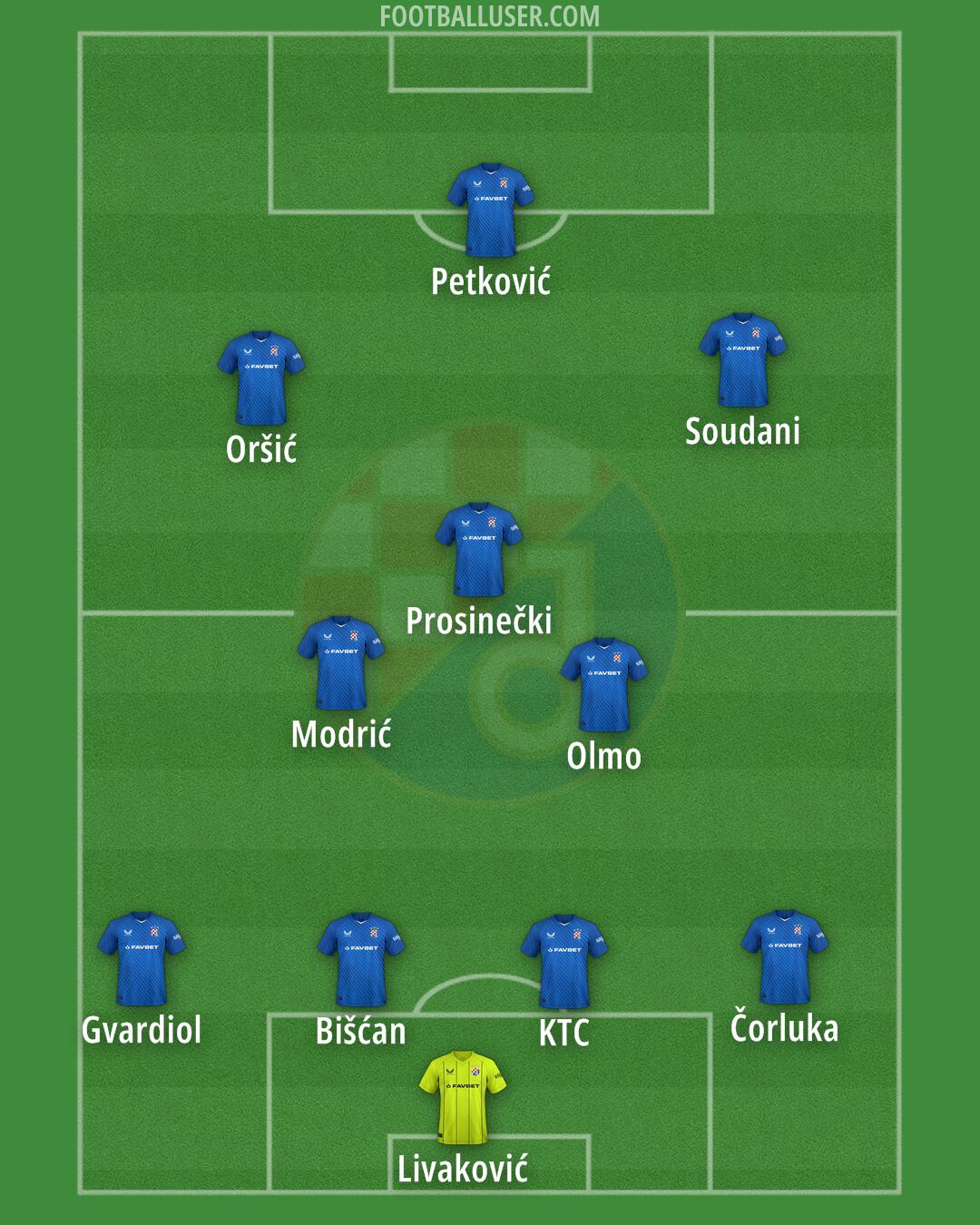
Livaković · Gvardiol · Bišćan · KTC · Čorluka · Modrić · Olmo · Prosinečki · Oršić · Soudani · PetkovićDinamo seeks to control games through high pressing and rapid ball movement in a 4-3-3. This formation is built to win the ball high up the pitch and use quick combinations to break the lines. The team aims to dominate territory by pushing the defensive line forward to squeeze the space.
Livaković guards the goal and acts as the last line of defense. The back line operates as a flat back four where Čorluka plays as the right back to provide width. Gvardiol operates at left back with the ability to carry the ball forward into midfield. KTC and Bišćan form the central pairing, with Bišćan often acting as a ball playing defender to start attacks. The defensive unit works to hold a high line and set the offside trap to keep the opposition away from the goal.
A three man midfield connects the defensive and attacking lines. Modrić plays as the left central midfielder, using his famous passing range to dictate the tempo and recycle possession. Olmo acts as the right central midfielder to drive forward with the ball and press aggressively. Prosinečki plays as an attacking ten behind the striker, looking to find space between the lines. This midfield group works to win the second ball and ensures the team can transition quickly from defense to attack.
The attacking front line uses three attackers to stretch the defence. Petković leads the line as a pressing centre-forward who holds up the ball to bring others into play. Oršić plays as an inverted winger on the left to cut inside and create chances, while Soudani stays wide on the right to provide width. The team uses these forwards to pin the last defender and create runs in behind. Attack movements often involve overlaps from the full backs to create overloads.
Dinamo gains a significant advantage through numerical superiority in the central areas when Prosinečki drops deep. The ability to press high in coordinated waves allows the team to win it back high up the pitch. This formation also offers speed of transition, allowing the wide players to exploit space immediately after a turnover.
This 4-3-3 formation is designed for a team that wants to dominate possession and hunt for the ball. It is best suited for matches against opponents that play a deep block and struggle with high intensity.