West Ham Football Formation
 January 23, 2025


Starting Lineup
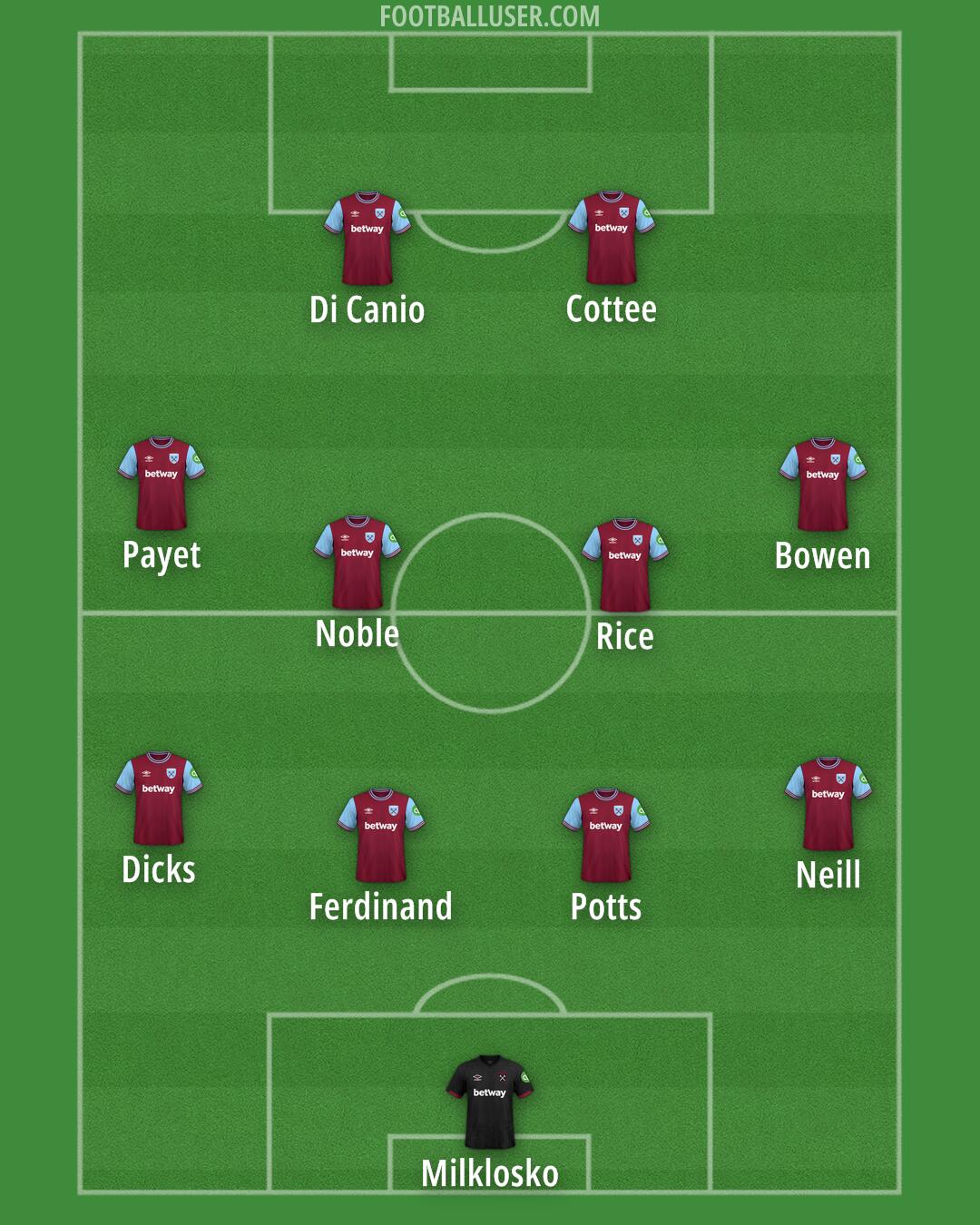
Milklosko · Neill · Potts · Ferdinand · Dicks · Rice · Noble · Bowen · Payet · Cottee · Di CanioWest Ham focuses on a direct and vertical identity through a 4-4-2 formation. This lineup is built to win second balls and strike quickly once the ball is recovered in central areas. The team relies on physical presence and rapid transitions to catch the opposition out of position.
Milklosko stands between the posts to command the area. The defensive unit operates as a flat back four with Neill acting as a defensive wing back on the right side. Dicks provides balance on the left, while Ferdinand and Potts operate as the central defenders. Ferdinand is known for his aerial strength and leadership, while Potts focuses on covering the space behind the midfielders. The unit tends to sit deep to deny space behind the defense, forcing the opposition to play in front of them.
The midfield works in a central pairing with Rice and Noble controlling the middle. Rice serves as the primary carrier who drives forward with the ball, while Noble shields the defense and recycles possession. On the flanks, Bowen and Payet occupy the wide areas to provide width. Bowen looks to drive towards the box, whereas Payet drops into pockets of space to create chances. This midfield block works together to squeeze the space in front of the defense and press in a mid-block.
West Ham utilizes two forwards in a partnership to lead the attack. Di Canio acts as the primary playmaker in the final third, using his technical ability to lay it off for others. Cottee plays as a presence to hold up the ball and chase long passes. The forwards press the opposition back line to force errors, allowing the team to break quickly. Bowen and Payet often cut inside to create central overloads, which allows the strikers to find the feet of the striker or move into the channels.
This formation offers significant tactical advantages, particularly the ability to create numerical superiority in the central zones during transitions. West Ham can also use wide overloads when Bowen and Neill move forward together. The compactness when defending makes it difficult for opponents to play through the middle, forcing them to play wide where the team can double up on attackers.
This 4-4-2 setup relies on a strong central core and effective wide play to disrupt the opponent. It is best suited for matches against teams that play with a high line and leave space to be exploited on the break.