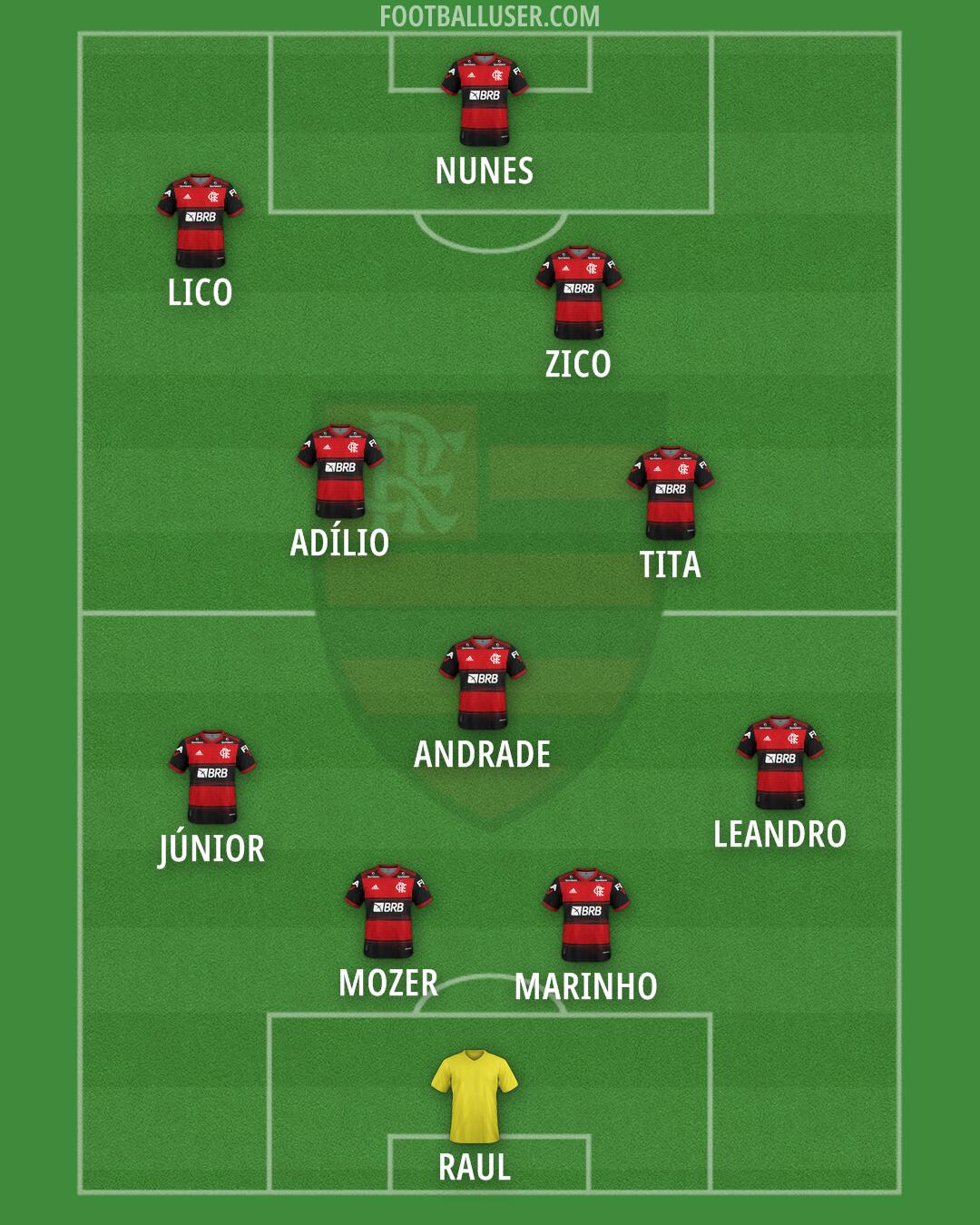

Flamengo Football Formation
 January 24, 2025
 Pretorian


Starting Lineup
NUNES · ZICO · ADÍLIO · TITA · ANDRADE · LICO · LEANDRO · MARINHO · MOZER · JÚNIOR · RAULFlamengo seeks to control matches through a high press and rapid vertical transitions in a 5-2-3 formation. This lineup is built to dominate the attacking third by keeping players high up the pitch while maintaining a solid foundation to stop counters. The team uses the extra defenders to secure the central area and allow the wide players to push high.
RAUL acts as the last line of defense, ready to sweep behind the high line when needed. The back five consists of MARINHO, MOZER, and ANDRADE as central defenders, with LEANDRO and JÚNIOR acting as attacking wing backs. MARINHO and MOZER work to win headers and clear the lines, while ANDRADE provides cover to help the unit hold a compact shape. LEANDRO and JÚNIOR provide the necessary width, pushing high to overlap the wingers and send crosses into the box.
The midfield functions as a double pivot to connect the defense and the attack. TITA and ADÍLIO occupy the central spaces, working to win the second ball and recycle possession. TITA often looks to carry the ball forward, while ADÍLIO works to intercept passes and protect the center. This pair must press aggressively in a mid-block to force a long ball from the opposition and regain control quickly.
Flamengo utilizes three attackers to stretch the defense across the pitch. NUNES operates as a pressing centre-forward to pin the last defender, while LICO and ZICO act as wide attackers. LICO works on the left to cut inside and create space, whereas ZICO uses his legendary passing range and dribbling style to influence the game from the right. They look to combine in tight spaces or hit in behind on the transition to exploit gaps left by the opposition.
The main tactical advantage for Flamengo is the ability to create wide overloads through the movement of LEANDRO and JÚNIOR. By having the wing backs push high, the team can pin the opposition back and create numerical superiority in the final third. Another strength is the speed of transition, where the midfield can quickly find the front three to attack before the opponent can recover.
This formation relies on the intensity of the wing backs and the creativity of the forward line. It is best suited for matches against teams that play with a high line and can be punished on the break.