
Instituto Football Formation
 January 24, 2025


Starting Lineup
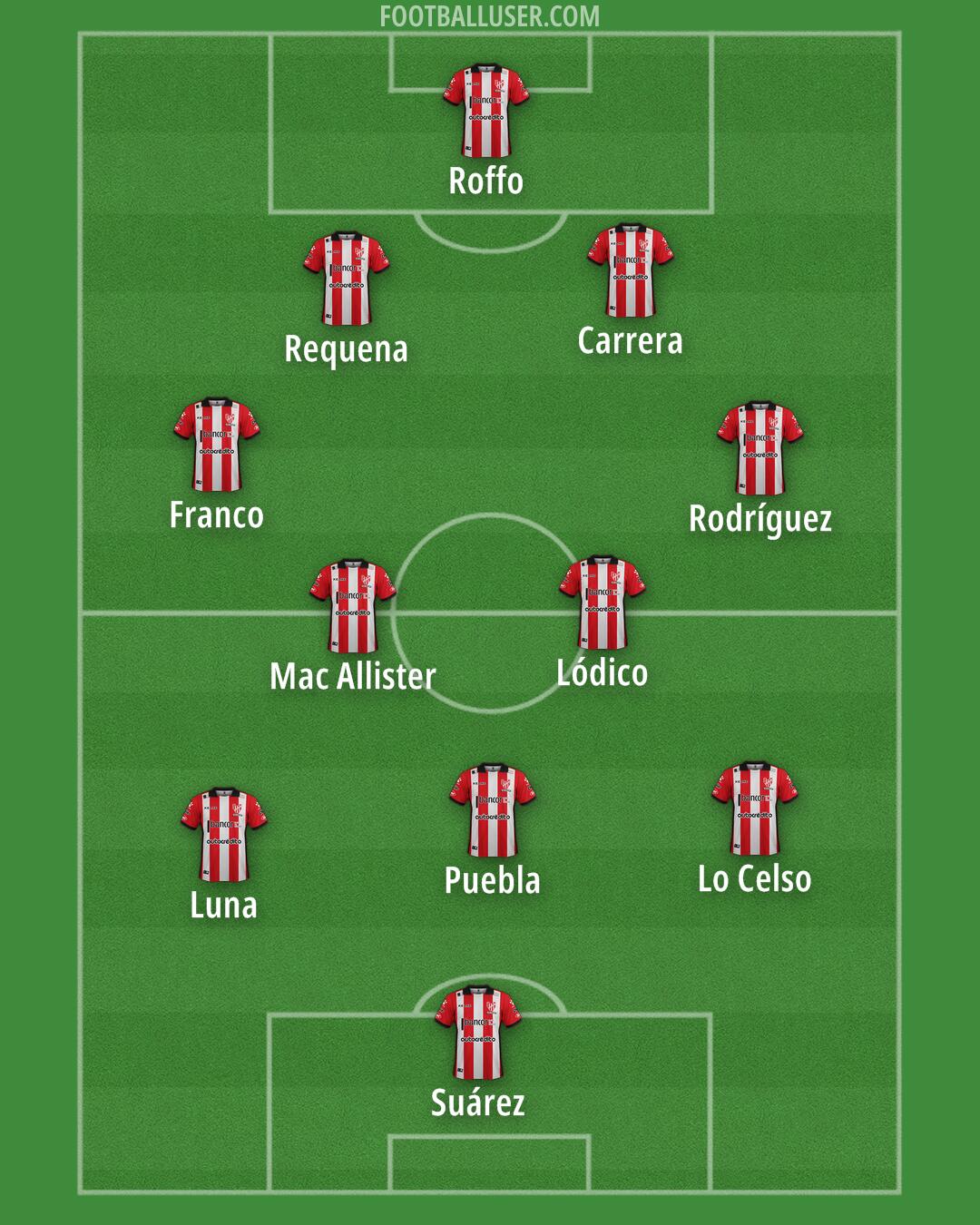
Roffo · Rodríguez · Requena · Carrera · Franco · Luna · Lo Celso · Puebla · Suárez · Mac Allister · LódicoInstituto aims to play with heavy verticality through a high pressing 2-4-4 formation. This lineup is built to overwhelm the opposition in the final third by pushing bodies forward and looking to win the ball back high up the pitch. The goal is to bypass the middle of the park and force the play into the attacking zones as quickly as possible.
Roffo operates as the lone man between the posts, often left exposed due to the aggressive nature of this system. Ahead of him, Carrera and Requena form a narrow back two that must defend man to man or squeeze the space to prevent long balls. These central defenders act as a high line, needing to step up to catch attackers offside and quickly clear the lines when under pressure.
The midfield works in a block consisting of a double pivot and two advanced creators. Franco and Rodríguez form the central pair to shield the defence, with Rodríguez often looking to intercept and Franco working to win the second ball. In front of them, Mac Allister and Lódico operate in the half spaces to connect the lines, with Lódico looking to drive forward with the ball and Mac Allister finding space to play through the lines.
The attacking line is extremely aggressive, utilizing two central forwards and two wide players to stretch the defence. Puebla and Suárez work as a strike partnership, with Suárez acting to hold up the ball and Puebla looking to make runs in behind. On the flanks, Lo Celso and Luna act as inverted wingers who cut inside to create central overloads, while also looking to deliver early crosses or cut it back to the arriving midfielders.
One major tactical advantage for Instituto is the ability to create massive wide overloads when the midfielders push into the attacking zones. The team also benefits from high pressing in coordinated waves, using the four forwards to trigger a press that forces the opposition into mistakes. This creates constant chaos in the opponent's defensive third through rapid transitions.
This high risk formation relies on extreme aggression to dominate games through offensive volume. It is best suited for matches against opponents who struggle to play out from the back or who sit in a deep low block.