Ipswich Football Formation
 January 24, 2025


Starting Lineup
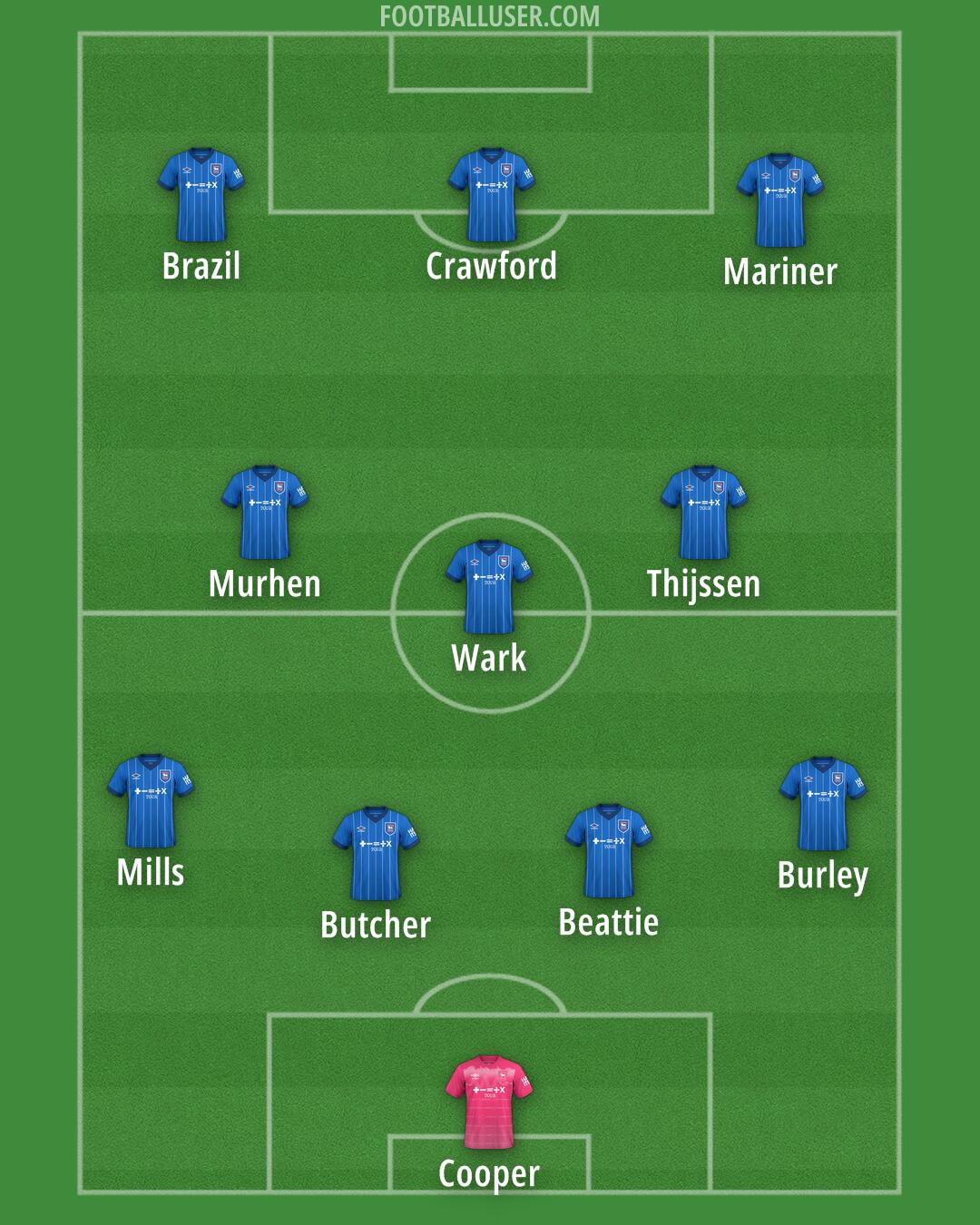
Cooper · Burley · Beattie · Butcher · Mills · Wark · Thijssen · Murhen · Mariner · Brazil · CrawfordIpswich focus on playing a vertical game that relies on rapid transitions and high pressure, utilizing a 4-3-3 formation. This lineup is built to stretch the opposition by using the full width of the pitch and forcing turnovers in the final third. The goal is to win the ball back high up the pitch and strike quickly before the opponent can settle.
Cooper plays between the posts to command his area and organize the back line. Ipswich use a flat back four that looks to squeeze the space between the defensive and midfield units. Butcher and Beattie act as the central pairing, with Butcher acting as a ball playing defender to initiate play. Burley and Mills provide width as full backs, looking to push up the flanks to support the attack while ensuring they track back to cover the wide areas. The defensive unit works together to maintain a compact shape and set the offside trap when the line steps up.
The midfield operates with a single pivot system. Wark sits in front of the defence to shield the back four and intercept passes. Thijssen and Murhen play as the two central midfielders, with Thijssen acting as a carrier to drive forward with the ball into the half spaces. Murhen connects the defensive and attacking lines by recycling possession and finding the players in advanced positions. This trio works to compress the midfield and prevent the opposition from playing through the center.
In the attacking third, the team employs three attackers across the front. Brazil and Mariner act as wide wingers who look to cut inside and create goal scoring opportunities. Brazil stays wide to stretch the defence while Mariner looks to isolate his marker in one on one situations. Crawford operates as a lone striker, working to hold up the ball and pin the last defender. The front three press from the front to force a long ball from the opposition, allowing the team to win the second ball and launch attacks in transition.
This formation offers several tactical advantages, particularly the ability to press high in coordinated waves. By using the wide players to force the play towards the touchline, Ipswich can create numerical superiority in the middle of the pitch. The speed of transition is a major strength, as the team can move from a defensive block to an attacking move in seconds.
Ipswich rely on a high energy system that uses width and central pressing to dominate games. This 4-3-3 formation is best suited for facing teams that play a high line or struggle to handle intense pressure.