Southampton Football Formation
 January 26, 2025


Starting Lineup
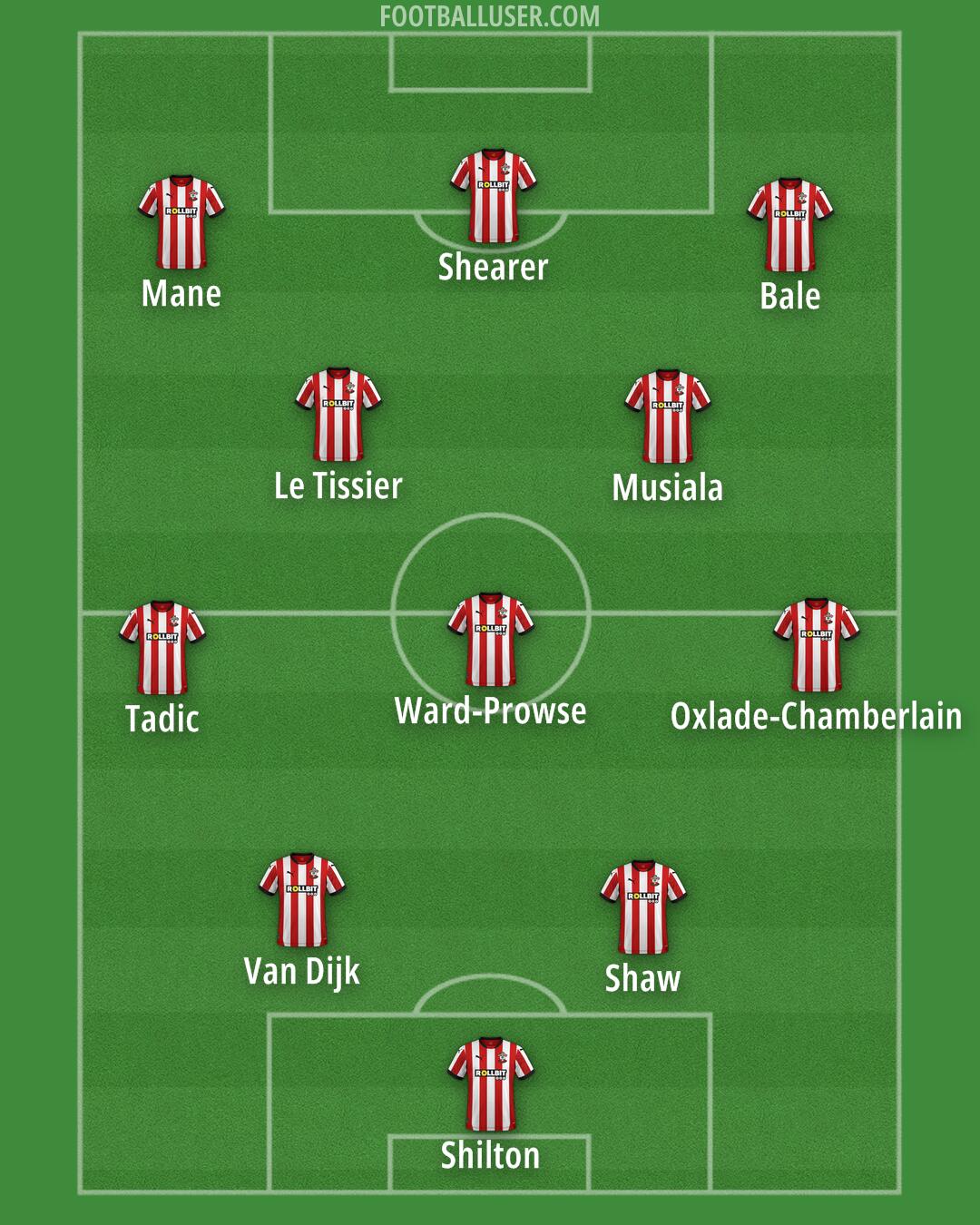
Bale · Shearer · Mane · Musiala · Le Tissier · Ward-Prowse · Oxlade-Chamberlain · Tadic · Shilton · Van Dijk · ShawSouthampton aims to control the tempo and win it back high up the pitch to keep the pressure on. Their intention is reflected in a 2-5-3 formation. This lineup is built to play a heavy pressing game that overwhelms the opponent in their own half through constant movement.
Shilton stays between the posts to protect the goal. The back line consists of a narrow pair of center backs, Shaw and Van Dijk. Virgil van Dijk uses his aerial strength to lead this small unit. Because they lack full backs, Shaw and Van Dijk must defend zonally and hold the line to cover the wide spaces. They need to step up to set the offside trap and intercept any direct balls.
The midfield is a five-man block that works to compress the middle and dominate central zones. Ward-Prowse operates as a deep playmaker who uses his passing range to recycle possession. Tadic and Oxlade-Chamberlain occupy the half-spaces to connect the defensive and attacking lines. Musiala and Le Tissier push higher to act as wide creators who can carry the ball forward. This lineup allows the team to win the second ball and progress through the thirds.
The attacking front line features three players who look to stretch the defence. Shearer acts as a central striker to hold up the ball or run in behind. Mane and Bale provide width, with Mane using his pace to pull wide and Bale looking to cut inside. They work to pin the last defender and create space for players to arrive late into the box. The goal is to split the defence with a through ball or create cutbacks from the byline.
A main advantage for Southampton is the numerical superiority in the middle of the pitch. Having five players in the center allows them to squeeze the space and pick up runners effectively. Another strength is the ability to press in pairs from the front, using the three attackers to trigger a press. This creates many chances to hit in behind on the transition and exploit any gaps in the opponent formation.
This 2-5-3 formation is an aggressive way to play that relies on high intensity and bravery. It is best suited for games against teams that sit deep and struggle to cope with verticality.